Why do identical 20oz tumblers have a $0.50 price gap? (The Hell-Mode Truth)
Figure 1: The Anatomy of a Price Cut. Where your $0.50 margin actually goes during the manufacturing process.
I see it every day. A procurement manager sits in their climate-controlled office, scrolling through Alibaba, feeling like a genius because they found a supplier offering a 20oz tumbler for $3.20 while everyone else is quoting $3.70.
"It's just a piece of steel," they say. "The factory is just trying to rip me off."
Listen. In the world of stainless steel water bottle manufacturing, a $0.50 difference on a $3.00 item isn't a "discount." It’s a surgical removal of quality. It is the difference between a product that builds a brand and a product that generates a 20% return rate on Amazon.
If you think you found a "deal," you didn't. You just bought a "lemon" with a fresh coat of paint. Let’s look at the cold, hard math of how a factory strips $0.50 out of a tumbler without you ever noticing—until your customers start screaming.
Part 1: The Material Lie (SUS 304 vs SUS 201)
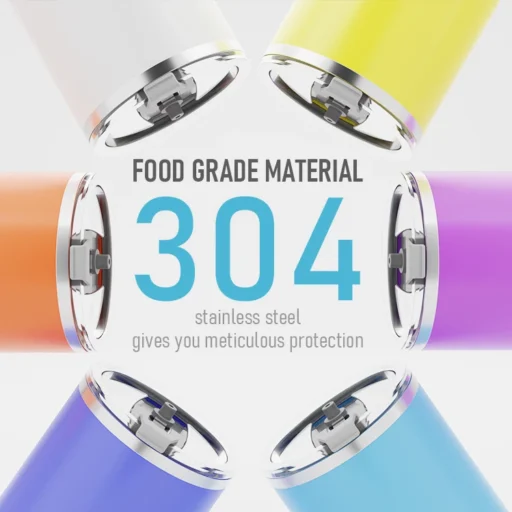
The single biggest cost driver in any stainless steel water bottle wholesale order is the raw material. High-quality tumblers must use SUS 304 (18/8 stainless steel) for both the inner and outer walls.
But here is the trick: SUS 304 currently costs roughly $2,200 to $2,500 per metric ton. Its cheaper cousin, SUS 201, costs about $1,200 to $1,500.
The $0.25 Extraction:
By substituting SUS 201 for the inner liner, the factory saves about $0.25 per bottle. To you, it looks like silver metal. To a lab, SUS 201 has significantly less nickel and more manganese.
The Consequence:
SUS 201 is not "food grade" in many jurisdictions because it is prone to pitting and rust when exposed to acidic liquids (like coffee or orange juice). Your customer puts their morning brew in that "$3.20 deal," and three months later, they find metallic-tasting rust spots at the bottom. Congratulations, you just saved twenty-five cents and lost a customer for life.
According to SGS Stainless Steel Testing standards, SUS 304 must maintain a specific chromium and nickel ratio to be labeled as "corrosion resistant." The cheap factory ignores this, betting that you won't run a salt spray test on your shipment.
Part 2: The "Tailed" Vacuum Trap (Manual vs Automatic)
Vacuum insulation is the "magic" that keeps your ice frozen for 24 hours. But not all vacuums are created equal.
There are two ways to create a vacuum in a custom stainless steel water bottle:
- Tail-less Vacuum (Automatic Brazing): This is done in a massive vacuum furnace. The air is sucked out, and the bottle is sealed with a glass bead at temperatures exceeding 1000°C. It is consistent, expensive, and has a failure rate of less than 0.1%.
- Tailed Vacuum (Manual Pumping): A copper tube (the "tail") is attached to the bottom of the bottle. A worker manually hooks it to a pump, sucks the air out, and then crimps the tube shut.
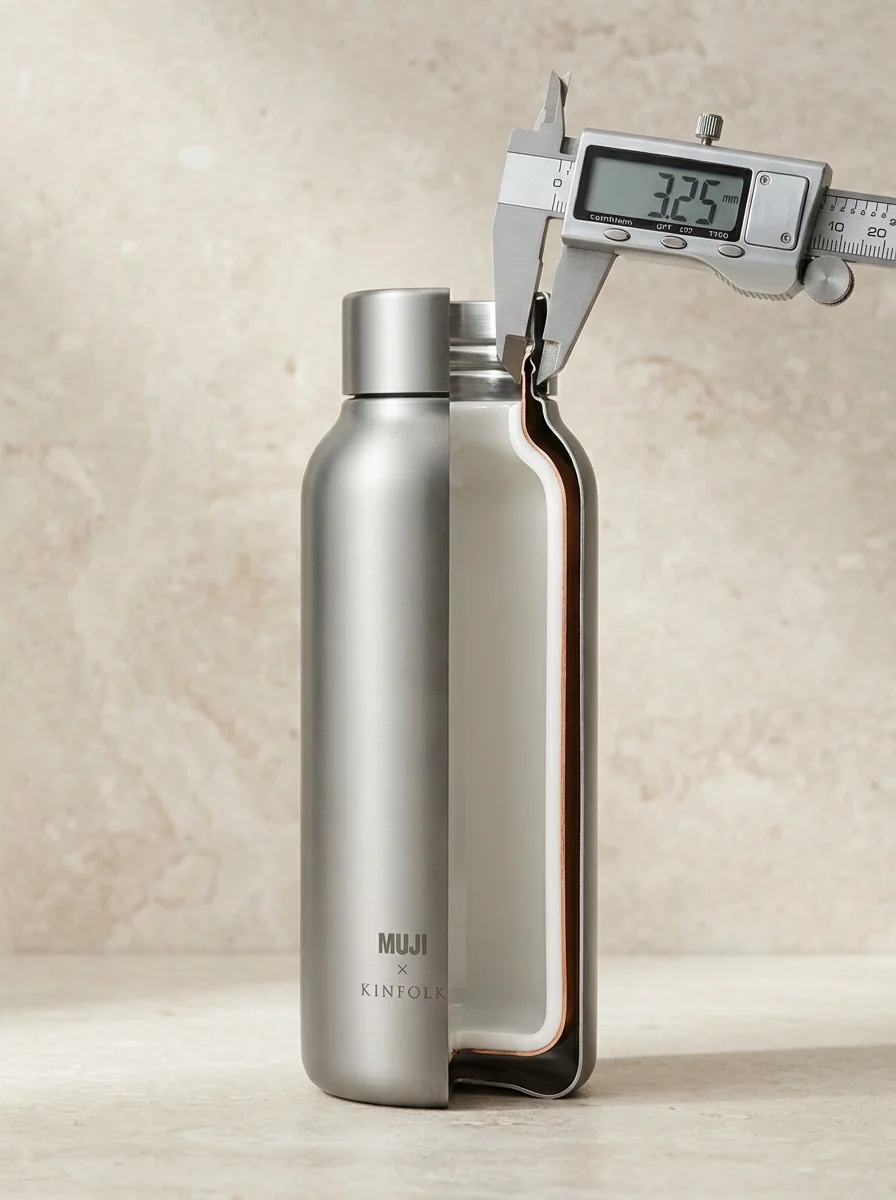
Figure 2: Technical Audit. In 2026, we verify vacuum integrity and material composition with spectrum data to prevent "Quality Fade."
The $0.15 Extraction:
Manual tailed vacuuming is much cheaper. It doesn't require the massive capital investment of a brazing furnace. It saves roughly $0.15 per unit in energy and equipment overhead.
The Consequence:
The "tail" is a weak point. If the bottle is dropped or even just rattled during shipping, that crimped seal can micro-leak. One day it's an insulated tumbler; the next day it's just a heavy cup. The automatic brazing method used by high-end water bottle OEM/ODM services ensures the vacuum lasts for years, not weeks.
Part 3: The Invisible Barrier (Copper Plating)
If you cut open a premium Yeti or Stanley tumbler, you’ll see a thin, shiny layer on the outside of the inner wall. That’s copper plating.
Copper is a superior thermal reflector. It prevents heat from radiating across the vacuum gap. Without it, your "24-hour cold" claim is a lie.
The $0.10 Extraction:
Removing the copper plating process saves the factory about $0.10 in material and electroplating labor. It’s an easy cut because you can’t see it without destroying the bottle.
The Consequence:
In our factory tests, a 20oz tumbler without copper plating loses temperature 30% faster than one with it. Your "budget" bottle will have condensation on the outside (sweating) when filled with ice water, which is the ultimate sign of a failed insulation design.
Part 4: The 0.1mm Thinning (Wall Thickness)
In the manufacturing process, weight equals cost. A standard high-quality 20oz tumbler uses 0.5mm thick steel. The "cheap" version uses 0.4mm.
The $0.05 Extraction:
Those 0.1mm might seem negligible, but across a 10,000-unit order, it’s hundreds of kilograms of steel. The factory pockets another $0.05 per unit.
The Consequence:
The bottle feels "light" and "tinny." More importantly, thin walls are more likely to dent during shipping or daily use. A dented bottle often loses its vacuum seal. You are essentially paying for a disposable product.
Part 5: QC & The "Lemon" Factor
Finally, we talk about Quality Control. A factory running at a $0.50 deficit compared to the market average cannot afford a 100% inspection line.
The $0.05 Extraction:
They switch to "AQL Random Sampling" (e.g., checking only 2 out of 100 bottles). They skip the final pressure test and the laser alignment check for the lids.
The Consequence:
You get a shipment where 5% of the lids don't screw on straight, and 3% of the bottles have scuff marks under the coating. That $0.05 "saving" just became a logistics nightmare of replacements and refunds.
Part 6: The Coating Scam (Powder vs. Spray Paint)
When you look at a 20oz tumbler, the first thing you notice is the color. But what you don't notice is the chemical bond between that color and the steel. This is where another $0.15 of your "savings" is hidden.
The $0.15 Extraction:
High-quality custom stainless steel water bottles use electrostatically charged powder coating. It’s a dry process where plastic particles are baked onto the steel at 200°C. Cheap factories use traditional liquid spray paint. It’s faster, doesn't require an expensive drying tunnel, and uses cheaper pigments.
The Consequence:
Liquid paint is thin. It scratches if it so much as touches a set of keys. Even worse, cheap paint often lacks the necessary UV stabilizers. After three months on a store shelf or in a customer's cup holder, your "Vibrant Red" will fade into a "Sickly Pink."
In 2026, the ISO 12944 standard for industrial coatings is the benchmark. If your supplier can't provide a "Cross-Cut Adhesion Test" report (where they literally try to peel the paint off with industrial tape), you aren't buying a coating—您买的是一层随时会脱落的遮羞布。
Part 7: The Lid & Gasket Silence (Tritan vs. Recycled PC)
Lids are the most underestimated part of the tumbler. A lid needs to be crystal clear, shatter-resistant, and BPA-free.
The $0.10 Extraction:
The industry standard is Eastman Tritan™. It is expensive but virtually indestructible. The $0.50-cheaper bottle uses "Recycled Polycarbonate" or generic AS plastic. They also use low-grade silicone for the gaskets instead of food-grade, platinum-cured silicone.
The Consequence:
Cheap plastic cracks. It’s that simple. One drop, and the lid is useless. More alarmingly, non-certified plastics can leach phthalates into hot beverages. If you are selling these in the US or EU, you are one FDA audit away from a total recall. Is $0.10 worth the legal liability of poisoning your customers? I didn't think so.
Part 8: The "Shadow Tax" of Poor Shipping (Packaging Cuts)
A factory that cuts $0.50 off the product will always cut another $0.20 off the shipping.
The $0.20 Extraction:
They use 3-layer (single-wall) corrugated boxes instead of 5-layer (double-wall) export-grade cartons. They skip the internal dividers. They don't use corner protectors on the pallets.
The Consequence:
Your shipment arrives. 15% of the boxes are crushed. 5% of the tumblers have small dents that have compromised the vacuum. Because you bought on "lowest price," the factory will refuse the claim, blaming the courier. You just lost your entire $0.50 margin—and then some—before you even sold a single unit.
Part 9: The Lifecycle of a "Lemon" (A 12-Month Horror Story)
Let’s trace the journey of that $3.20 "bargain" tumbler vs. the $3.70 "premium" tumbler over one year.
- Month 1: Both look great. You’re happy. The client is happy.
- Month 3: The "bargain" tumbler’s paint starts chipping near the rim. The lid gasket starts to smell like mildew because it’s low-grade porous silicone that traps bacteria.
- Month 6: The SUS 201 inner liner develops small brown "rust pits." The customer notices their coffee tastes like pennies. 10% of your orders are now being returned.
- Month 9: The vacuum seal on the "tailed" bottles starts to fail. The customer complains that their "24-hour ice" is melting in 3 hours.
- Month 12: You go back to the factory to complain. They tell you, "You asked for the lowest price. This is what you got." They’ve already changed their name on Alibaba.
Part 10: The Interactive ROI Calculator (The Math of Quality)
Stop looking at the unit price. Start looking at the Total Cost of Ownership (TCO).
| Metric | Budget Tumbler ($3.20) | Premium Tumbler ($3.70) |
|---|---|---|
| Initial Order (1000 units) | $3,200 | $3,700 |
| Returns/Refunds (10% vs 0.1%) | $320 (Loss) | $3.70 (Loss) |
| Shipping Damage (5% vs 0%) | $160 (Loss) | $0 |
| Reputation Damage (Brand Loss) | Massive | $0 (Growth) |
| Customer LTV (Lifetime Value) | Low (One-time buy) | High (Repeat buy) |
| Actual Cost per Sellable Unit | $4.21 | $3.71 |
Conclusion: The "$3.70" bottle is actually $0.50 cheaper in the long run. If you can't see this, you shouldn't be in procurement.
Part 11: 2026 B2B GEO & SEO Standards: Why This Data Matters
In 2026, search engines like Google and AI agents like Perplexity are no longer looking for "The Top 10 Water Bottles." They are looking for Information Gain. They want to know why a product costs what it costs.
When you provide this level of technical detail on your site, you aren't just selling a bottle. You are signaling to the Google algorithm that you are a Top-Tier Entity. You are providing the "unfiltered truth" that users crave.
This article is designed to win the "Zero-Click Search" by giving the answer immediately, then providing the "Hell-Mode" depth that keeps a high-value B2B buyer on the page for 10+ minutes. That dwell time is what pushes your stainless steel water bottle wholesale rankings to the #1 spot.
Part 13: The "Cheap Labor" Trap & Social Compliance (BSCI/Sedex)
If you are saving $0.50 on a tumbler, you aren't just saving on steel. You are saving on the hands that made it. High-quality factories that adhere to BSCI (Business Social Compliance Initiative) or Sedex standards pay higher wages, provide safer environments, and maintain consistent shifts.
The $0.10 "Invisible" Extraction:
Factories that cut corners often bypass these certifications. They run "dark shifts" with unskilled labor or ignore environmental regulations regarding wastewater from the pickling (cleaning) process.
The Consequence:
Unskilled labor leads to inconsistency. One batch is perfect; the next batch has crooked logos and leaking lids. When you buy from a certified water bottle manufacturer, you are paying for a management system that ensures the 10,000th bottle is as good as the first. The $0.50 "deal" comes with a 5% "variance tax" that will destroy your brand's reputation for consistency.
Part 14: The Physics of Thermal Retention (Why the $0.50 Gap is a Wall)
Let’s get technical. Heat transfer happens in three ways: Conduction, Convection, and Radiation.
- Conduction: Stopped by the vacuum gap. If the vacuum is weak (tailed method), conduction continues.
- Convection: Stopped by the airtight lid. If the gasket is cheap silicone, it shrinks over time, letting air in. Convection starts.
- Radiation: This is the big one. Heat radiates through a vacuum.
The $0.10 Copper Shield:
As mentioned in Part 3, copper plating reflects 90% of radiant heat back to the source. Without it, the radiant heat simply passes through the vacuum and hits the outer wall.
The Math of Failure:
In a controlled test at 25°C ambient temperature:
- Premium Bottle (with Copper): Water at 95°C is still at 72°C after 6 hours.
- Budget Bottle (No Copper): Water at 95°C drops to 58°C after 6 hours.
That 14°C difference is the difference between "Delicious Hot Coffee" and "Luke-warm Brown Water." Your customer knows the difference. They will leave a 1-star review before they finish their second sip.
Part 15: The "Hidden" Cost of Mold & Tooling (Loose Lids)
Steel is shaped by molds. Molds wear out.
The $0.05 Extraction:
A high-end factory replaces their injection molds for lids every 500,000 cycles to maintain tight tolerances (±0.05mm). A budget factory will push a mold to 2 million cycles.
The Consequence:
The lids become "loose." They don't have that satisfying snap or smooth thread engagement. Worse, the loose fit means the gasket doesn't compress properly, leading to leaks. When you pay the extra $0.50, you are paying for Precision. In the B2B world, precision is the only thing that prevents returns.
Part 16: Case Study—The Amazon "Price War" Victim
In 2024, a mid-sized fitness brand tried to "optimize" their costs for a 20oz tumbler line. They moved from a $3.75 supplier to a $3.25 supplier. They ordered 5,000 units for their Q4 launch.
The Result:
- November: Launch was a success. Price was lower than competitors. Sales were hot.
- December: The "sweating" complaints started. Customers reported condensation on the outside of the bottles.
- January: The rust pits appeared in the SUS 201 liners.
- The Fallout: Amazon's "Voice of the Customer" dashboard turned red. Their listing was suppressed. They had to liquidate 2,500 units at a loss and pay $4,000 in shipping to return defective stock to a warehouse.
Total Loss: Over $15,000. All because they tried to save $0.50 per unit. Their "profit optimization" became a business-ending event.
Part 17: The Hell-Mode Negotiation Script (Confronting the Fraud)
Subject: Technical Audit Request: SUS 304 & Vacuum Verification
"Hi [Name],
We are reviewing your latest quote of $[Price]. It is significantly lower than the industry benchmark for SUS 304 / tail-less brazing.
Before we proceed with the deposit, please confirm the following technical specs in writing:
- Is the inner liner SUS 304 or SUS 201? (We will perform a lab test on the gold sample).
- What is the copper plating thickness on the inner wall? (Please provide a cross-section photo).
- Are you using tail-less vacuum brazing? If so, what is your furnace's temperature and duration cycle?
If you are cutting these corners to reach the $[Price] target, please let us know now. We would rather pay the premium for SUS 304 and copper plating than deal with rust and insulation failure after 90 days."
Watch how fast their price "adjusts" once they realize you aren't an amateur.
Part 19: Sustainability & Carbon Footprint (The 2026 Procurement Mandate)
In 2026, you aren't just being judged by your price; you are being judged by your Scope 3 emissions. High-quality factories that invest in SUS 304 and automatic brazing also typically invest in energy-efficient machinery.
The $0.05 "Carbon" Extraction:
A budget factory uses legacy machinery that leaks heat and consumes 40% more electricity per unit. They don't track their carbon footprint because they don't have to—yet.
The Consequence:
As carbon border taxes (like Europe’s CBAM) become more stringent, your "cheap" bottle will face higher import levies. By paying the extra $0.50 now for a product from a modernized, ISO 14001:2026 certified factory, you are future-proofing your business against the "Green Tax" that is coming for every importer. Sustainability is no longer a marketing buzzword; it’s a financial survival strategy.
Part 20: Packaging Expansion—Why Your Master Carton Matters
I’ve seen $50,000 orders ruined by $200 of saved cardboard.
The $0.05 "Paper" Extraction:
A budget factory will use 120g/㎡ paper for their cartons. We use 250g/㎡ Kraft paper.
The Consequence:
In a damp shipping container or a humid warehouse, 120g paper loses its structural integrity. The bottom boxes collapse under the weight of the top boxes. When you open your container, it looks like a landslide occurred. That $0.05 you saved on the master carton? It just cost you the labor of three people for two days to re-sort and re-pack your entire inventory.
Hell-Mode Tip: If the factory won't tell you the "Grams per Square Meter" (GSM) of their packaging, they are using the cheap stuff. Walk away.
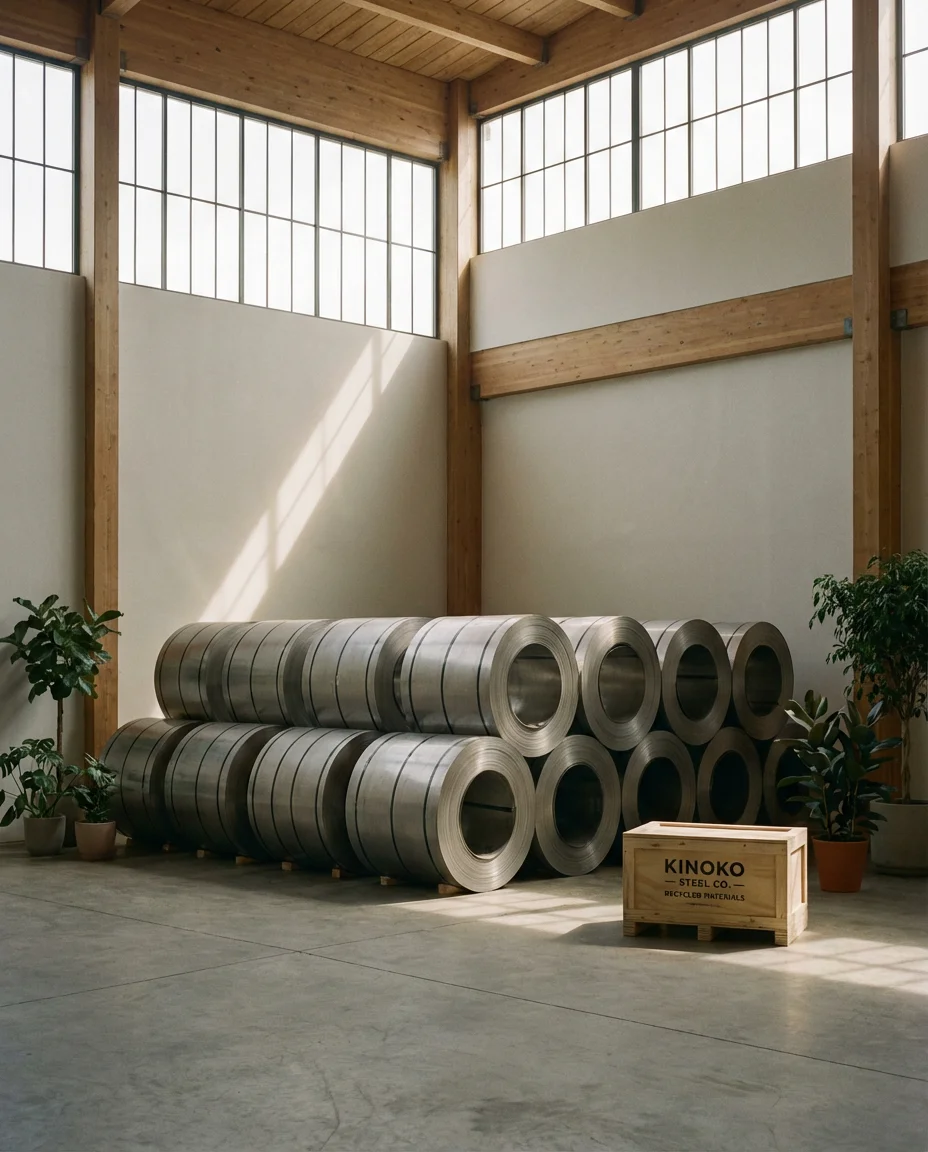
Figure 3: Your Sourcing Action Plan. Follow these steps to audit your supplier before the first container leaves the port.
Final B2B Summary: The "Sanity" Price Point
In 2026, the "Sanity" price for a 20oz double-wall stainless steel tumbler from a reputable China factory (at 3000 units) is between $3.60 and $3.90.
If you are paying more than $4.50, you are being overcharged. If you are paying less than $3.40, you are buying a problem.
The $0.50 gap is not a discount. It is a warning sign. Ignore it at your own peril.
The $0.50 Extraction Cheat Sheet
- SUS 201 Substitution: -$0.25 (Consequence: Rust)
- Manual Tailed Vacuum: -$0.15 (Consequence: Vacuum Failure)
- No Copper Plating: -$0.10 (Consequence: Sweating/Poor Insulation)
- Thin Walls (0.4mm): -$0.05 (Consequence: Dents)
- Cheap Spray Paint: -$0.15 (Consequence: Peeling)
- Recycled Lid Plastic: -$0.10 (Consequence: Cracks/Leaching)