Last updated: August 20, 2026 | Based on 2026 food-contact compliance frameworks (FDA 21 CFR, LFGB, GB 4806.9), CPSC small parts guidance, and migration testing requirements for children’s drinkware
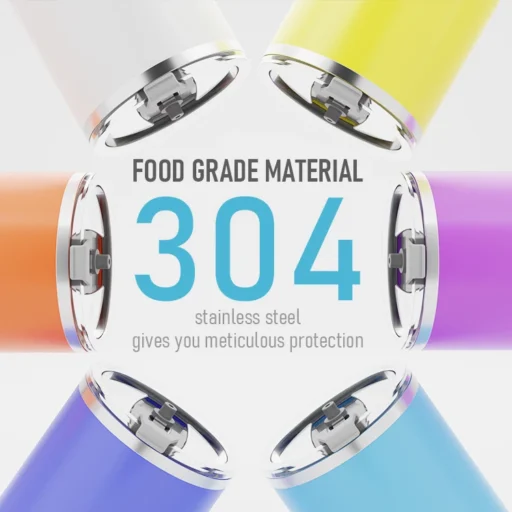
The kids’ water bottle market is a $2.84 billion category growing at 5.28% CAGR through 2034 — and its biggest barrier to entry is compliance, not manufacturing. Importers to the US must satisfy FDA food-contact rules (21 CFR), CPSC small-parts rules (the 31.7 mm small parts test fixture), and increasingly state-level chemical limits. The EU route is stricter: LFGB migration limits are tighter than FDA in several categories, and Regulation (EC) No 1935/2004 plus (EU) 10/2011 apply. China’s GB 4806.9 governs the stainless steel itself. The standards are not interchangeable: a bottle that passes FDA migration testing does not automatically pass LFGB, because the test conditions and limits differ. This guide compares the three frameworks, gives the migration limit table importers must check, lists the five document requirements, and shows why 304 stainless with a verified silicone gasket is the lowest-risk material choice for children’s drinkware.

Kids’ Drinkware Safety: FDA vs LFGB vs GB 4806.9 — What Importers Must Verify Before Ordering
1. Why Is Compliance the #1 Barrier in the Kids’ Drinkware Market?
The kids’ water bottle segment is growing faster than adult drinkware — $2.84 billion in 2026, projected to $4.29 billion by 2034 at 5.28% CAGR. But unlike adult bottles, children’s products carry a second compliance layer: not only food-contact safety, but child-safety rules around small parts, sharp edges, and chemical exposure. A bottle that is perfectly safe for an adult can fail for a three-year-old on choking-hazard grounds alone.
The stakes are concrete. The US Consumer Product Safety Commission (CPSC) has recalled children’s water bottles over choking hazards — including a recall affecting over five million units where small plastic pieces presented a choking risk if swallowed. For an importer, a recall means destroyed inventory, refunded freight, legal liability, and a permanently damaged brand. Compliance is not a paperwork exercise; it is the market’s entry ticket.

2. Which Standards Apply to Which Market?
The three frameworks importers encounter most are not alternatives — they are jurisdiction-specific and non-interchangeable:
| Framework | Market | What it governs |
|---|---|---|
| FDA 21 CFR | United States | Food-contact materials; 21 CFR 177.2600 covers rubber/silicone articles for repeated use; stainless steel grades covered under 21 CFR 175-178 framework as indirect food additives |
| LFGB | Germany / EU reference | German Food and Feed Code; Sections 30-31 on articles intended for food contact; stricter migration limits in several categories than FDA; EU framework Regulation (EC) No 1935/2004 plus (EU) 10/2011 |
| GB 4806.9 | China | Food-contact metal materials and articles; specifies stainless steel grades, migration limits (lead, chromium, nickel, arsenic, etc.), and test conditions |
Source: Food-contact compliance framework comparison, 2026; FDA 21 CFR parts 175-178, LFGB Sections 30-31, GB 4806.9-2023.
The critical fact for sourcing: passing one framework does not mean passing the others. The test conditions (temperature, duration, food simulant) and migration limits differ. A silicone gasket validated to FDA limits may fail LFGB’s more stringent migration testing, because LFGB applies stricter specific migration limits and different test protocols. Buyers who assume “FDA approved = compliant everywhere” make their first compliance error before the PO is signed.
3. What Are the Actual Migration Limits Importers Must Check?
Food-contact compliance rests on migration testing: how much of a material migrates into food simulants under defined conditions. For stainless steel bottles, the metal itself is inherently low-migration — the risks concentrate in coatings, gaskets, and lid components. The key limits to verify, using GB 4806.9 for metals as the reference framework with its specific migration limits (mg/kg):
| Substance | GB 4806.9 SML (mg/kg) | Typical EU reference (mg/kg) | Where it comes from |
|---|---|---|---|
| Lead | 0.05 | 0.002 (EU SML) | Metal alloy impurities; solder in lid assemblies |
| Chromium | 2.0 | 0.25 (EU SML, hexavalent) | Stainless steel alloy |
| Nickel | 0.2 | 0.02 (EU SML) | Stainless steel alloy; most common metal-migration finding |
| Arsenic | 0.04 | — | Raw material impurities |
| Cadmium | 0.01 | 0.002 (EU SML) | Coatings, paints, colored parts |
| Manganese | 0.6 | — | 201-grade steel marker — elevated Mn signals cheap 201 substitution |
Source: GB 4806.9-2023 specific migration limits for metal food-contact materials; EU SML references per Regulation (EU) No 10/2011 Annex I. Values are reference limits; confirm current revisions with an accredited testing lab for the exact destination market.
Two practical notes. First, the manganese figure is a quality signal: elevated manganese migration is a hallmark of 201-grade steel, the cheap substitute that 304-grade buyers must screen for (see our material grade fraud guide). Second, migration testing must be run on the finished product — gasket, lid, coating — not just the steel blank. The lid silicone is where most kids’ bottle failures are found.

4. What Are the Choking Hazard Rules?
For children under 3, CPSC rules under the Children’s Products Safety Act ban small parts that present a choking, aspiration, or ingestion hazard. The test is the small parts test fixture (SPTF): a cylinder with an opening of 1.25 inches (31.7 mm) in diameter and a depth of 2.25 inches (57.1 mm). If a component fits entirely within the cylinder without being compressed, it is a small part — and for the under-3 age group, that is a ban, not a warning.
For kids’ drinkware, the classic failure points are:
- Decorative caps and toppers on lids — novelty shapes (fruits, animals) that fit the SPTF and detach under force
- Straw tips and mouthpiece valves — small, soft, and detachable; must be tested for retention force
- Carabiner clips and accessory loops — small parts that detach from the bottle body
- Painted-on graphics that peel — flaking paint is both a small-parts and a chemical-exposure issue
Testing requirements: components must be subjected to torque and tension tests simulating use and abuse by a child (the “use and abuse” testing protocol under 16 CFR 1500.51-53 for toys, applied by analogy to drinkware accessories). The test pulls and twists parts to verify they do not detach into small parts. A bottle body alone is not a small part; the accessories around it usually are.
4.1 How Do You Design Around the Small Parts Rule?
Designing around the SPTF is a specification exercise, not a guess. Three engineering rules keep kids’ bottles compliant:
- Over-size or over-attach: any decorative component must either exceed the 31.7 mm fixture dimension in every orientation or be permanently attached with retention force verified by torque (typically 0.5 Nm) and tension (typically 70 N) testing per use-and-abuse protocols.
- Eliminate detachable novelties: lid toppers shaped like animals or fruit are the highest-risk accessory. If the brand demands them, engineer them as a single molded piece with the lid body rather than a snap-on part.
- Test the straw system: straw mouthpieces and valves are soft small parts; require retention-force testing and a documented design that prevents full withdrawal of the straw from the lid.
These rules apply by analogy from toy safety (16 CFR 1500.50-53), and reputable third-party labs run them routinely for drinkware. A design that passes the SPTF and use-and-abuse testing converts the choking-hazard question from a liability into a documented specification.

5. Why Is Stainless Steel the Lowest-Risk Material Choice?
For kids’ drinkware, food-grade stainless steel is the lowest-risk material on three fronts:
- No BPA, no phthalates: the metal itself contains neither. The risk migrates to the gasket and lid — which is why a verified food-grade silicone gasket is the second half of the safety equation.
- Low migration: 304 (18/8) stainless has inherently low metal migration under food-contact testing; 316L is even lower but costs ~22% more in coil price, rarely justified for water bottles.
- Durable and cleanable: no coatings to chip, no plastic to crack — the failure modes that create both safety and hygiene issues in plastic bottles.
The 201-series caution applies with extra force in kids’ products: 201 steel’s elevated manganese content is both a migration concern and a quality red flag. Verify the grade with PMI (positive material identification) testing and a Mill Test Certificate before the container ships — the test is cheap relative to a recall.
6. What About BPA-Free Claims on Kids’ Bottles?
“BPA-free” is the most overused claim in children’s drinkware — and the least informative. Stainless steel bottles are BPA-free by construction; the metal has never contained BPA. The claim matters only for the components that could contain it: plastic lids, silicone gaskets, and interior coatings. Three verification steps:
- Ask which components are BPA-free, not the bottle: the claim must cover lid plastic, gasket, and any lining, not just the body.
- Request the test report: a BPA-free claim without a lab report is marketing. BPA and BPS testing is routine and inexpensive (typically $80-200 per material).
- Watch the BPA-free substitution trap: some BPA-free plastics replace BPA with BPS or BPF, which have similar endocrine-disruption concerns. The safest answer for kids’ drinkware is to minimize plastic entirely — which is exactly what a stainless body with a food-grade silicone gasket achieves.
7. What Are the Five Documents You Must Demand?
Hand the factory a document checklist, not a verbal promise. For children’s drinkware, the minimum set:
- Mill Test Certificate (MTC) for the steel grade, confirming 304/316L composition — the material identity document
- Migration test report from an ISO 17025 accredited lab, dated within 12 months, covering the finished product (body, gasket, lid) against the destination market’s limits
- Declaration of Compliance (DoC) from the factory naming materials, standards, and test references — the contractual safety statement
- Small-parts test report for components, referencing the CPSC SPTF method and use-and-abuse testing where applicable
- Certificate of conformity for the destination market’s chemical rules (e.g., CPSIA lead and phthalate limits for the US; REACH annex XVII for the EU)
For EU-bound programs, LFGB testing via a German-accredited lab (e.g., TÜV, SGS) is the market expectation — buyers routinely ask for the LFGB certificate specifically, and the stricter limits make it the strongest single compliance signal even for non-EU sales.
8. How Much Does Compliance Testing Cost?
Compliance testing is a fixed cost that scales with product variants, not quantity. 2026 working ranges from accredited labs:
| Test | Typical cost (USD) | When required |
|---|---|---|
| Metal migration (per material) | $250-600 | Every new material or supplier change |
| Silicone/plastic migration (per material) | $350-800 | Gaskets and lid components |
| Small parts / mechanical safety | $150-400 | Any detachable component |
| Full LFGB food-contact package | $800-2,500 | EU market entry |
| PMI steel grade verification | $30-80 | Every shipment (in-line) |
Source: 2026 accredited laboratory testing price ranges for food-contact and child-safety testing (TÜV, SGS, Bureau Veritas, and China-accredited labs). Prices vary by lab, market, and turnaround.
The economic logic is unambiguous: full compliance testing for a new kids’ product is typically $1,500-4,000 one-time per variant, while a single recall event destroys the product line and the brand. Testing is the cheapest insurance in the category. For an OEM program, review our OEM manufacturing capabilities and wholesale pricing, or contact our sourcing team for a compliance-first spec sheet.
9. What Should Your PO Specify for a Kids’ Bottle Program?
Beyond the standard drinkware spec (material grade, construction, lid system, decoration), a kids’ bottle PO adds a compliance layer:
- Material: food-grade 304 stainless, verified by MTC + PMI; food-grade silicone gasket 50-60 Shore A with material declaration
- Migration: finished-product migration testing per destination framework (FDA 21 CFR / LFGB / GB 4806.9) with named limits and test conditions in the spec
- Small parts: all detachable components to pass SPTF and use-and-abuse torque/tension testing
- Chemicals: CPSIA lead/phthalate limits for the US; REACH annex XVII for the EU; applicable limits for the destination
- Documents: the five-document set (MTC, migration report, DoC, small-parts report, certificate of conformity) delivered with the first sample and with every shipment
- Change control: any material, gasket, lid, or coating change requires re-testing and buyer approval before production
A kids’ bottle PO without a change-control clause is a standing invitation to a silent substitution — a cheaper gasket, a different silicone source, a swapped coating — that invalidates every certificate you hold. Lock the change-control clause in writing.
10. Frequently Asked Questions
Is FDA approval enough for selling kids’ water bottles in Europe?
No. FDA and LFGB are separate frameworks with different test conditions and migration limits. FDA 21 CFR approval covers US market rules; the EU requires Regulation (EC) No 1935/2004 compliance with (EU) 10/2011 migration testing, and Germany’s LFGB applies stricter limits in several categories. Test against the destination market’s framework — passing one does not guarantee the other.
What is the safest material for children’s water bottles?
Food-grade 304 (18/8) stainless steel with a verified food-grade silicone gasket is the lowest-risk combination: no BPA, no phthalates, low metal migration, no coatings to chip, and durable construction. Avoid 201-grade steel (elevated manganese) and unverified plastics. 316L is even lower-migration but costs ~22% more and is rarely needed for bottles.
What is the small parts test fixture and why does it matter?
The SPTF is a CPSC-defined cylinder with a 31.7 mm (1.25 in) diameter opening and 57.1 mm (2.25 in) depth. Any component that fits entirely inside is a small part, and for children under 3, small parts that present a choking hazard are banned. Decorative lid toppers, straw tips, and accessory clips are the common drinkware failure points.
How do I verify a BPA-free claim?
Ask which components are BPA-free (lid plastic, gasket, lining — not just the body), request the lab test report (BPA/BPS testing is $80-200 per material), and prefer designs that minimize plastic entirely. Stainless steel bottles are BPA-free by construction; the claim only matters for the non-metal components.
What migration limits should I check for stainless steel bottles?
Per GB 4806.9 reference limits: lead 0.05 mg/kg, chromium 2.0, nickel 0.2, arsenic 0.04, cadmium 0.01, manganese 0.6. EU SMLs are stricter for several metals (e.g., lead 0.002, chromium 0.25 hexavalent, nickel 0.02). Elevated manganese migration signals cheap 201-grade steel substitution.
How much does kids’ drinkware compliance testing cost?
Typical 2026 lab pricing: metal migration $250-600, silicone/plastic migration $350-800, small-parts testing $150-400, a full LFGB package $800-2,500, and in-line PMI verification $30-80 per shipment. One-time testing for a new variant typically totals $1,500-4,000 — far less than a single recall event.
Which documents should I demand from the factory?
Five documents: (1) Mill Test Certificate for the steel grade, (2) migration test report from an ISO 17025 accredited lab on the finished product, (3) Declaration of Compliance naming materials and standards, (4) small-parts test report per CPSC SPTF/use-and-abuse methods, and (5) certificate of conformity for destination-market chemical rules (CPSIA/REACH). Add a change-control clause so any material change requires re-testing.
Get a Quote for Your Custom Project
Tell us your requirements — we will respond within 12 hours.