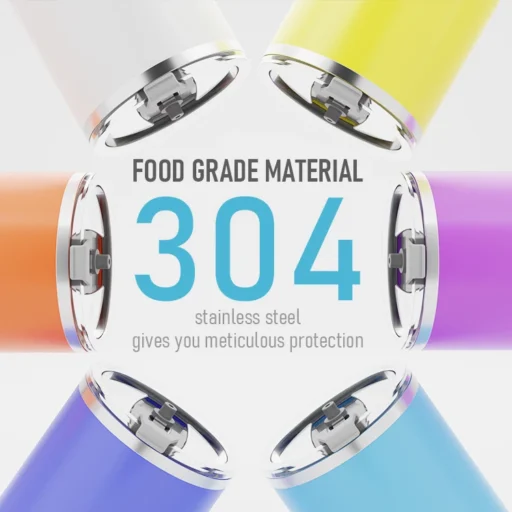
Many tumbler brands use sustainability language, but buyers and end customers increasingly expect more than broad green claims. A premium stainless steel tumbler line becomes more credible when the product story is built on durability, repeat use, material quality, and sourcing consistency.
For wholesalers and brand owners, the strongest sustainability position is not abstract. It is a practical story supported by product quality, long-term usability, and commercial logic.
| Area | Weak Positioning | Stronger Positioning |
|---|---|---|
| Sustainability Story | Generic eco wording | Durability and repeat-use value |
| Premium Logic | Packaging-led only | Material, finish, and product experience |
| Buyer Confidence | Depends on marketing style | Depends on product credibility |
| Commercial Strength | Short-term appeal | Repeat-order potential and clearer positioning |
Premium perception comes from a combination of finish quality, usability, brand presentation, packaging, and the feeling that the product will remain useful over time. Buyers should think beyond appearance alone.
A tumbler only supports a stronger sustainability story when it is durable enough to be used repeatedly, reliable enough to avoid early replacement, and positioned honestly in the market. Otherwise the message becomes weaker than the product.
Buyers should compare material quality, finish consistency, durability expectations, branding method, and whether the sourcing strategy can support repeatable output. Stronger sustainability positioning requires stronger operational consistency.
Yes, but only when the product quality supports long-term use and when the brand story stays realistic. A weak tumbler with a strong green slogan usually creates more skepticism than trust.
Details such as powder coating quality, lid performance, packaging, logo method, and tactile finish all influence whether the product feels credible as a premium reusable item.
For broader food-contact material context, buyers can review the FDA overview of food-contact substances. Buyers serving European markets may also review the European Commission guidance on food contact materials.
No. Packaging can support positioning, but the product itself must justify the claim.
Yes, if the product is durable, usable, and supported by credible sourcing and quality control.
Using broad environmental language without product quality and long-term use value to support it.
If you want to build a stronger premium tumbler line, focus on product credibility first and sustainability language second. Learn more about our OEM & ODM services, read more strategy articles in our blog, or contact us to discuss your product positioning.