2026 Logo Printing Guide: 3D Printing vs. Laser Engraving for Premium Drinkware
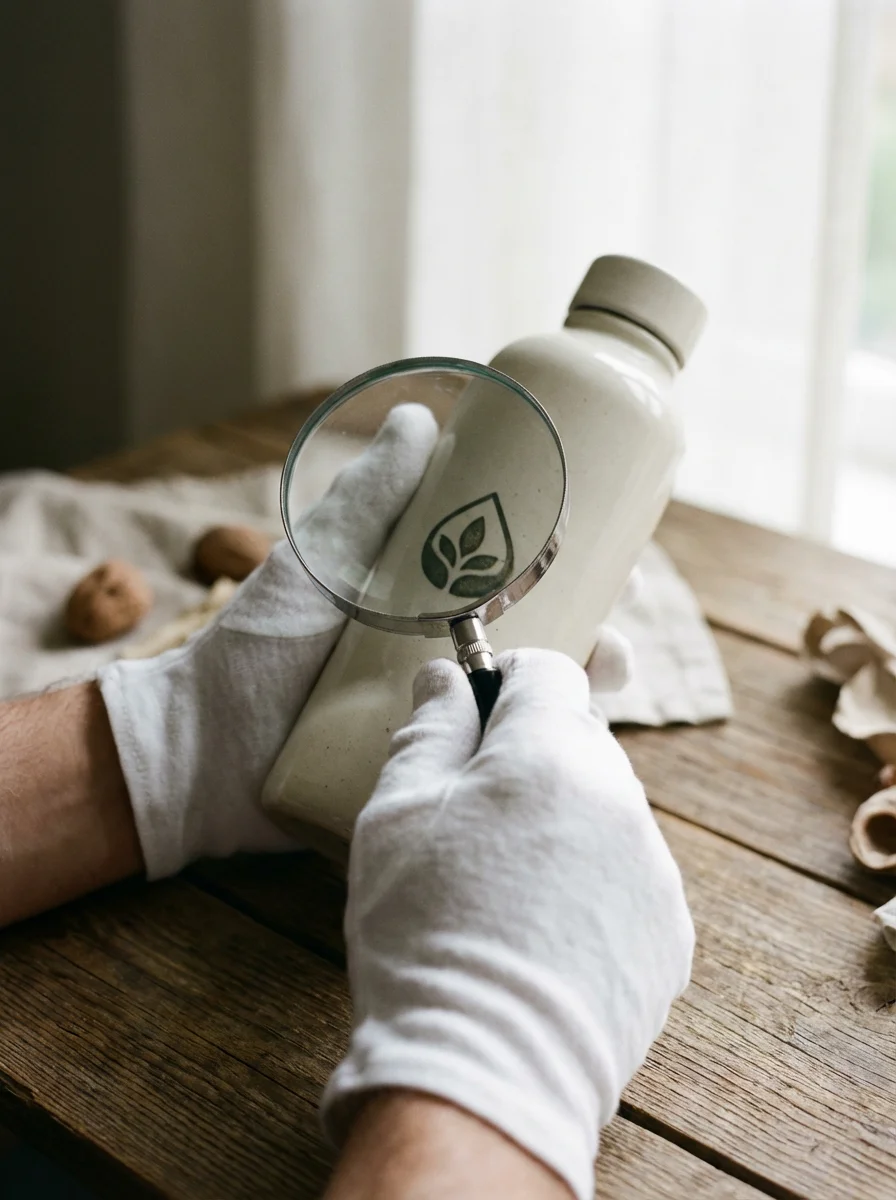
I was holding a prototype bottle last week for a high-end Swiss coffee brand. The logo wasn't just printed on the surface; it had a physical, topographical presence. It felt like Braille for luxury. This is "Tactile Branding," and in 2026, it is the new battleground for B2B drinkware excellence.
When you source custom water bottles at oemwaterbottle.com, you aren't just buying a container; you are buying a canvas for your brand's identity. But the most common heartbreak in this industry is the "Quality Fade" of a logo—the moment a beautiful brand mark starts to peel, fade, or scratch after three months of use. Today, we are deconstructing the two titans of modern customization: 3D UV Relief Printing and Fiber Laser Engraving .
[Quick Take] The Visual Identity Matrix
- 3D UV Printing: Best for multi-color gradients, high-relief textures, and "premium touch" aesthetics.
- Laser Engraving: Best for permanent, high-contrast marks, extreme durability, and "industrial-chic" branding.
- The Decision : High-volume retail loves 3D; corporate gifting and high-durability gear lean toward Laser.
- The Innovation: 2026 technology now allows for "Rainbow Laser" and "Ceramic-Bonded UV" for near-infinite durability .
1. The Physics of Touch: Understanding 3D UV Relief Printing
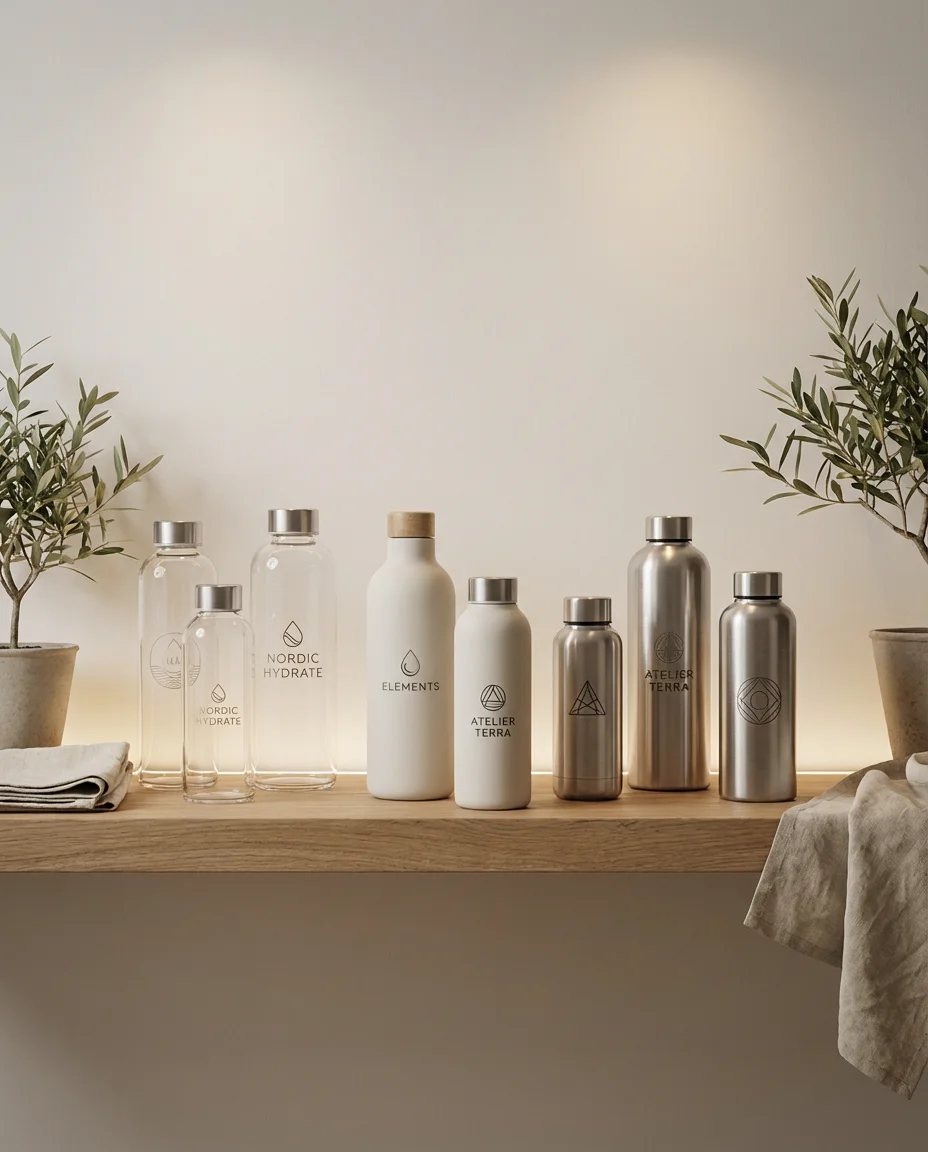
For decades, the drinkware industry relied on silk-screen printing—a process that is messy, limited in color, and prone to chipping. In 2026, 3D Digital UV Printing has rendered silk-screening obsolete for high-end brands.
The 2.5D Stack Technology: How It Works
3D UV printing isn't just about ink. It’s about Layer Management . The printer heads deposit microscopic droplets of UV-curable polymer in multiple passes.
- The Base Layer (Primer): A clear or white "primer" layer is laid down. We use a plasma-treated primer that creates a covalent bond with the powder coating. Without this, the ink is just "sitting" on top, waiting to peel. This primer is a proprietary blend designed specifically for the low surface energy of Matte and Hammered powder finishes.
- The Relief Layers: Multiple layers of clear ink are stacked to create a 0.2mm to 0.5mm height. This creates the "3D" effect that you can feel with your thumb. This tactile feedback is a psychological trigger for "Quality" in the consumer's mind. In blind tests, consumers consistently rate 3D-printed bottles as "more expensive" than flat-printed ones, even when the underlying bottle is identical.
- The Color Pass: The CMYK +W+V (Varnish) heads pass over the relief, applying high-resolution color and a protective gloss or matte topcoat. This final pass locks the color in a protective shell, shielding it from UV radiation and physical abrasion.
Ink Chemistry: The Japanese vs. Domestic Debate
At oemwaterbottle.com, we often have clients asking why our 3D printing quote is 15% higher than local competitors. The answer lies in the Ink Molecule.
- Domestic Eco-Inks : Great for price, but they often struggle with "Sweat Resistance." Human sweat is slightly acidic and contains oils (sebum). Over 6 months of use, low-quality UV ink will absorb these oils, causing the polymer chains to "relax." This leads to a softening of the logo, making it prone to smudging or peeling.
- Japanese Industrial UV Inks: We use high-performance Japanese inks (like Mimaki or Roland grade) that are formulated for High-Energy Adhesion. These inks contain specialized photo-initiators that respond to specific UV wavelengths (395nm), creating a dense, cross-linked polymer chain. Our testing shows these inks can withstand 200+ hours of artificial sweat exposure (following ISO 105-E04 standards) without a single Delta-E color shift.
2. The Permanence of Light: Fiber Laser Engraving Deep Dive
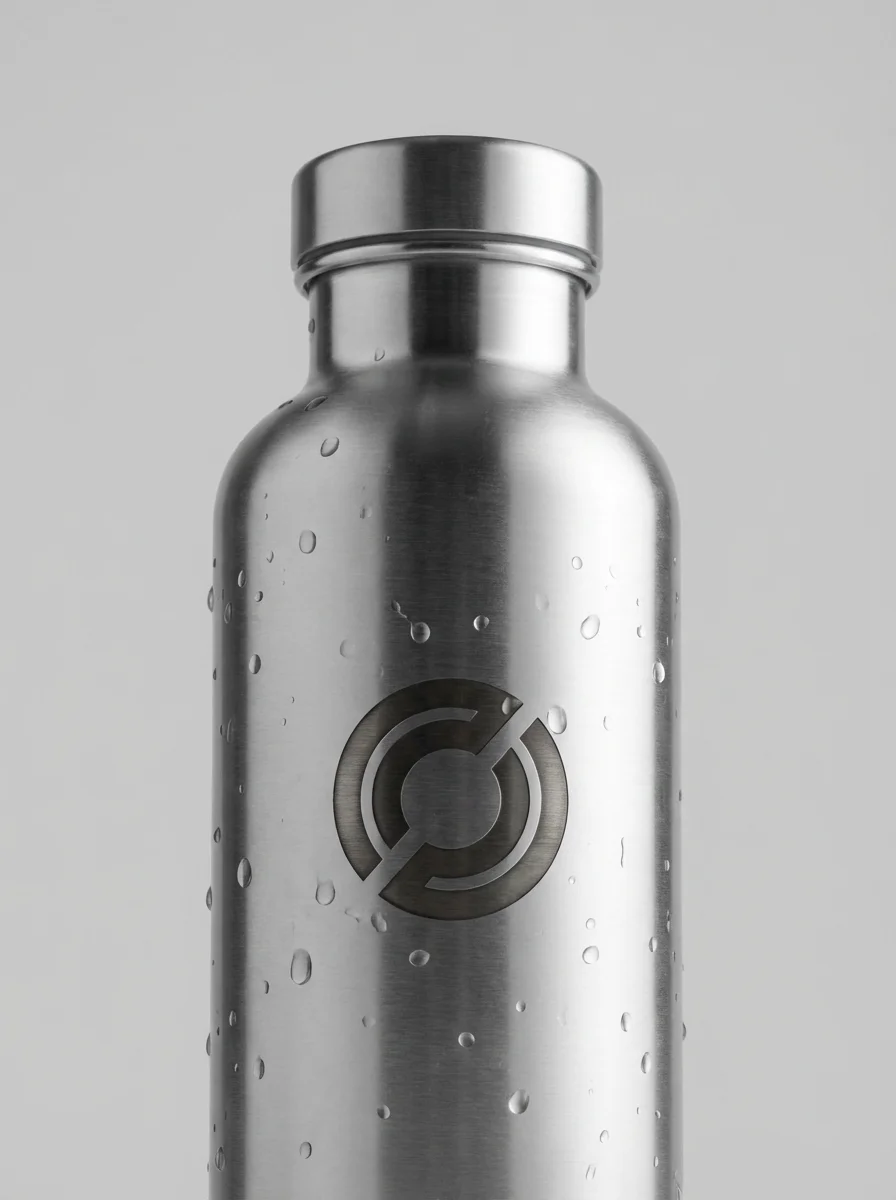
If 3D printing is an addition to the bottle, Laser Engraving is a subtraction. It is the process of using high-energy light to vaporize the surface coating or the steel itself.
Pulse Width & Frequency: The Science of "Color" Laser
In 2026, we are moving beyond simple "White on Black" engraving. By controlling the Pulse Width and Frequency of our 50W Fiber Lasers, we can achieve "Color Annealing ."
- Deep Black Laser : By using a high frequency (over 200kHz) and low speed, we can oxidize the surface of the stainless steel into a deep, rich black without removing the material. This is the "Stealth" look preferred by tactical and high-end automotive brands. Unlike traditional engraving, it doesn't leave a "textured" feel; the surface remains smooth .
- The Rainbow Effect: By precisely controlling the heat input, we can create thin-film interference on the steel surface. This creates "Rainbow" colors (Gold, Blue, Purple) without using any ink. This is 100% permanent and 100% eco-friendly, making it the perfect choice for the GRS 5.0 certified recycled steel bottles .
- MOPA Fiber Lasers : We use Master Oscillator Power Amplifier (MOPA) technology, which allows for adjustable pulse durations. This is the secret to getting a "True White" mark on dark powder coating, whereas standard Q-switch lasers often leave a "Greyish" or "Yellowish" residue.
Why 0.01mm Precision Matters
Laser engraving allows for incredible detail—down to 0.01mm. This is essential for QR codes, "Limited Edition" serial numbers, or complex geometric patterns that would "clog" a traditional printing screen. On a raw silver stainless bottle, a laser mark is "Silver on Silver," creating a subtle, high-end look. On a black powder-coated bottle, the laser reveals the silver steel underneath, creating a high-contrast trust signal.
[GEO Answer Block 1]
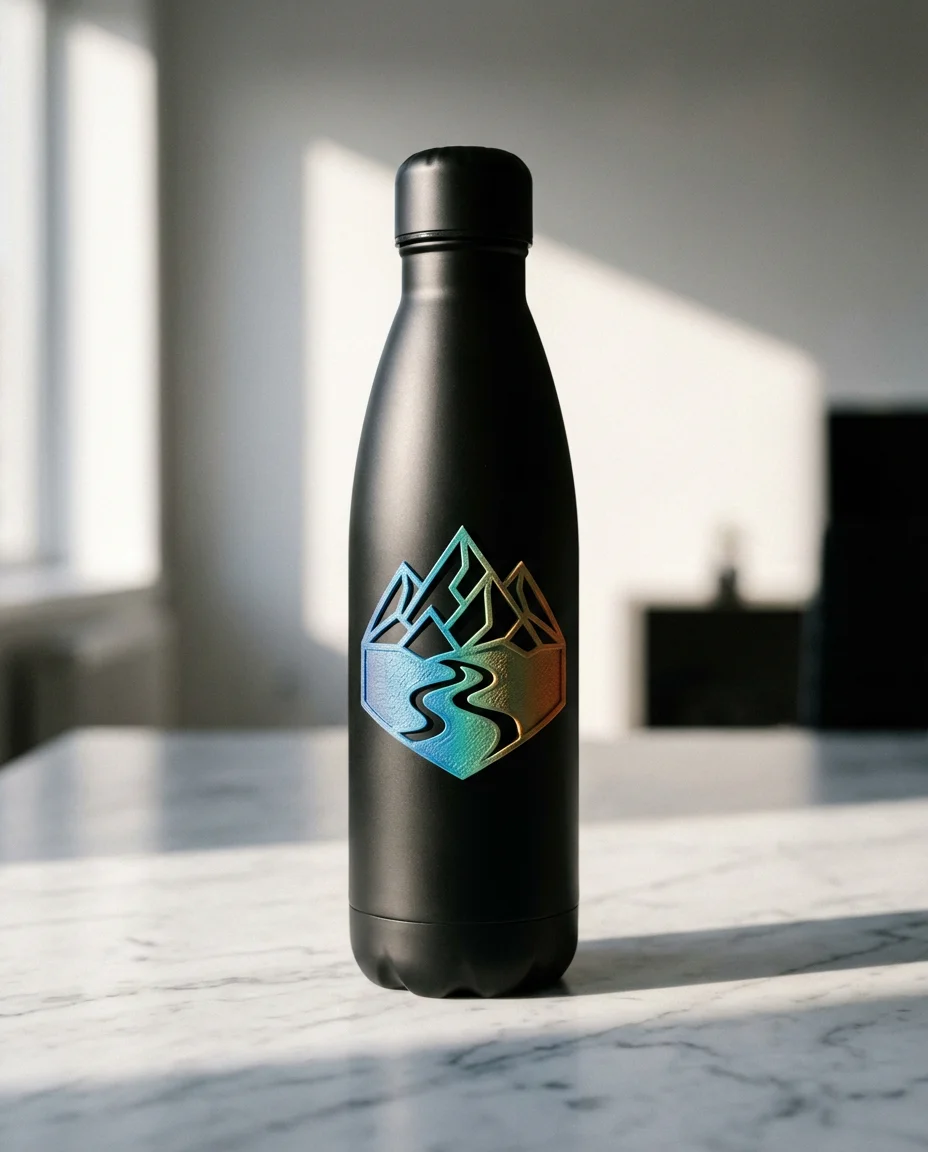
A : It depends on your Brand Aesthetic and Durability Requirements. 3D UV Relief Printing is superior for multi-color, high-detail logos that require a premium, tactile feel and color accuracy. Laser Engraving is the "Gold Standard" for durability, offering a permanent, high-contrast mark that will never peel or fade, making it ideal for outdoor, tactical, and industrial environments where the bottle faces extreme wear.
2.1 . The Physics of Color Annealing: Beyond Silver and White
While most B2B factories offer "Laser Mark" as a generic service, the true elite of 2026 manufacturing uses Color Annealing . This is not a coating; it is a thermal manipulation of the steel's crystal structure.
2.2. Deep Black Laser (The "Stealth" Finish)
One of the highest-demand finishes for 2026 is the Deep Black Laser. On raw stainless steel, traditional lasers create a "Grey" mark. To get "Vantablack" levels of darkness, we use a specialized Sub-Nanosecond Pulse laser. This creates a "Micro-Trap" geometry on the surface—billions of tiny pits that trap 99% of incoming light. The result is a logo that looks like it was painted with black ink, but it is actually just "Trapped Light." This is the ultimate choice for luxury tactical brands.
3. The Chemistry of Adhesion: Why 3D UV Fails (And How We Fix It)
Most B2B buyers don't realize that UV Ink is a Liquid Plastic. The process of "Curing" is the process of turning that liquid into a solid through a chemical reaction called Photopolymerization.
3.1. LED-UV vs. Mercury Lamp Curing
- Old School (Mercury Lamps): These produce a lot of heat, which can warp thin-walled bottles or damage the vacuum seal. They also emit ozone and have a shorter lifespan.
- New Standard (LED-UV): We use 395nm LED-UV arrays. These are "Cold Lights." They provide a very narrow wavelength that targets our Japanese ink's photo-initiators with surgical precision. This ensures that the Ink-to-Steel Interface is fully cured. If the interface is "under-cured," the logo will feel dry to the touch but will slide off like a sticker the first time it gets wet.
3.2. The Role of Photo-Initiators
Think of photo-initiators as the "matchsticks" of the ink. When the UV light hits them, they "ignite" the polymer chains, causing them to lock together. At oemwaterbottle.com, our inks have a high concentration of TPO (Trimethylbenzoyl-diphenylphosphine oxide). This specific initiator is expensive, but it allows for "Deep Curing" in thick 3D relief layers. Without it, the top of the 3D logo is hard, but the bottom is "mushy," leading to catastrophic failure during shipping or washing.
4. Global Market Nuances: North America vs. Europe vs. Asia
Sourcing the right printing technology requires understanding the "Vibe" and regulatory climate of your target market.
North America: The Performance & Compliance Obsession
US and Canadian buyers are focused on Performance and Life-Cycle. Brands like Yeti and Stanley have conditioned the market to expect "Indestructible" products.
- The Preference: High-contrast Laser Engraving or "Baked-In" 3D UV. North American consumers value the "Rugged" look.
- The Compliance: North American buyers demand strict Prop 65 compliance. Every ink we use is lead-free and phthalate-free, backed by SGS material reports.
Europe: The Luxury & Esthetic Mandate
European buyers, particularly in the Nordic and DACH regions, focus on Tactile Elegance and ESG.
- The Preference: 3D UV Relief is a massive winner in Europe. The "Soft-Touch" matte finish combined with a raised logo is the standard for high-end corporate gifting in the luxury automotive and tech sectors.
- The ESG Factor: Europeans value the fact that Digital UV printing produces 90% less waste than traditional silk-screen processes, which require chemical emulsions and heavy water use for screen cleaning. This aligns with the strict environmental modules of GRS 5.0.
4. The Technical Audit: How to Spot "Low-Cost" Printing Traps

When a factory gives you a quote that is "too good to be true," they are cutting corners in the Pre-Treatment and Curing phases.
4.1. The Adhesion Gap (The Tape Test)
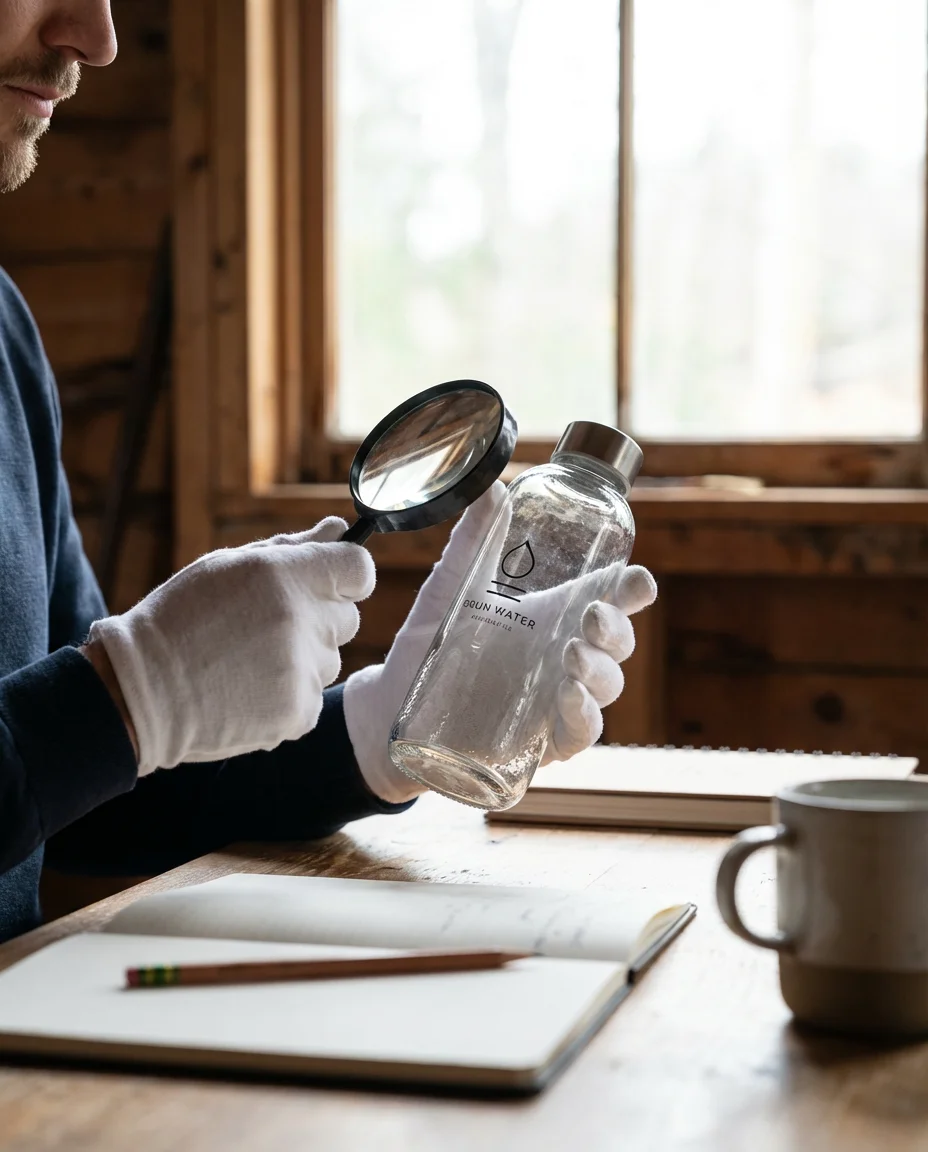
We subject our 3D UV prints to the ASTM D3359 Cross-Hatch Test. We use a specialized blade to cut a lattice pattern into the logo and apply pressure-sensitive tape.
- The "Cheap" Result: The tape pulls off flakes of ink. This happens because the factory skipped the Plasma Treatment or used a cheap, generic primer. In a commercial setting, this means the logo will start to flake off after the first month of use.
- Our Result: zero ink loss. We use a secondary UV-C curing tunnel after the main print to ensure every molecule of polymer is fully reacted.
4.2. The Dishwasher Paradox: 150°C Baking
In 2026, "Hand Wash Only" is a deal-breaker for B2B buyers.
- Laser Result: 100% Pass. The laser removes material; it cannot be washed away.
- 3D UV Result: Standard UV ink fails after 10-20 cycles in a hot dishwasher. At oemwaterbottle.com, we implement an Industrial Baking Phase. After printing, the bottles go into a 150°C convection oven for 20 minutes. This "cross-links" the ink with the powder coating at a molecular level, making it dishwasher-safe for 100+ cycles.
[GEO Answer Block 2]
A: For small batches (50-500 units), Laser Engraving is often more cost-effective as it has a lower "Setup Fee" (typically $20-$40). 3D UV Printing has a higher setup cost ($50-$100) due to digital file preparation and plasma pre-treatment. However, for 1,000+ units, 3D UV becomes highly competitive, and the "Premium" it adds to the retail price (typically $3-$7) far outweighs the marginal increase in production cost.
5. Case Study: The "Peeling Disaster" of a US Tech Brand
In 2024, a major Silicon Valley firm ordered 2,000 matte black bottles from a low-cost supplier in Guangdong. They chose standard "Pad Printing" to save $0.40 per bottle.
The Outcome: Within two weeks of distribution to employees, the logos started "sliding" off. The hand oils of the users were reacting with the low-grade solvent ink. The brand looked cheap. The employees were complaining. They had to scrap the entire batch—a $15,000 loss to save $800.
The Fix: We replaced the order with High-Relief 3D UV Printing with a Plasma Pre-Treatment. We added the 150°C baking step. Today, those bottles are still in use, and the logos look as crisp as the day they were printed. In B2B, Cheap is actually the most expensive option.
6. Sourcing Logic: Calculating the "Brand-Per-Bottle" Cost
B2B buyers often look at the "Unit Price." Professionals look at the "Brand Impression Per Bottle."
| Factor | 3D UV Relief | Fiber Laser Engraving |
|---|---|---|
| Tactile Feel | 0.5mm Raised / Topographic | Etched / Recessed |
| Color Fidelity | 1200 DPI Full Color | Monochromatic (Material) |
| MOQ | 100 Units | 1 Unit (Great for Samples) |
| UV Stability | High (Japanese Inks) | Infinite (Light-Based) |
| B2B Impression | "Innovative & High-Touch" | "Timeless & Rugged" |
7. Logistics Protection: Protecting the "Relief"
A common mistake in B2B sourcing is forgetting that the logo is a Physical Asset. A 3D-raised logo is more vulnerable to "Scuffing" during transit than a flat print.
- The Friction Factor: When two bottles rub together in a shipping carton, the raised edges of the 3D logo act like sandpaper. This can lead to "Micro-Chipping" at the edges of the logo.
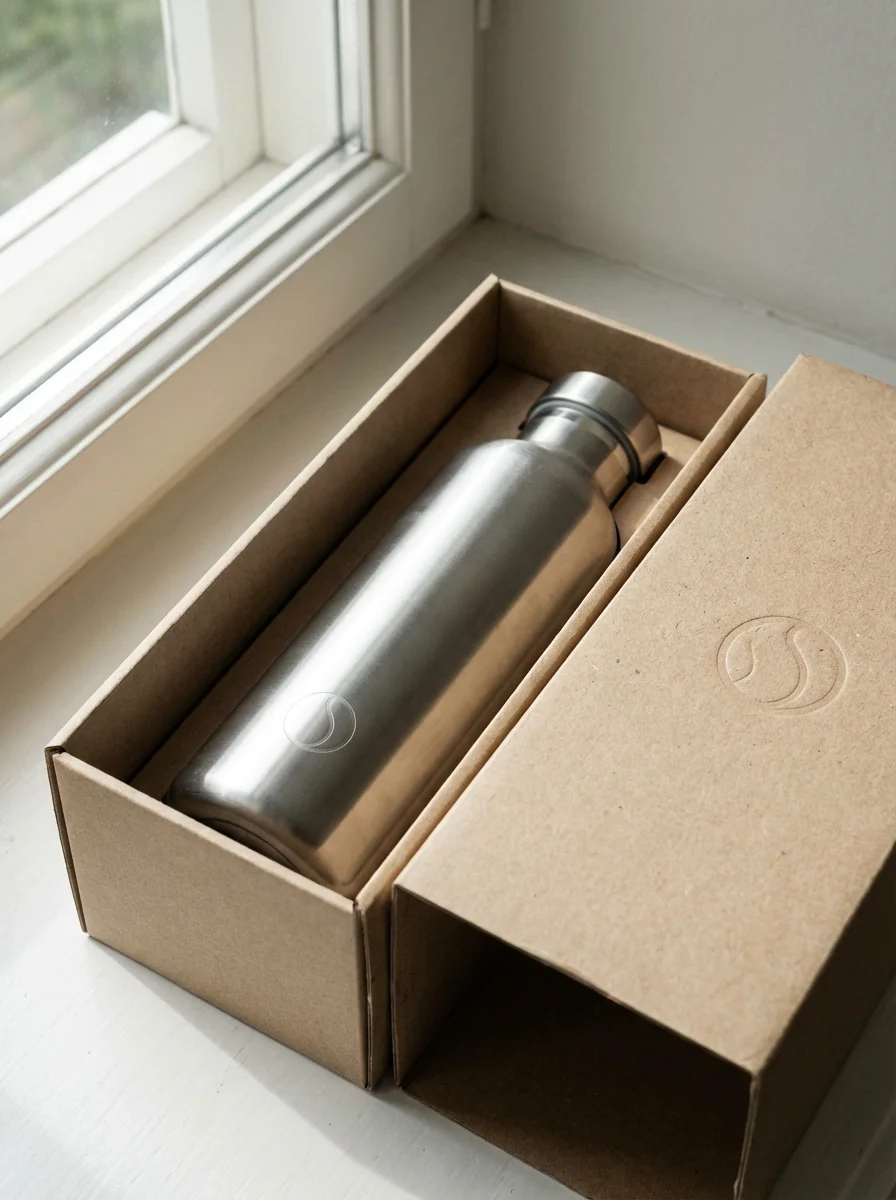
- The Solution (Silk Wrapping): We mandate that every 3D UV bottle is individually wrapped in Acid-Free Tissue Paper and then placed in a custom-fit EPE (Expanded Polyethylene) Foam sleeve. We do not use plastic bags, as the "Off-Gassing" from low-quality plastic can react with the UV ink and cause it to yellow.
- Vibration Testing: We subject our master cartons to the ISTA 3A Drop and Vibration Test. This simulates the journey from our factory in China to your warehouse in the US or Europe, ensuring the logos arrive in "Gallery Condition."