The Naked Truth About Stainberess Steel Cup Pricing: That "Steal" of a Deal? It's Probably Going to Bankrupt You.
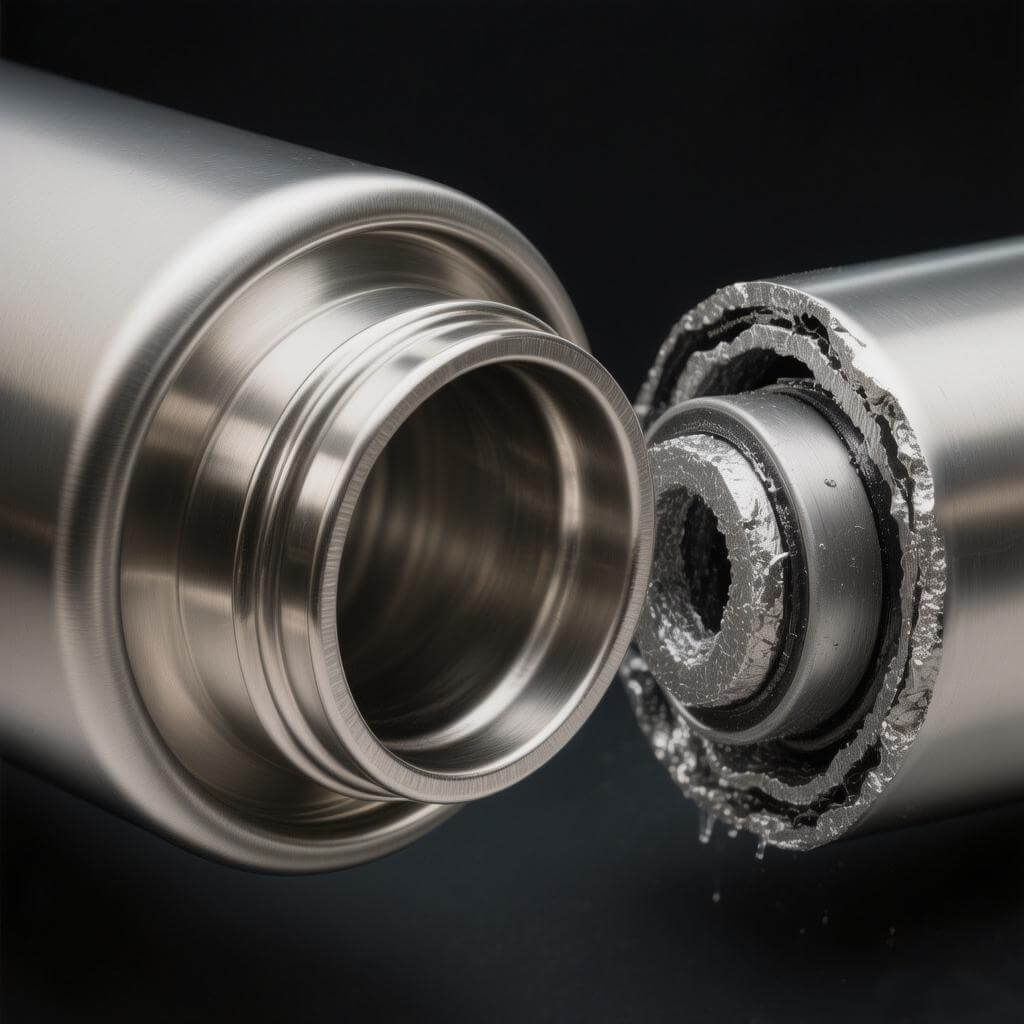
Let me tell you a story I’m almost tired of repeating. About six months ago, I got a panicked call from a founder in Colorado. His voice was strained. “John,” he said, “my entire launch is falling apart. The custom mugs are leaking in people’s cars. The reviews are brutal.”
Six months before that call, he’d been ecstatic. He’d found a stainless steel water bottle supplier quoting him a price 30% lower than mine. He went with them, of course. Who wouldn’t? Now, he was staring down thousands in refunds, a warehouse full of useless inventory, and a brand reputation that was circling the drain.
This isn’t an outlier. I see it every single week. And the lesson is always the same: the price tag is the smallest part of what a product actually costs you.
So, Where Does Your Money Actually Go? Let's Open the Hood.
You see two quotes for a stainless steel drink bottle: $4.50 and $8.75. They look the same in the product photo. The difference is in the stuff you can’t see.
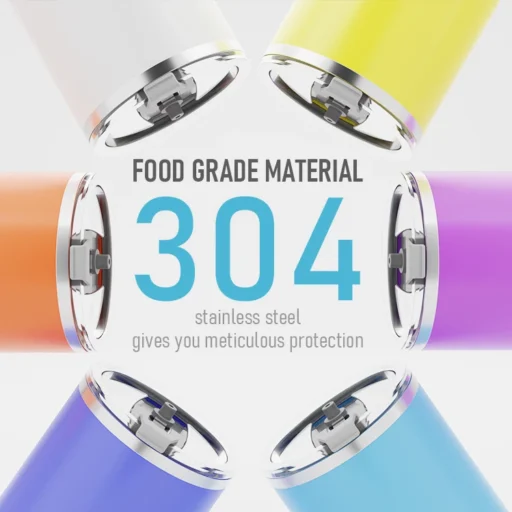
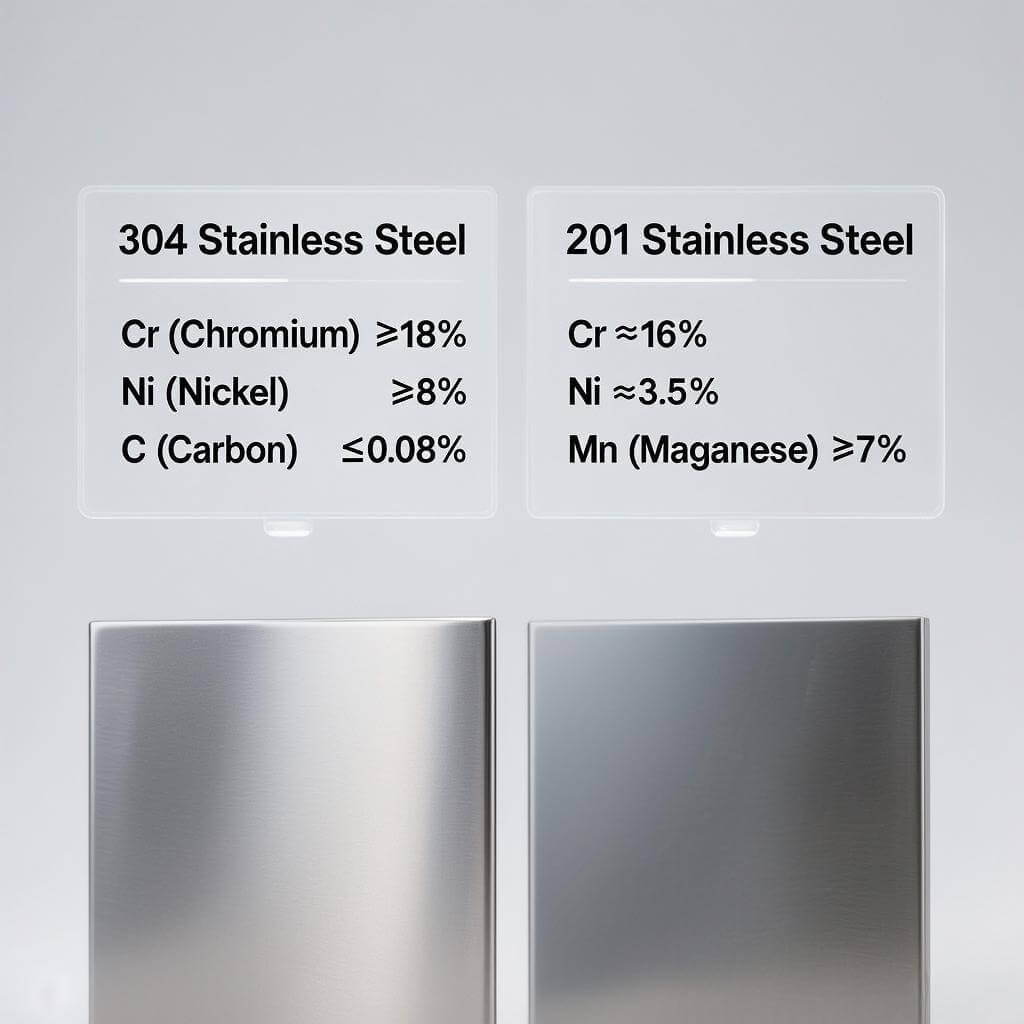
That cheaper bottle? It’s likely using 201-grade stainless steel instead of food-grade 304. That’s an instant 40% saving on materials for them—and a future headache of rust and metallic taste for you. The vacuum insulation? Probably thinner, with a cheaper copper plating process. The plastic lid and straw? Often made from non-food-safe recycled materials that can crack and leach.
I had a client in the fitness space learn this the hard way with a protein shaker bottle. They went with the low-cost option. Three months in, the lids started splitting at the threads during normal use. The cost to replace the entire batch, plus the flood of negative social media posts, made their initial “bargain” about three times more expensive than our original quote. The math is simple, but you have to be willing to do it.
The Factory Floor Doesn't Lie: A Tale of Two Factories
Last year, I toured a factory that was quoting insanely low prices. The reason became clear within ten minutes. Their “quality control” was one overworked guy glancing at every tenth bottle. No pressure tests. No thermal imaging. They were playing roulette with their clients’ money.
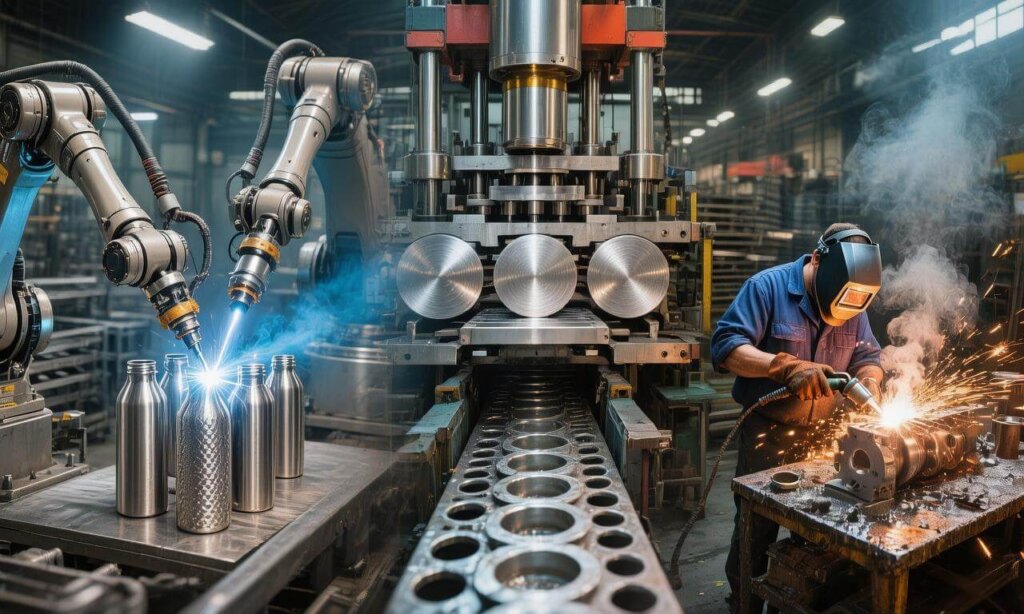
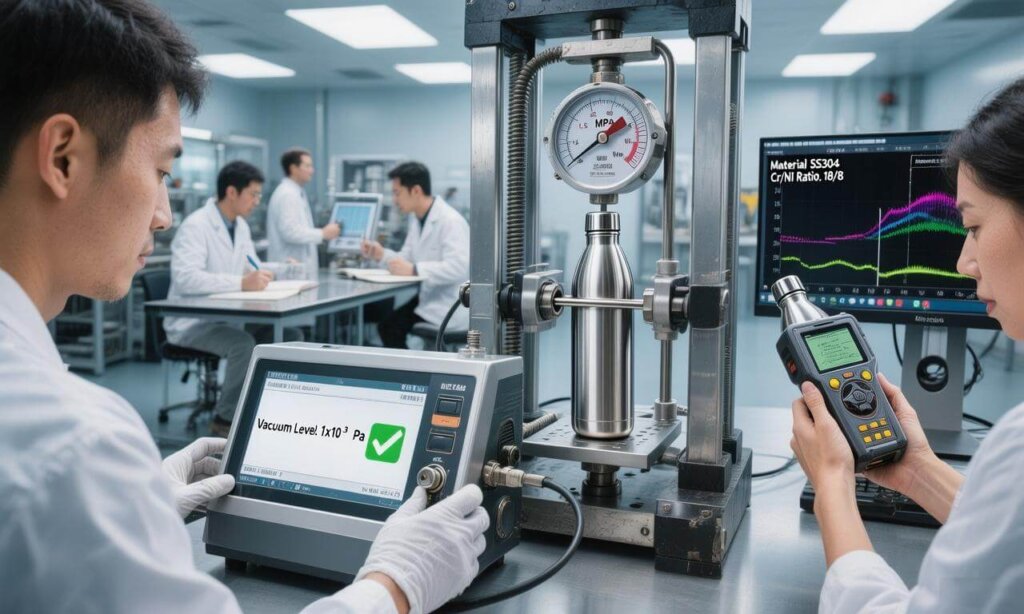
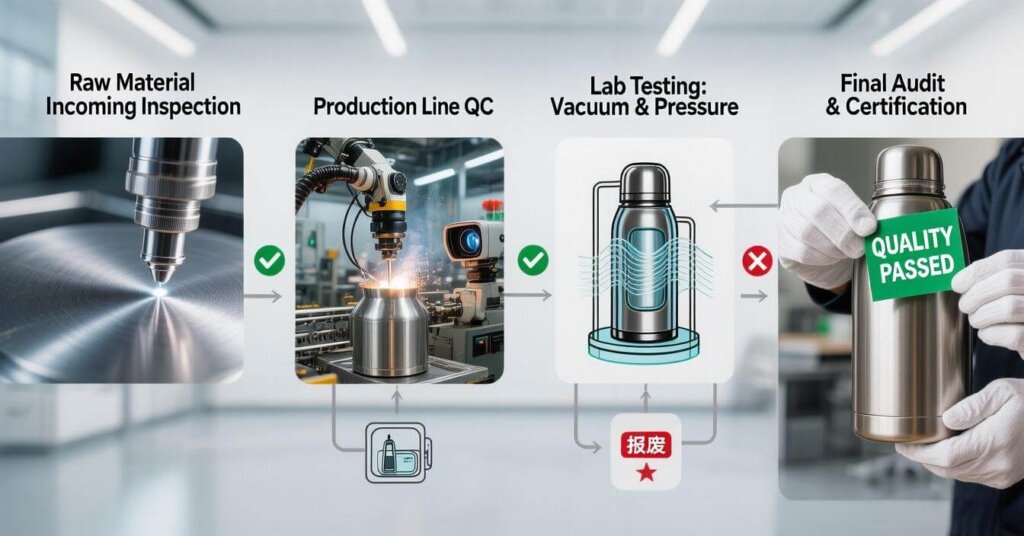
Now, walk into one of our partner facilities. You’ll hear the hum of automated welding arms ensuring perfect, consistent seals. You’ll see vacuum chambers that test every single unit, not just a sample. They use spectrometers to verify the exact composition of the stainless steel coming in. This isn’t just for show. This is the machinery that prevents catastrophes.
This level of rigor isn’t free. A real, comprehensive QC system adds 15-20% to the manufacturing cost. But ask my client from Colorado—what’s the cost of not having it?
The Invoice is Just the Beginning: The Bills They Don't Show You
Let’s talk about the hidden costs that never appear on a quote but will definitely show up on your P&L statement.
1. The “Ghosting” Tax: Have you ever tried getting a straight answer from a cut-rate supplier at 3 AM your time? The communication breakdowns, the language barriers, the endless email chains—that’s all time and money you’re burning.
2. The Supply Chain Surprise: A supplier offering rock-bottom prices often doesn’t have deep inventory. When the price of nickel spikes or there’s a port delay, guess whose order gets pushed to the back of the line? Your production timeline becomes a suggestion, not a plan.
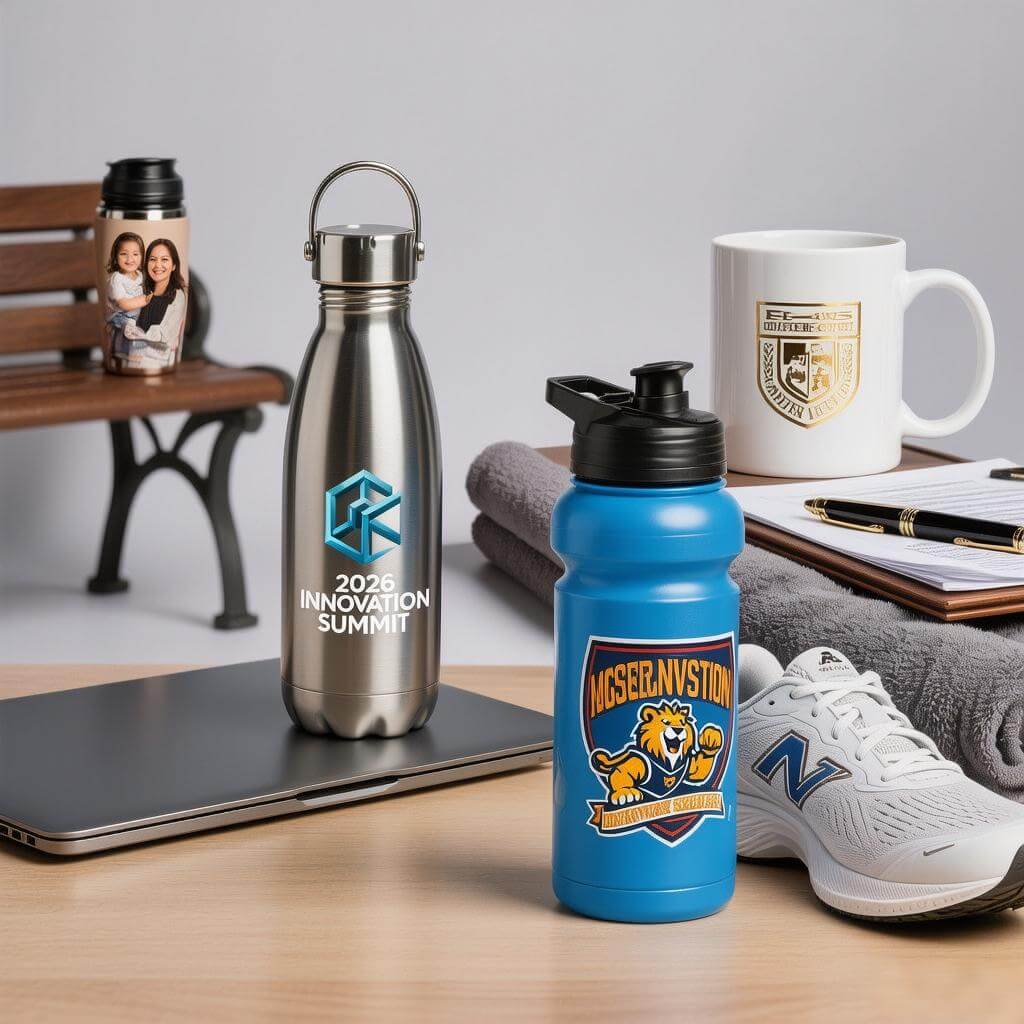
3. The Customization Illusion: True OEM/ODM work requires real investment in design and engineering. Budget suppliers are masters at slapping your logo on a generic product. But when you want a genuinely unique custom mug—a different lid mechanism, a proprietary finish—they can’t deliver. You’re stuck with a “custom” product that looks exactly like everyone else’s.
The Ripple Effect: When a Bad Cup Sinks a Good Brand
I remember a boutique coffee roaster that wanted to launch a line of branded coffee cups. Their initial supplier provided beautiful samples. The production run, however, was a horror show. The double-wall insulation was so inconsistent that some mugs were too hot to hold, while others kept coffee warm for barely an hour. The laser engraving was patchy.
The supplier, of course, had vanished after cashing the final payment. The company wasn’t just out tens of thousands of dollars; they had to face their customers and explain why their premium brand was selling a subpar product. That kind of reputational damage takes years to repair.
How to Source Like a Pro (and Sleep Well at Night)
So, what should you do the next time you’re sourcing insulated water bottles?
Interrogate the Quote: Don’t just look at the price. Ask, “What grade of steel are you using? Can I see the material certification?”
Demand a QC Tour: Ask for a video of their factory floor and their quality control process in action. If they hesitate, walk away.
Check Real References: Don’t just call the references they give you. Find their other clients online and ask them point-blank: “What happened when something went wrong?”
Price the Relationship, Not the Unit: Your supplier should be a partner, not a vending machine. You’re paying for their expertise, their reliability, and their ability to save you from your own blind spots.
The most successful brands I work with understand a simple, counter-intuitive truth: sometimes, the most expensive thing you can buy is the cheap option.
What about you? Have you ever been burned by a “too-good-to-be-true” price? What was the hidden cost you didn’t see coming?