How We Build Quality In, Not Just Check It On: A Insider's Guide to Stainless Steel Water Bottle Manufacturing
Let me tell you about a call I got last year. A long-term client, a major distributor in Europe, was frustrated. Their latest shipment of insulated drink bottles had a 5% failure rate—not from them, but from their end customers. Lids were leaking, the vacuum was failing prematurely. The kicker? Our final inspection report was spotless. Every sampled bottle passed. This wasn’t a failure of checking; it was a failure of building. That experience hammered home a truth we’ve known for a decade: true quality isn’t inspected into a product at the end; it’s manufactured into it, step by step, from the very first sheet of steel.
Relying solely on a final inspection for your stainless steel tumbler or hydrogen water bottle orders is like checking the foundation of a house only after the roof is on. You might see cracks in the walls, but fixing the root cause is messy, expensive, and often too late. It leads to exactly what my client faced: high internal scrap, costly rework, angry customers, and a battered brand reputation. In today’s market, where a single viral complaint about a 34 oz water bottle failing can do real damage, that’s a risk no serious wholesaler can afford.
So, how do we shift from being quality police at the exit to being quality engineers throughout the journey? We build a system—a living, breathing framework of checks and balances woven into the production line itself. This is about preventing defects, not just finding them.
The First Gate: Scrutinizing the Building Blocks
It all starts before production even hums to life. You can’t bake a great cake with spoiled eggs, and you can’t craft a premium BPA free water bottle with subpar materials. Our Incoming Quality Control (IQC) is a ruthless first filter.
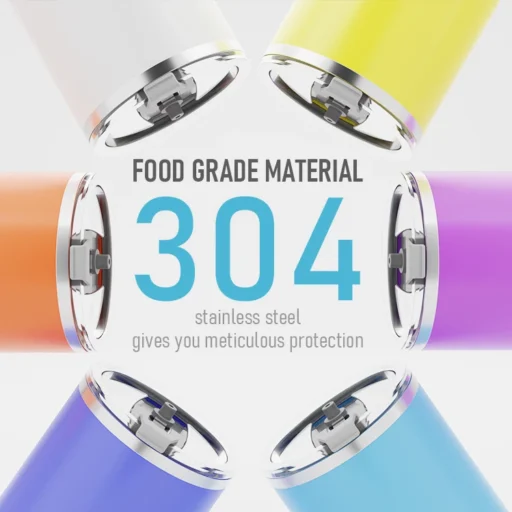
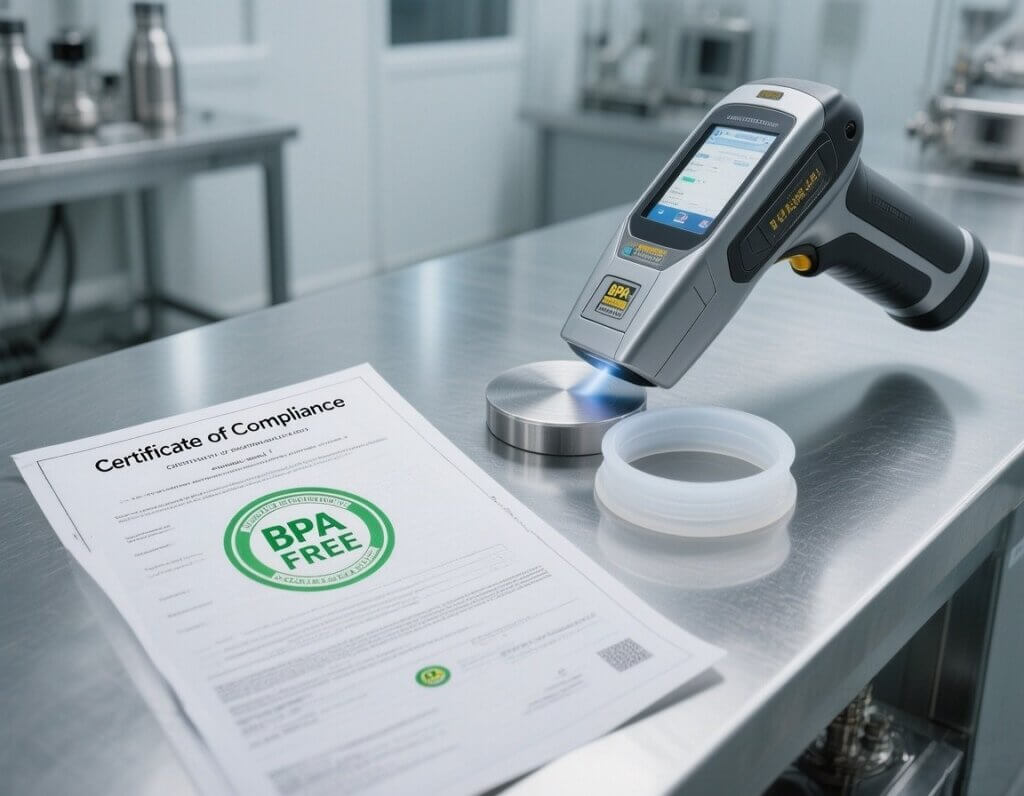
For the stainless steel itself, we don’t just take the mill’s certificate at face value. We use handheld XRF analyzers to verify the composition of every batch of 304 or 316-grade steel. Is the chromium content high enough (typically 18-20%) for proper corrosion resistance? Is the nickel present (8-12% for 304)? This isn’t overkill; it’s essential. The American Society for Testing and Materials (ASTM) sets precise standards (like ASTM A240 for stainless steel plate) for a reason—deviations can lead to rust, weak spots, or contamination. We cross-check against these benchmarks religiously.
For components, the scrutiny is just as intense. Every batch of plastic for lids or straws comes with a BPA-free compliance certificate, but we run our own random migration tests. The silicone gaskets? They get stretched, baked, and sniffed (yes, literally—off-odors are a major red flag). That colorful powder coating for your custom stainless steel tumbler? We test its adhesion and salt spray resistance before it ever touches a cup. This rigorous vetting means we can trace every component back to its source, creating a transparent chain of custody that gives our partners, like those exploring our OEM/ODM SERVICES, absolute confidence in the base materials.
The Crucible of Creation: Shaping and Welding Under a Microscope
Now, the raw material meets the machine. This is where invisible flaws become permanent problems. Take the deep drawing process that forms a seamless 32 oz water bottle body from a flat disk. If the mold is worn by even a few microns, or the hydraulic pressure isn’t perfect, you get thin spots. These weak points might pass a visual final check but will fail under thermal stress or a drop.
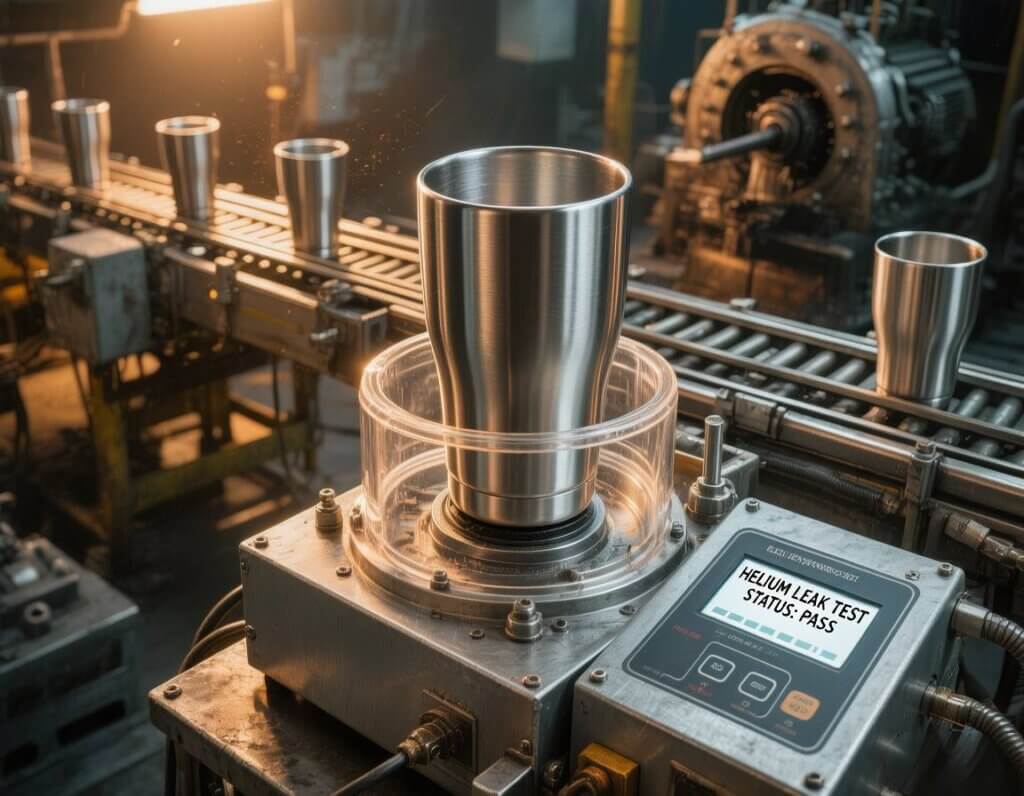
That’s why we monitor the process, not just the product. Operators don’t just run machines; they are data points. They use ultrasonic thickness gauges to spot-check cups at different stages, ensuring wall consistency. For our vacuum-insulated lines, the welding of the inner and outer walls is a critical juncture. A tiny pinhole in the weld will doom the vacuum. So, we use helium mass spectrometers for leak testing—a sensitive method that can find leaks far smaller than traditional water dunk tests—on a sampling basis right at the station. It’s more than a test; it’s real-time feedback for the welder.
And here’s a nuance most don’t consider: cleanliness. After welding, microscopic slag or debris can remain inside a hydrogen water bottle’s complex chamber. If not removed, it can affect taste, clog mechanisms, or even interfere with the electrolysis process. We use high-pressure, food-grade cleaning cycles and even endoscopic cameras for critical products to ensure the interior is as pristine as the exterior. This attention to the unseen is what separates adequate from exceptional.
Send Us Your Inquiry
The Heart of Performance: Sealing in Quality
This phase is where the promise of an insulated drink bottle is realized—or broken. The vacuum sealing process is a delicate ballet of heat, pressure, and time. We don’t just assume the machine is working; we verify its output constantly. Every batch includes bottles that are sacrificed for destructive testing: we cut them open to measure the vacuum level directly and inspect the integrity of the seal.
For the exterior coating, whether it’s a vibrant print for a Protein Shaker Bottle or a durable matte finish, adhesion is everything. We use the cross-hatch test (making a grid of cuts on the coating and applying tape) not as a final gate, but as an in-process check. If the tape pulls up paint, the entire batch from that spray run is halted immediately. The same goes for the specialized internal coatings some bottles use. We test for chemical resistance—will lemon juice or protein shake residue degrade it over time?
Think about it: a parent chooses a small water bottle for their child because it’s marketed as safe and durable. If the coating chips and the base metal is exposed, that trust is shattered. Our process controls here are guardians of that trust.

Assembly: Where Everything Must Click
Finally, all the pieces come together. This seems straightforward, but it’s a minefield of potential user experience failures. A lid that cross-threads. A gasket that’s pinched. A push-button mechanism that’s too stiff or too loose.
Our assembly lines have functional test stations integrated directly into the flow. For a sport water bottle with a flip-top, we mechanically actuate it hundreds of times in a cycle. For a coffee cup with a slide lid, we test the seal by pressurizing the cup. For our hydrogen water bottles, we have dedicated rigs that activate the electrolysis unit, measure hydrogen concentration output, and verify safety shut-offs. These aren’t random samples; they’re systematic validations.
And durability? We have a dedicated station that does drop tests—simulating the inevitable tumble from a car cup holder or gym bag. We don’t test every single bottle to destruction, but we test enough from every production run to know exactly where the failure points are and if we’re within our safety margins.

The Backbone: Data, Traceability, and a Culture of "Why?"

All these checks generate a river of data. The real magic of a process control system isn’t just in collecting it, but in using it. Every component, from the steel coil to the final can cooler, carries a lot number. Every process step logs key parameters. This means we can trace any issue back to its origin. Was there a spike in leak failures on Tuesday? Let’s cross-reference: did we get a new batch of sealing rings that morning? Did the welding station’s argon gas pressure fluctuate?
This data-driven approach fuels our continuous improvement cycles. We hold regular quality dialogues with our production teams, not to assign blame, but to solve puzzles. It transforms quality from a departmental responsibility into a shared company mission, a core part of our About Us story. It’s what allows us to confidently tell partners that we don’t just make products; we manage and guarantee their integrity.
So, the next time you evaluate a supplier for your insulated water bottle line, don’t just ask for a final inspection report. Ask to walk the line. Ask to see the thickness gauge logs from the drawing press. Request the SPC charts from the welding station. Inquire about their material traceability system. The answers—and the visible, embedded controls—will tell you far more about your future risk and reliability than a thousand perfect samples ever could. After all, consistent quality is the most powerful feature any product, from a simple tumbler to a complex hydrogen generator, can ever have.