Description
Custom 34oz Insulated Flask Thermos Bottle
Customization is where most private label programs lose money. The bottle itself is rarely the problem; the decoration, the color match and the packaging usually are. This page treats the flask as a canvas and covers what each decoration method can and cannot do, how color drifts between runs, what a pre-production sample should prove, and how MOQ interacts with all of it.
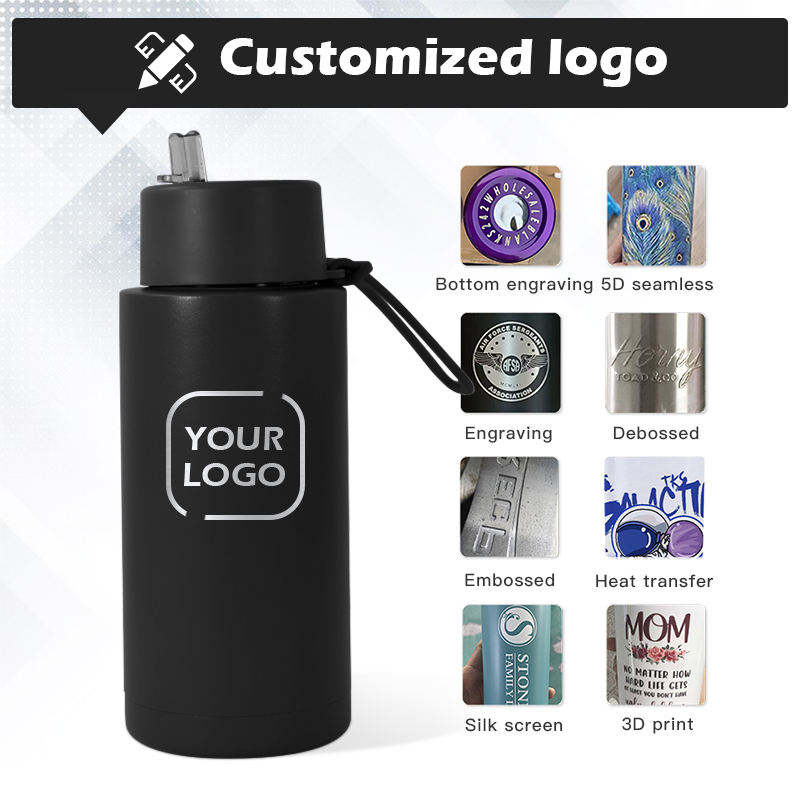
Decoration methods and where each one breaks
Screen printing remains the workhorse for solid logos and text. It handles one to four colors well, holds up to washing, and scales cheaply. It struggles with gradients and fine half-tones, and on curved surfaces the squeegee pressure has to be tuned or edges blur.
Laser engraving removes the coating or etches the steel, producing a permanent mark that cannot peel. It is the right choice for logos that must survive industrial use. The limitation is color: laser output is monochrome, and on painted bodies the engraved area exposes bare steel, which some brands like and others reject.
Pad printing suits small, detailed artwork on curved areas — a badge, a certification mark, a size indicator. It wears faster than screen print on high-touch zones.
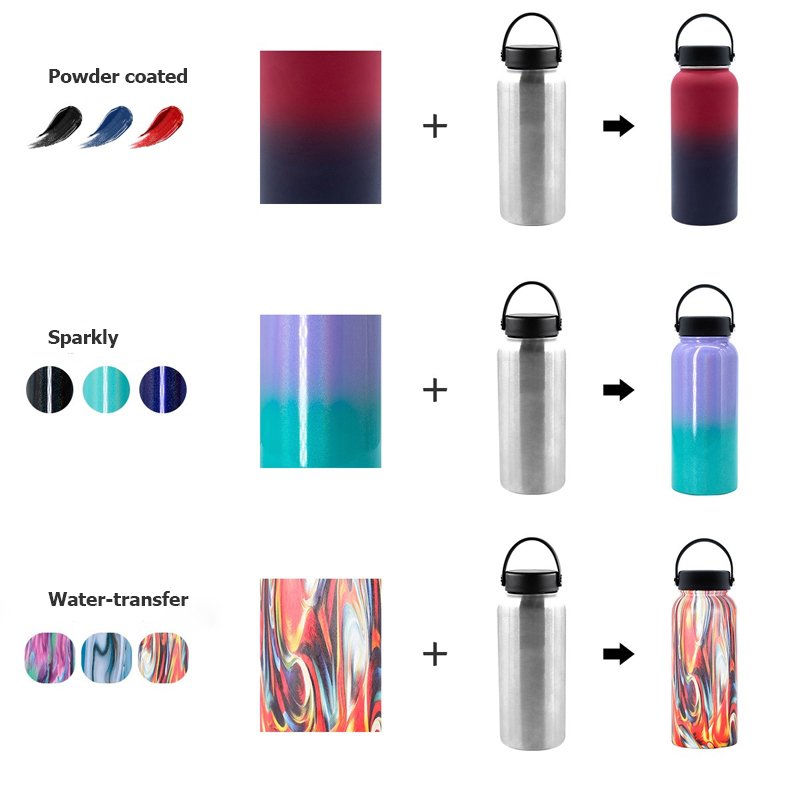
Water transfer and UV printing handle full-color imagery and photographic gradients. Water transfer wraps complex shapes but needs a clear top coat to survive handling; UV print gives sharp detail but has a harder hand-feel and can chip at edges under impact.
The practical rule: pick the method from the artwork, not the other way around. Sending a photographic gradient to screen print is the most common cause of a failed first sample.
Color control across runs
Paint batches drift. A second production run six months later will not match the first unless the color is controlled by a physical reference rather than a name. Specify a Pantone code plus a tolerance, and keep a signed physical standard on file at both ends. Ask for a spray-out panel before the bulk run — approving color from a digital file is how mismatches happen.
Metallic and soft-touch finishes drift more than solid colors and are harder to touch up. If the program spans multiple SKUs that must sit together on a shelf, produce them in the same batch window where possible.
What a pre-production sample should prove
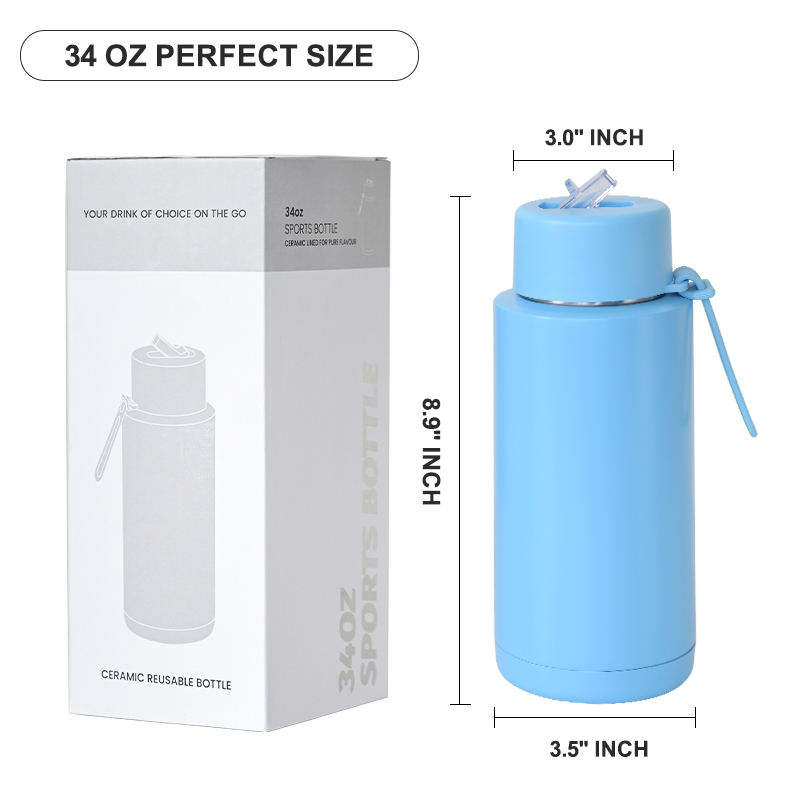
A sample that only confirms the logo position is not a pre-production sample. It should demonstrate the decoration on the actual finish, the lid and straw fit, the color against the approved standard, the packaging configuration, and the retail-ready presentation. Ask for the sample in the final packaging, not loose.
Sample turnaround typically runs in the range of one to two weeks depending on decoration complexity and whether new tooling or new artwork separation is involved. Programs that compress this stage usually pay for it in the bulk run.
Packaging as part of the customization
Packaging decisions change the landed cost more than most decoration choices. A color box adds tooling and minimum order quantities; a poly bag with a header card is cheap but reads as commodity in retail. For e-commerce channels, the drop-test performance of the packaging matters more than its print quality.
Decide the packaging before the MOQ conversation, because the box minimum often sets the effective order quantity, not the bottle minimum.
How MOQ interacts with decoration
Minimum order quantity is driven by three separate constraints: the bottle production run, the decoration setup, and the packaging minimum. They are rarely the same number. A program can hit the bottle minimum and still fail the packaging minimum, which is why quoting MOQ as a single figure creates problems later.
When the order is below a setup threshold, the usual options are sharing a production window with a similar color, accepting a stock finish with a printed label instead of direct decoration, or splitting the program across fewer SKUs.
Artwork handoff checklist
- Vector artwork with fonts outlined, not a flattened image
- Color reference: Pantone code plus approved physical standard
- Decoration area marked on a dimensioned drawing of the bottle
- Intended method stated, so the artwork can be separated for it
- Minimum line weight and text size confirmed for the chosen method
- Packaging artwork and dieline, if the box is part of the program
Most delays at this stage come from artwork that was designed for print on paper rather than for a curved, coated surface.