30oz Tumbler with Handle and Flip Straw Lid

Source 30oz tumbler with handle and flip straw lid with OEM/ODM support, custom logo options, flexible packaging, and wholesale manufacturing services for B2B drinkware buyers.

Category:

Pro-Grade Customization Services

Transforming your brand vision into high-performance hydration hardware.

01

Consultation

Technical review of your AI/PDF artwork & placement optimization within 24h.

02

3D Mock-up

Precision 3D digital rendering for visual approval before physical sampling.

03

Rapid Sampling

Physical pre-production samples delivered in 7-10 days for quality verification.

04

QC Production

Mass production with strictly aligned Pantone matching & adhesion testing.

Branding Technology Matrix

MethodB2B AdvantageDurability
Laser EngravingPermanent, high-precision industrial look. Zero MOQ for logos.Extreme
UV 3D PrintingFull-color 360° wraps. Ideal for complex artworks & gradients.High
Powder CoatingAnti-scratch textured finish. Available in any Pantone color.Extreme
Gas TransferSeamless full-body patterns (Wood, Marble, Camo).High

Need a custom project review? Consult Our Engineering Team →

Description

30oz Tumbler with Handle and Flip Straw Lid

Why the flip-straw lid is the first thing to fail

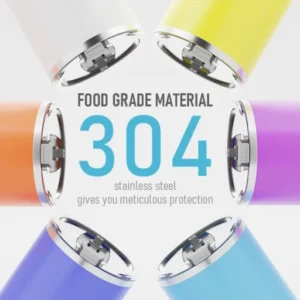
On a 30oz handled tumbler the body is rarely the problem. A double-wall 304 body with a 0.4mm inner wall and 0.5mm outer wall will outlast the lid by years. The lid assembly carries a hinge, a gasket, a straw port and a closure thread, and each of those is a wear point. When a buyer reports field failures six months after launch, the pattern is consistent: the hinge develops play, the straw gasket takes a compression set, and the unit starts weeping at the lid seam rather than at the spout.

Where the hinge actually breaks

Most flip lids use either a living hinge molded into the PP cap or a steel pin through a bore. Living hinges fail by fatigue. Between 8,000 and 12,000 cycles is the usual range before a crack appears, which is roughly eighteen months of daily use for a single owner. A pinned hinge survives longer but adds a second failure path, because the bore wears and the lid gains lateral play. Once there is play the gasket no longer seats concentrically and a leak path opens.

If your channel includes cup holders and gym bags, specify a pinned hinge with a 0.2mm interference fit and ask for a cycle report at 15,000 open-close cycles rather than the default 5,000. The test costs little and it separates two suppliers who otherwise quote the same price.

Gasket geometry is the real seal

The straw port is not sealed by the straw. It is sealed by the gasket around it, and that gasket has a specific compression window. Below 20 percent compression it leaks under a 30-degree tilt. Above 40 percent it becomes difficult to close and the hinge load rises. Food-grade silicone at 50 Shore A is the usual choice, and the groove depth should be cut so that installed compression lands between 25 and 32 percent.

Ask for a tilt test rather than a static leak test. A tumbler that holds water upright will still leak in a bag, and the tilt test is what your customer actually experiences.

Assembly tolerance across the thread

Thread engagement on a 30oz body is typically three and a half turns. If the cap is molded at the low end of its tolerance and the body neck at the high end, engagement drops below three turns and the lid backs off under vibration. The fix is not a tighter cap; it is a controlled neck finish. Specify the neck diameter with a 0.15mm band and hold both parts to it. This is the single specification most likely to be ignored in a first sample round and most likely to cause a returns problem later.

What to put in the purchase order

Four lines matter more than the rest: hinge cycle count, gasket compression range, neck finish band, and the tilt test angle. Add the powder coat thickness if the body is coated, because a 90-micron coat on the neck will change thread fit. With those five numbers on the PO, a 30oz program tends to run without lid-related claims. Without them, the body will be fine and the lid will still generate the emails.
   

Frequently Asked Questions

What Is The MOQ For Your Wholesale Order?

+

Our minimum order quantity varies by product type. Generally, for wholesale orders, the MOQ starts from 100 pieces. Please contact us for specific product MOQ requirements.

How Long Is The Production Lead Time?

+

Production lead time typically ranges from 15-30 days depending on order quantity and customization requirements. Rush orders may be accommodated with additional fees.

If I Provide My Sketches/Design, Can You Sign An NDA With Me To Protect My Design?

+

Yes, we absolutely respect intellectual property rights. We can sign a Non-Disclosure Agreement (NDA) to protect your designs and ensure confidentiality throughout the production process.

What Are The Options To Customize?

+

We offer various customization options including size, color, material, logo printing, packaging design, and special features. Contact us to discuss your specific customization needs.

Can I Get Samples And How Long Is The Sample Lead Time?

+

Yes, samples are available. Sample lead time is typically 5-7 business days. Sample fees may apply and can be refunded with your bulk order.

Which Kinds Of Certificates Or Testing Reports Would You Have?

+

We provide various certificates including CE, RoHS, FCC, ISO certifications, and product testing reports. Specific certificates depend on the product category and destination market.

What Format Of The File Do You Need If I Want My Own Design?

+

We accept various file formats including AI, PSD, PDF, PNG, JPG, and CAD files. For best results, please provide high-resolution vector files (AI or PDF format preferred).

What Is Your Payment Term And Shipping?

+

Payment terms: 30% deposit, 70% balance before shipment. We accept T/T, PayPal, and L/C. Shipping options include sea freight, air freight, and express delivery worldwide.