Description
Custom 20oz Cup with Beer Opener
A cup with a bottle opener built into the base sells as a gift before it sells as drinkware. That changes the engineering priorities: the opener has to work every time without deforming, the base has to stay flat enough to stand, and the added feature has to survive being dropped on concrete at a tailgate. This page covers how the feature is built and where the cost actually goes.
Where the opener sits, and why it matters
Three placements are common: a machined slot in a stainless base plate, a stamped hook formed into the base ring, and a separate insert pressed into a recess. Each has a different failure profile.
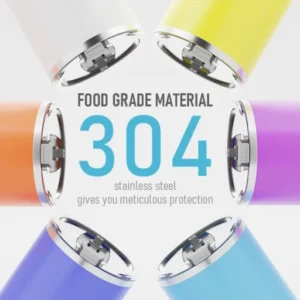
A machined slot in a 304 base plate is the most durable. The hook edge is thick enough to resist deformation and the plate stays flat because material is removed rather than bent. A stamped hook in the base ring is cheaper, but repeated use works the metal and the hook eventually rounds over. A pressed insert depends entirely on the interference fit — if it loosens, the whole base becomes a rattle.
For promotional programs where the cup will be used a few dozen times, stamped is adequate. For retail where the buyer expects years of use, specify machined.
Flatness after the opener is cut
Cutting an opener into the base removes material from one side. Unless the operation is sequenced correctly, the base cups upward and the cup rocks on a table. The fix is either to machine after forming with a fixture that holds flatness, or to press the base back to flat as a separate step.
Ask for the flatness tolerance and how it is measured. A cup that rocks is the most common one-star review on this category.
Coating the base
The opener edge has to stay bare metal to grip a cap. That means the coating has to stop cleanly at a boundary, and that boundary is where coating failures start. Masking the opener during coating is more expensive than coating first and machining afterwards.
If the base is powder coated and then milled, the cut edge is bare and will show oxidation over time in a humid climate. A light passivation after machining keeps it clean without affecting grip.
Weight and balance
Adding a steel base plate moves the centre of gravity down, which actually helps stability. A 20oz cup with a machined base plate feels more solid than the same cup without one, and that perception drives perceived value in gift channels.
Keep the total weight under about 450 grams empty. Above that the cup reads as heavy rather than sturdy.
Cost structure
The opener adds cost in three places: the extra machining operation, the added stainless material, and the inspection step that checks opener function on every unit. Machining time dominates. Reducing it usually means accepting a simpler hook geometry, which is a decision the buyer should make explicitly rather than discover in the sample.
Specification checklist
- Opener type: machined slot, stamped hook, or pressed insert
- Base plate material and thickness
- Flatness tolerance after machining, and the measurement method
- Coating boundary treatment at the opener
- Function test: number of caps opened in the inspection sample
- Empty weight target
Confirm opener geometry on a physical sample with the caps the end user actually buys. Cap dimensions vary by market and a hook that works on one brand can slip on another.
20 oz tumbler — specifications
| Capacity | 20 oz / 591 ml |
| Empty weight | 410 g |
| Body wall thickness | 0.5 mm |
| Thermal retention (series typical) | 100°C → 75°C at 6 h → 60°C at 24 h |
| Minimum order / lead time | 100 pcs · sample 3 days · production 7 days |
Measured on our current 20 oz double-wall vacuum body. Wall thickness and weight vary slightly by finish and lid configuration. Production lead time applies to existing tooling and standard colours.