Description
Plastic 32OZ Tritan Motivational Sports Water Bottles
Tritan is specified for one reason: it delivers glass-like clarity without bisphenol A, and buyers in the US and EU have been trained to look for that combination. But “BPA free” on a bottle is a claim, not a test result, and the difference between the two is where sports bottle programs get into trouble.
What Tritan is, precisely
Tritan is a copolyester, not a polycarbonate. The distinction matters because the BPA concern that drove the market away from polycarbonate does not apply to the same chemistry. Tritan is produced without BPA in the monomer chain, so the “BPA free” statement is structural rather than an additive substitution.
What buyers should still verify: the specific grade, the food-contact declaration for that grade, and whether the manufacturer can show a migration test rather than only a material certificate. A resin certificate proves what went into the hopper. A migration test proves what comes out of the finished bottle.
Clarity, and what dulls it
Tritan’s advantage is optical. That advantage disappears if the mould is polished poorly or if the resin is dried incorrectly before processing. Moisture in the melt produces a faint haze that cannot be polished out afterwards.
On a clear bottle, ask for a light transmission check against a reference sample. It is a two-minute test and it catches drying problems before a container ships.
The time markers are a printing problem
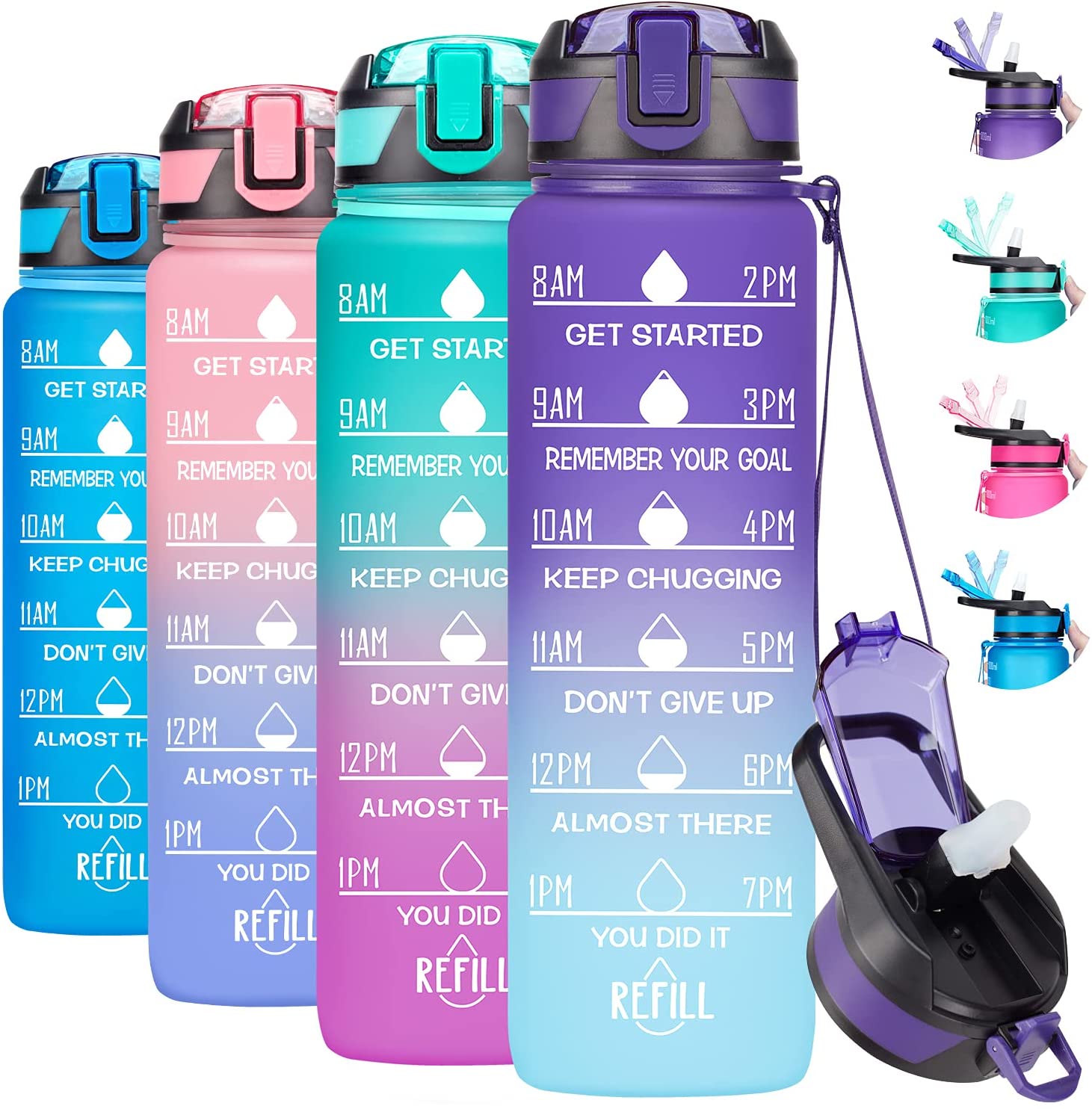
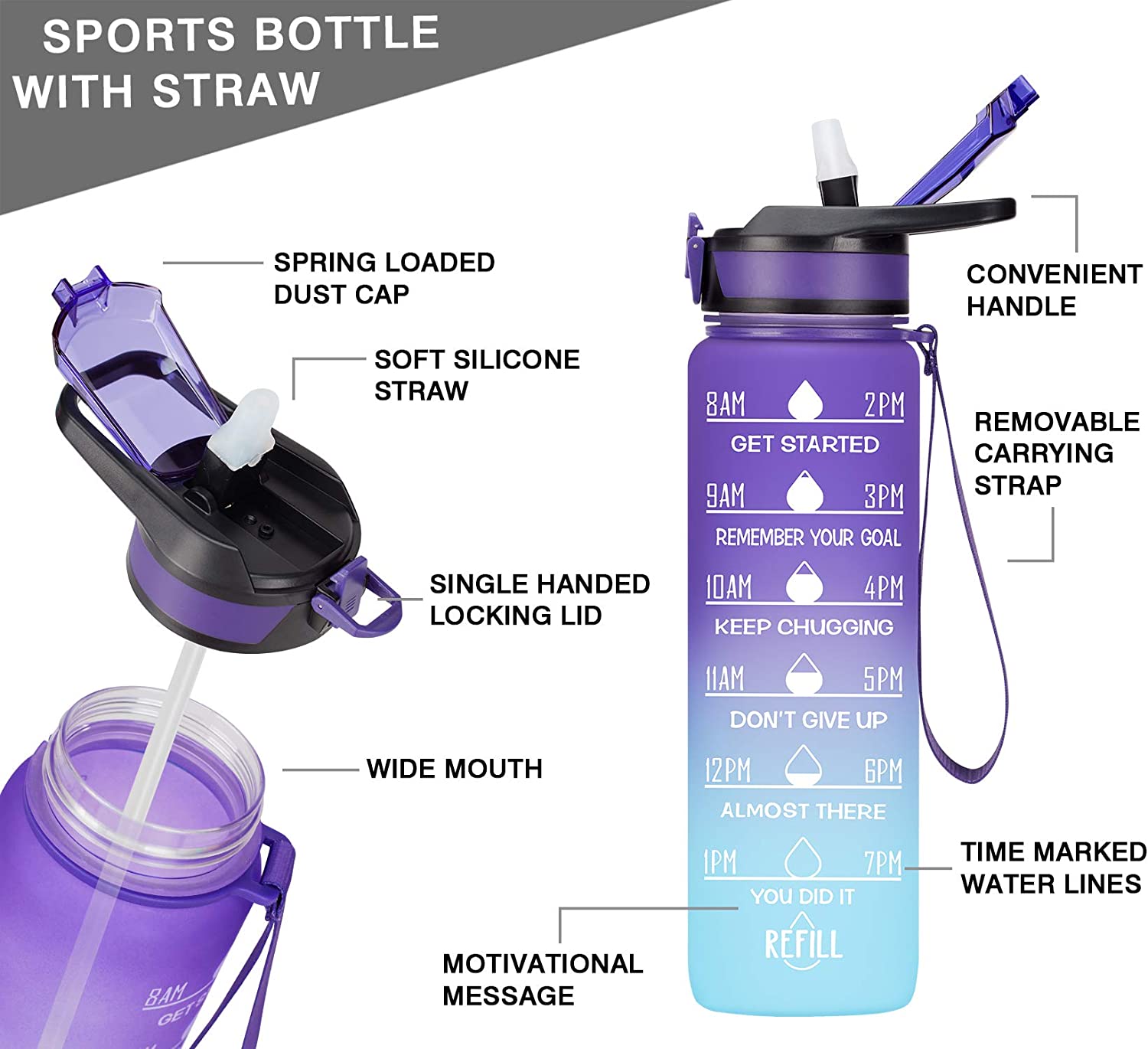
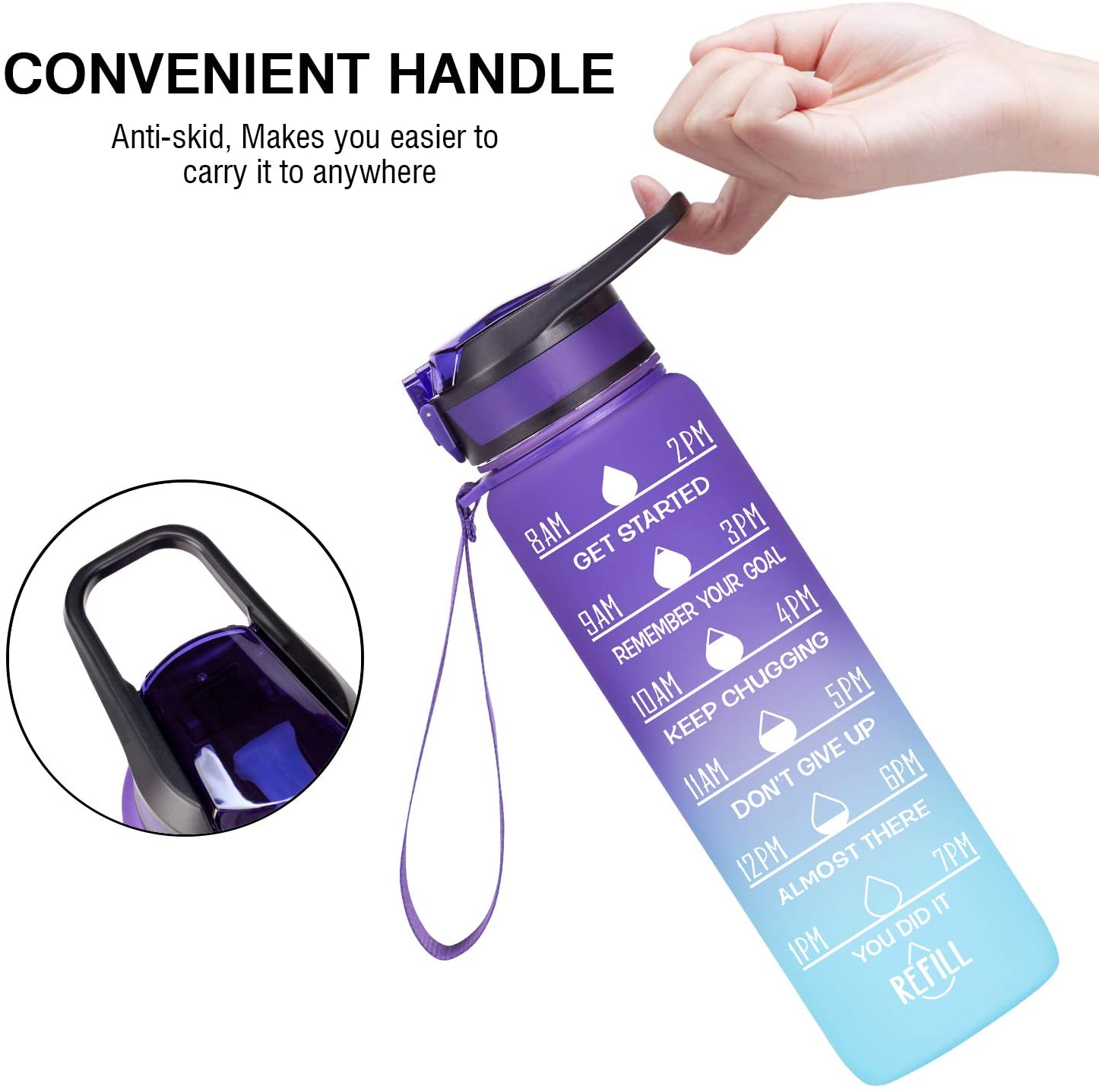
Motivational bottles carry hour markers down the side. Those markers are usually printed, and printed markers on a curved transparent surface are where quality varies most. Two failure modes: ink that rubs off in a gym bag, and alignment that drifts so the 12 o’clock mark does not sit at the top.
Specify the print method, require a rub test, and confirm the marker positions are measured from the seam rather than by eye. On a clear bottle any misalignment is visible from across the room.
Lid and mouth size
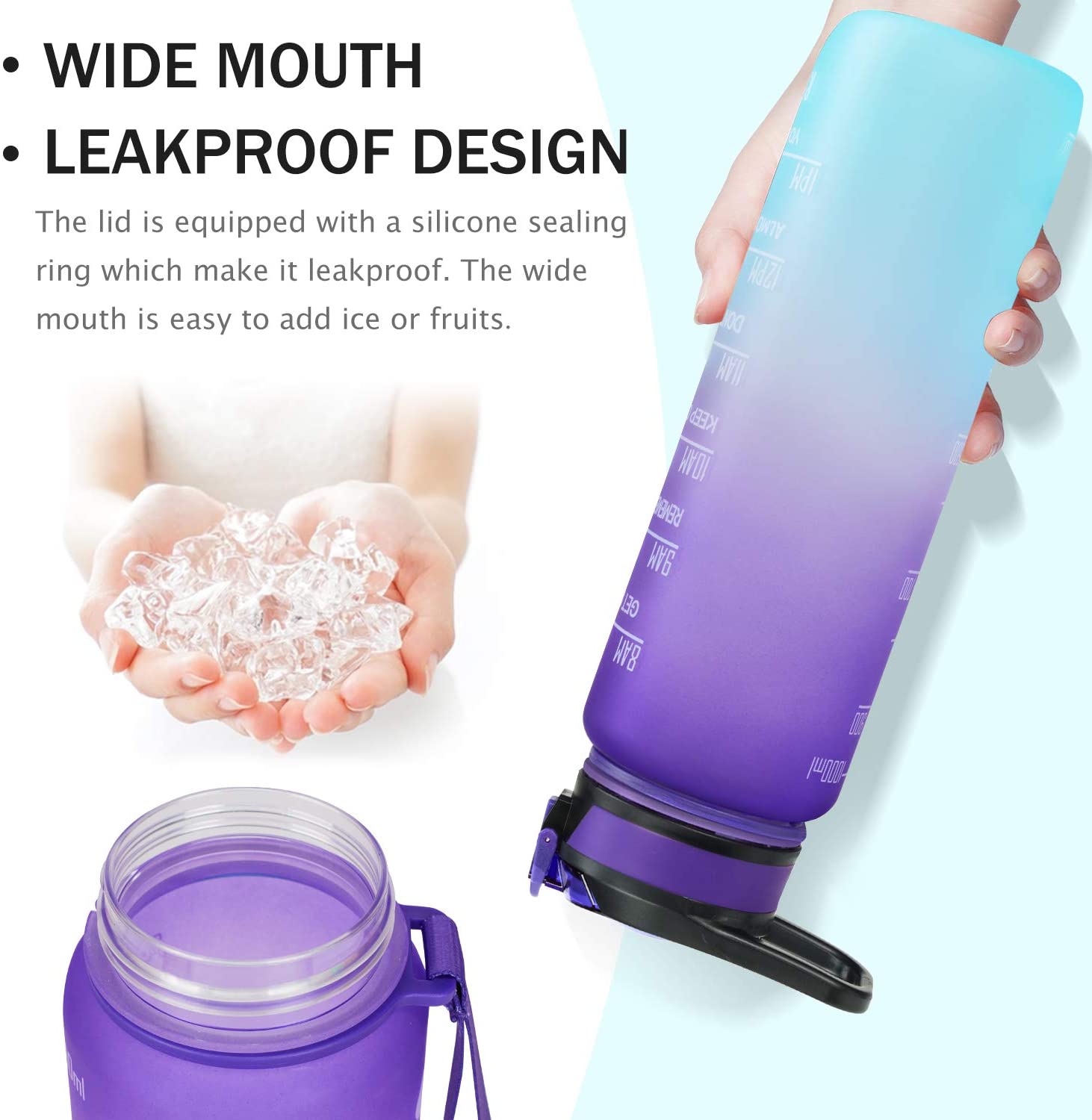
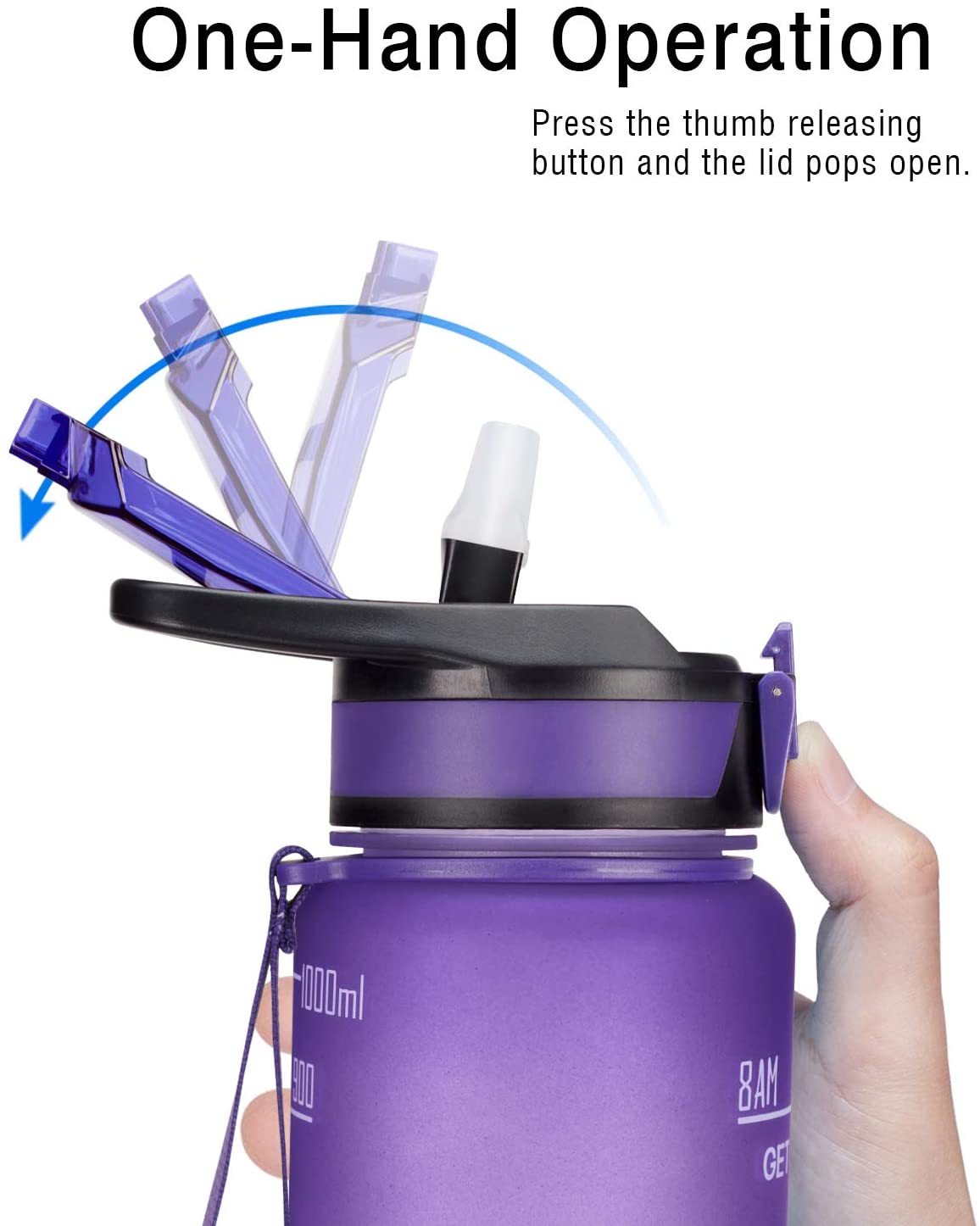
Sports bottles live or die on the lid. A flip-top that does not seal drips into a gym bag; a wide mouth that is easy to fill is hard to drink from while moving. The common compromise is a wide mouth with a threaded reducer and a flip cap.
Check two things on the sample: whether the cap seals after being dropped on its corner, and whether the thread engages in under two turns. Threads that need three or four turns get cross-threaded in daily use.
Dishwasher and hot liquid limits
Tritan handles normal washing but is not a hot-fill material. Pouring boiling water into a Tritan bottle can distort the wall. If the end user might do it anyway — and some will — the label needs to say so plainly, and the customer service script needs the same wording.
Documentation to request
- Resin datasheet naming the exact grade
- Food-contact declaration for that grade, current version
- Migration test report on the finished article
- BPA statement worded as a material property, not a marketing line
- Print rub test result for the marker graphics
- Light transmission check against an approved reference
Programs that ask for these before sampling avoid the situation where a retailer requests documentation the factory cannot produce for the grade actually used.