Description
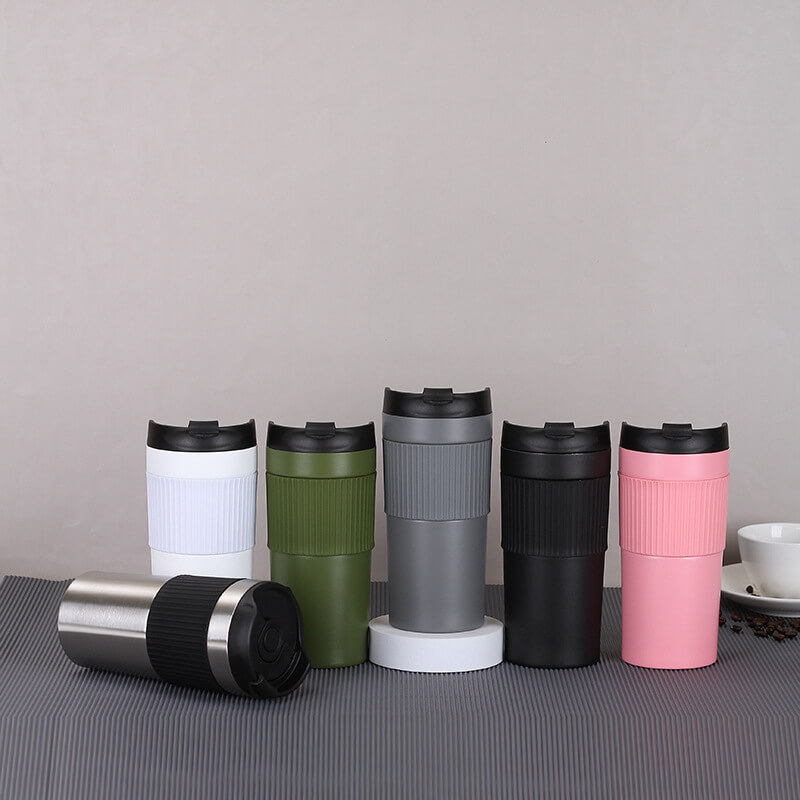
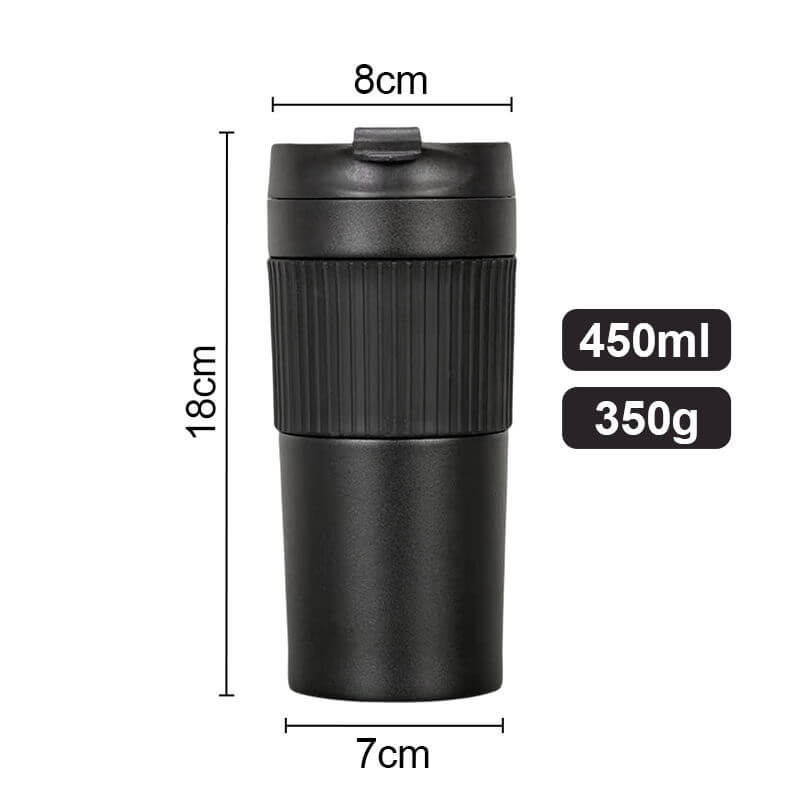
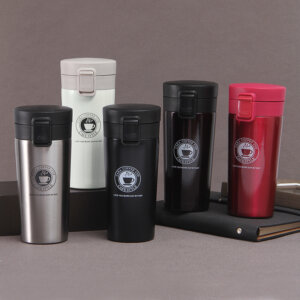
16oz Stainless Steel French Press Coffee Mug
A French press in a mug is a filtration problem
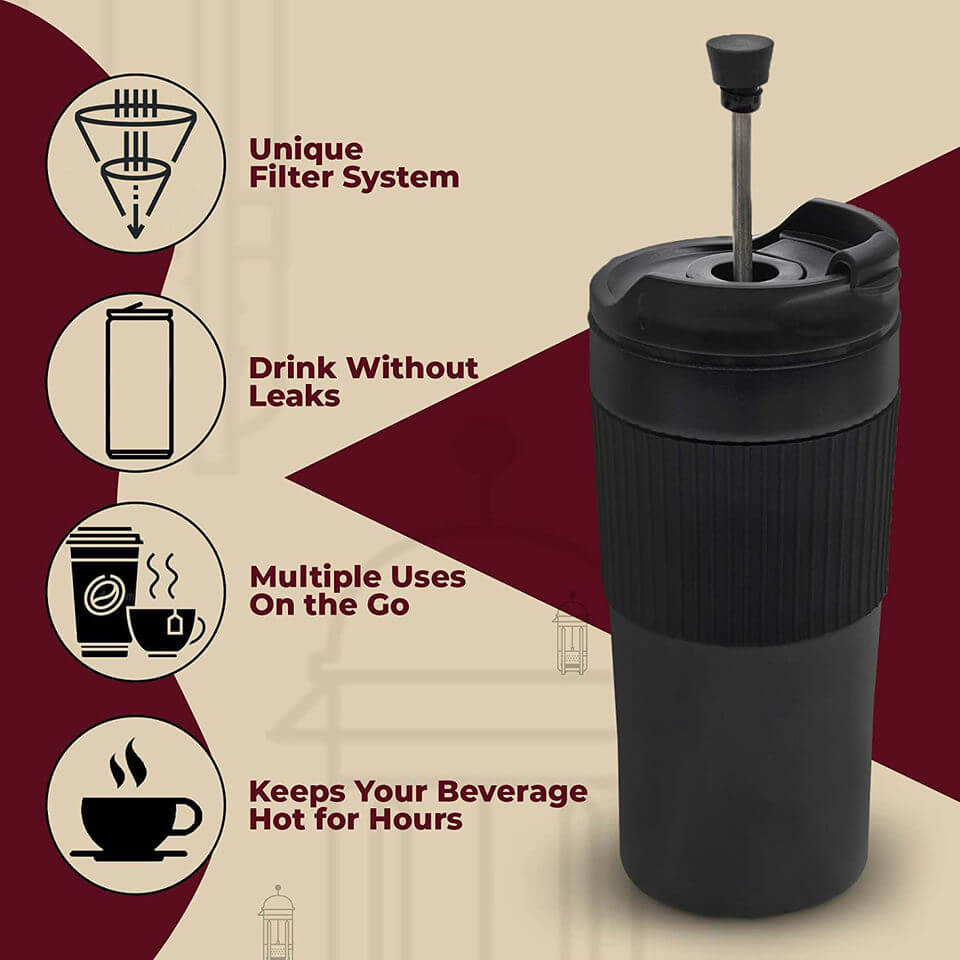
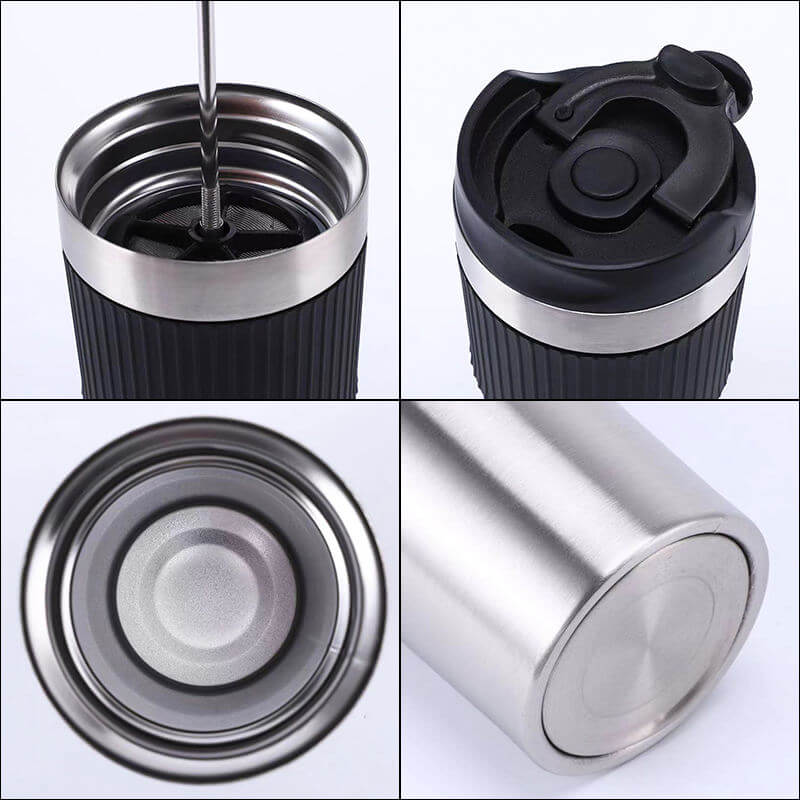
Putting a press mechanism inside a 16oz insulated mug is not a packaging trick. It is a filtration and cleaning problem with a thermal constraint attached. The coffee has to be separated from the grounds at the right moment, the mechanism has to survive being pressed against resistance, and the whole assembly has to be washable by someone who is not going to disassemble five parts.
Mesh rating decides the cup
The filter mesh is measured in microns, and the number changes what ends up in the cup. A 300-micron mesh passes grit, which reads as body to some drinkers and as sludge to others. A 150-micron mesh produces a cleaner cup but slows the press stroke noticeably and clogs faster with fine grinds.
Most private-label programs land at 200 to 250 microns as a compromise. If the product is positioned for specialty coffee, specify 150 microns and warn on the packaging that a coarse grind is required. Mismatching mesh and grind is the most common cause of a one-star review in this category.
Plunger travel and the force curve
A press rod in a tall mug has a long stroke, and the force rises sharply in the last third as the grounds compact. A rod that is too thin flexes under that load and binds against the wall. A rod that is too thick adds weight and cost without improving the press.
The specification that matters is the rod diameter relative to the stroke length. Above a 3:1 ratio, flex becomes visible. Ask for a press test at 20 cycles with a medium grind and check whether the rod stays coaxial with the bore.
Cleaning is the design constraint
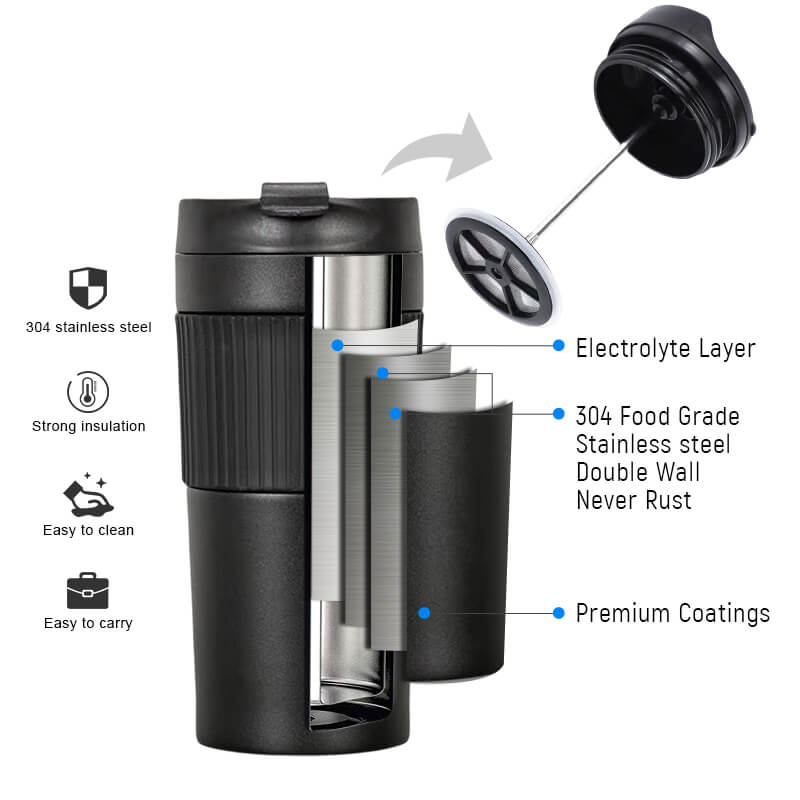
Every additional part is a place coffee oil accumulates. A press assembly with a removable mesh disc and a single gasket cleans in under a minute. An assembly where the mesh is fixed to the plunger and the gasket is captured behind it takes five and gets rinsed rather than washed, which leads to stale flavors within a week.
Design for the rinse: make the mesh disc removable without tools, and make the gasket visible so the user can see whether it is clean.
Thermal behavior changes the brew
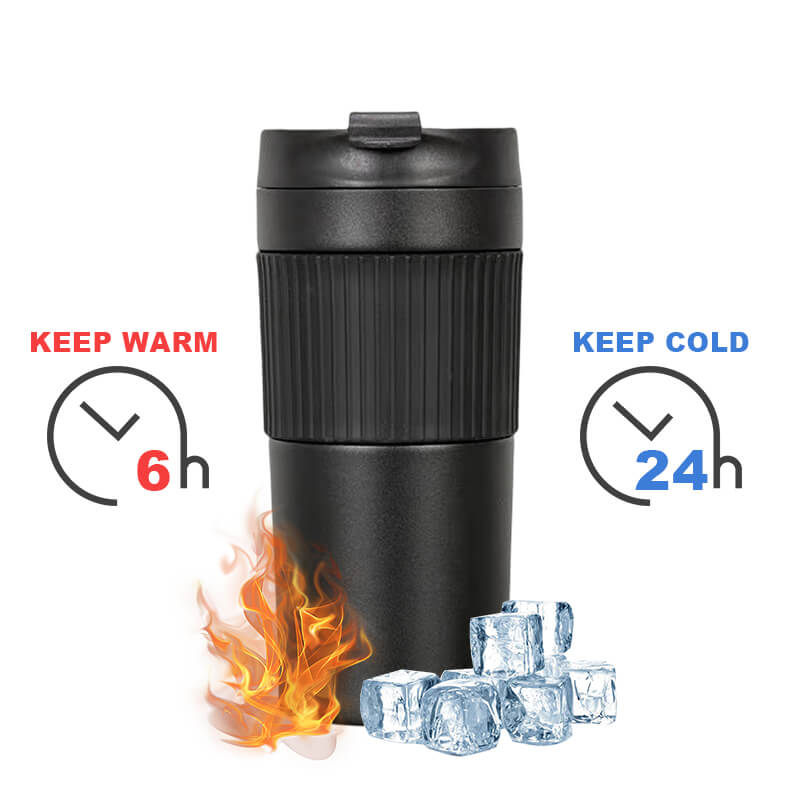
An insulated mug holds heat far better than a glass press, which means the extraction continues longer than the recipe assumes. Coffee that tastes right at four minutes in glass will over-extract in an insulated body if the user leaves the press in place. The practical fix is a instruction card that specifies pressing at 3:30 and pouring immediately, and a plunger design that seats fully so the grounds stop extracting when pressed down.