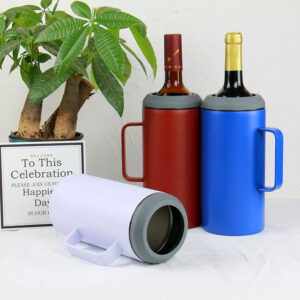
Description
Custom 16oz insulated can cooler
Sixteen-ounce cans are taller, not wider
The 16oz can format used by energy drinks and large-format beers keeps the same 66mm diameter as a 12oz can and adds height, reaching about 168mm against 122mm. A cooler designed for 12oz will accept the can and leave the top third exposed, which defeats the purpose. The fix is not a wider bore; it is a taller body.
That distinction matters because buyers often specify a 16oz cooler by scaling the diameter, which produces a loose fit on a standard can.
Bore depth and the exposed band
A cooler should cover all but the top 10 to 15mm of the can, so the user’s mouth never contacts metal that has been at ambient temperature. For a 16oz can that means an internal depth of about 155mm. Anything less and the top of the drink warms noticeably while the bottom stays cold.
Measure the actual can the customer will use. Slim 16oz cans at 53mm diameter exist in the same category and require a different bore entirely.
Wall thickness and the taller body
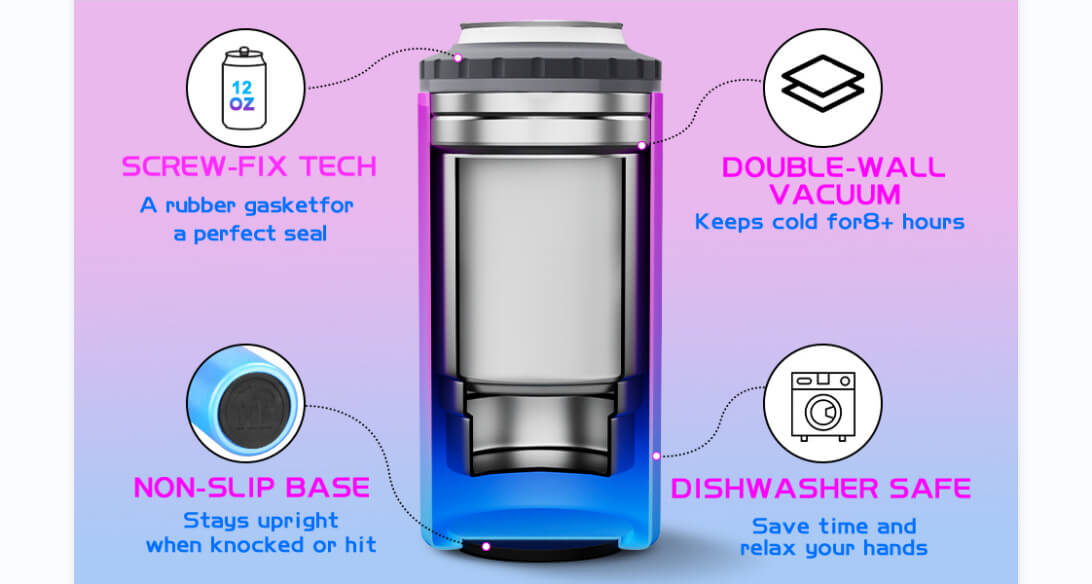
A taller cooler has more surface area and a longer lever arm when the user grips it low. The wall has to be rigid enough that the cooler does not flex when squeezed, because flexing breaks the air seal against the can and warm air enters. Below 4mm of insulation on a 16oz body, the performance drop is measurable.
A rigid outer shell with foam insulation performs better than a single flexible layer, and it holds its shape in a bag.
Graphics on a tall cylinder
The printable band on a 16oz cooler is narrow in width but long in circumference, which suits repeating patterns and vertical wordmarks rather than square logos. Plan artwork to the actual developed dimension, and add bleed where the seam sits.
Neoprene coolers with sewn seams cannot print across the seam. If a continuous graphic is required, a molded TPU body with a wrap print is the alternative.
Retail presentation and the pair problem
Sixteen-ounce coolers sell well as pairs, because the format is associated with shared occasions. A two-pack with a single printed sleeve merchandises better than two singles and reduces the packaging cost per unit, which is worth designing into the first order rather than discovering later.