Description
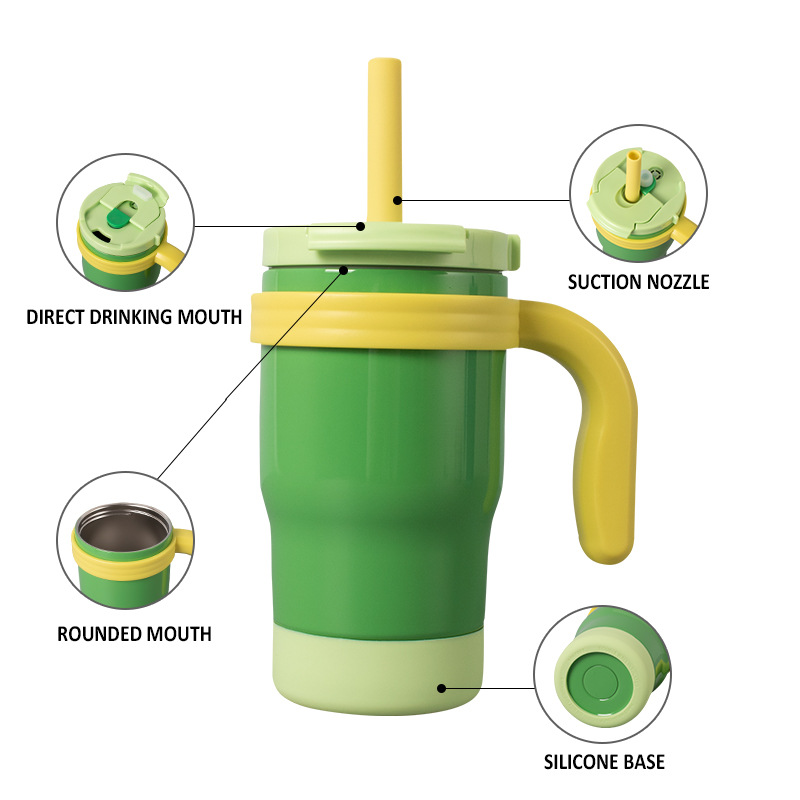
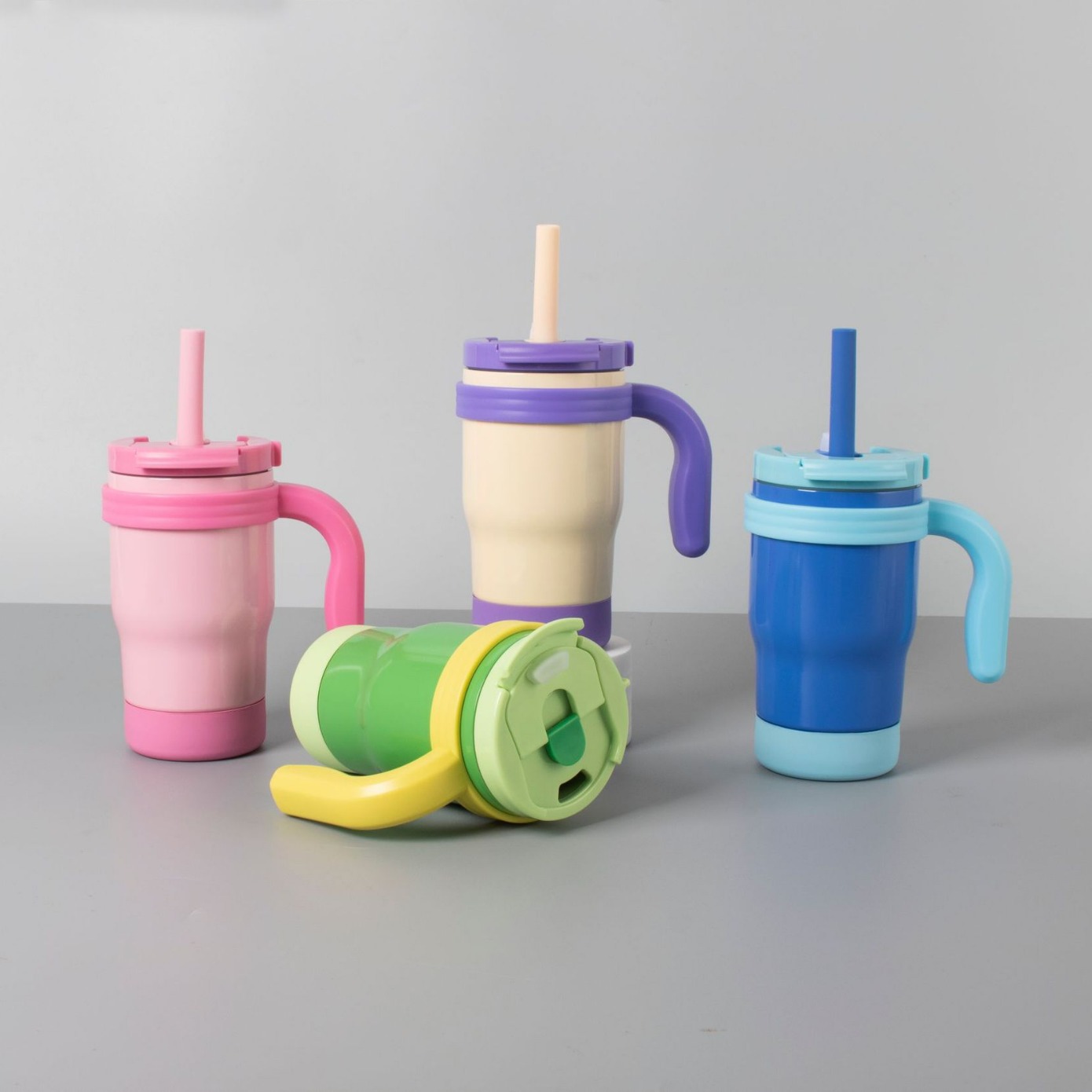
Custom 14oz Kids Stainless Steel Tumbler with Straw
The compliance stack for kids drinkware
Children’s drinkware carries more regulatory weight per unit than any other category in the housewares range. The product is chewed, dropped, washed at high temperature and used without supervision. Regulators treat it accordingly. A program that would be routine at 14oz for adults becomes a documentation and testing exercise at 14oz for children.
CPSIA, LFGB and what each actually requires
For the US market, CPSIA requires lead and phthalate limits on accessible components, and children’s products require third-party testing at an accredited laboratory, not self-declaration. The coating, the gasket and any printed decoration are all in scope, not just the steel.
For the EU, LFGB governs food-contact materials and requires migration testing plus a declaration of conformity. The two regimes overlap but are not interchangeable, and a product tested only to CPSIA cannot be shipped into the EU on the strength of that report.
Small tracking labels are also mandatory in the US for children’s products, and they must be permanently affixed to the product, not only to the packaging.
Choke hazards at the straw and lid
A straw that separates from the lid creates a small cylindrical object, and small cylindrical objects are a known choke hazard. The design fix is a straw with a shoulder that cannot pass through the lid opening, so the two parts stay together in use. This costs nothing if designed in and is expensive to retrofit.
The lid itself should not have a removable valve or plug below the small-parts cylinder dimensions. Any part that can be pulled off by a determined four-year-old will be.
Coating durability against saliva and dishwashing
Children’s products see more dishwashing cycles per year than adult products and are more likely to be chewed at the rim. A powder coat rated for 500 domestic cycles is the working baseline. Below that, chipping at the rim becomes visible within the first year, and chipped coating on a children’s product is a compliance question rather than a cosmetic one.
Ask for an adhesion test after cycling, not before. Coating that passes a cross-hatch test when new can fail after thermal cycling.
Testing cadence after a color change
A new color is a new coating formulation, and in most jurisdictions that means the compliance testing must be repeated for the coating, even though the body is unchanged. Brands routinely miss this and ship a color variant on the strength of the original report.
Building the retest cost into the color plan, rather than discovering it at the border, is the difference between a smooth seasonal launch and a shipment held in customs for three weeks.