Description
insulated Magnetic Water Bottle with Phone Holder
What the magnet is actually holding
A bottle with a magnetic phone mount is sold on convenience, but the engineering question is narrow: does the magnet hold a phone through a silicone case while the bottle sits in a car cup holder at 60km/h? Get that wrong and the product generates one-star reviews that have nothing to do with the bottle.
Most programs use N35 to N42 neodymium discs at 10 to 15mm diameter. N35 in a 12mm disc gives roughly 1.2kg of pull force on bare steel. A modern phone with a case weighs 200 to 260 grams. The margin looks generous until you account for leverage: the phone extends 80mm above the magnet, so a modest bump produces a torque that peels the mount rather than slides it.
Why the bottle body matters to the magnet
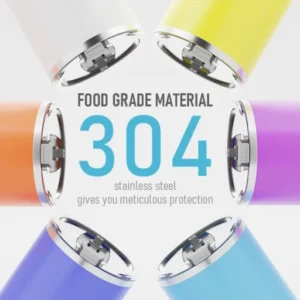
304 stainless is only weakly magnetic, and a double-wall body puts two layers of it between the magnet and anything inside. That is actually useful, because the magnetic field does not need to pass through the bottle. The mount is bonded to the exterior, and the field is contained in the mount assembly. What matters is that the adhesive between mount and body survives thermal cycling, because a powder-coated body expands and contracts at a different rate than the ABS bracket.
Specify a structural acrylic adhesive rather than a double-sided foam tape. Foam tape is what most first samples use, and it is what fails first in a hot car.
The bracket is the weak point, not the magnet
PC/ABS is the usual bracket material. It handles impact well but creeps under sustained load at temperatures above 60 degrees Celsius, which a dashboard reaches easily. A bracket that holds firmly in the factory can develop a permanent tilt after one summer. Glass-filled nylon costs slightly more and does not creep.
Ask for a heat-aging test: 72 hours at 70 degrees Celsius with a 250g load on the mount arm, then measure deflection. Anything above 2mm of permanent set is a design that will look broken in a year.
Drop testing with the phone attached
The standard drop test drops the bottle alone. The product as used has a phone hanging off it. Test the assembly: phone mounted, dropped from 80cm onto a hard floor, three orientations. What usually breaks is not the magnet but the phone’s own case attachment, which is worth knowing before you print packaging that promises a secure hold.
Magnet safety and market restrictions
If the product is marketed to families or positioned near children’s use, strong small magnets trigger separate regulatory attention in the US and EU. The magnet must be fully encapsulated so it cannot be removed by force, and the retention test is a torque and tension pull on the housing, not on the magnet itself. A magnet that can be levered out with a fingernail is a recall risk regardless of how the product is labeled.