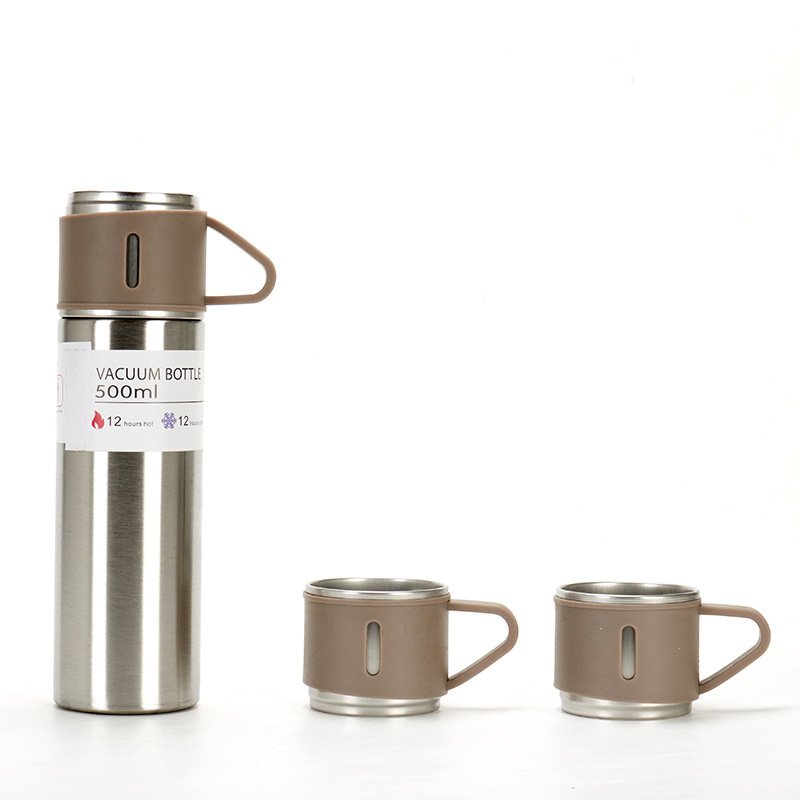
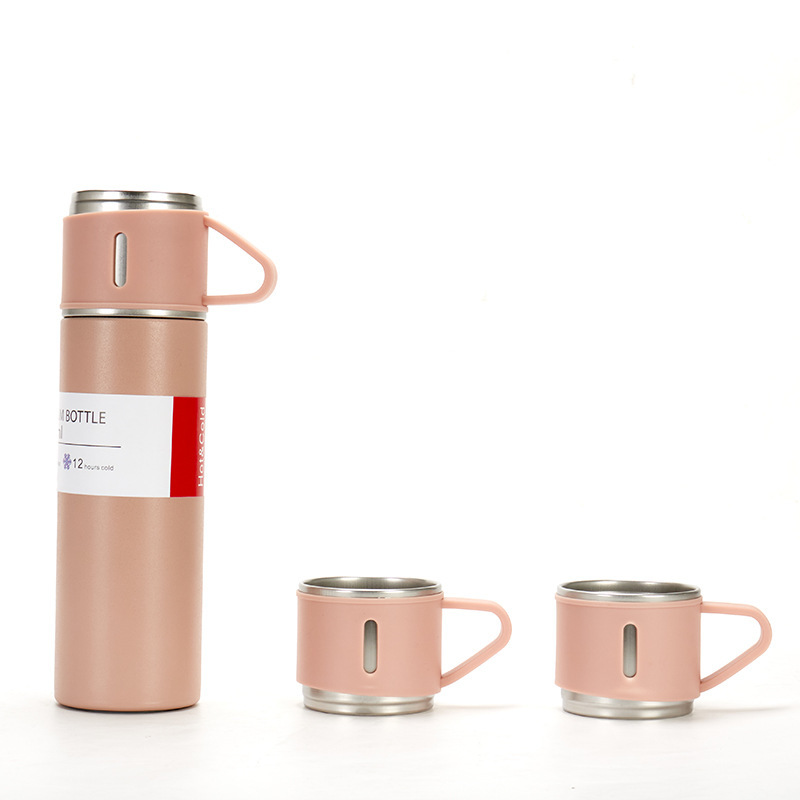
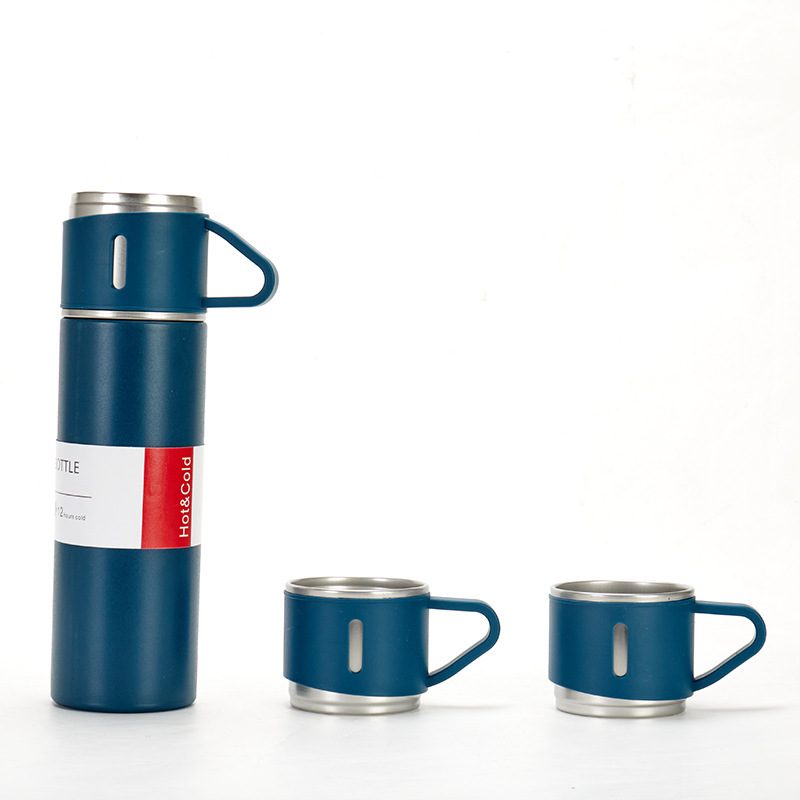
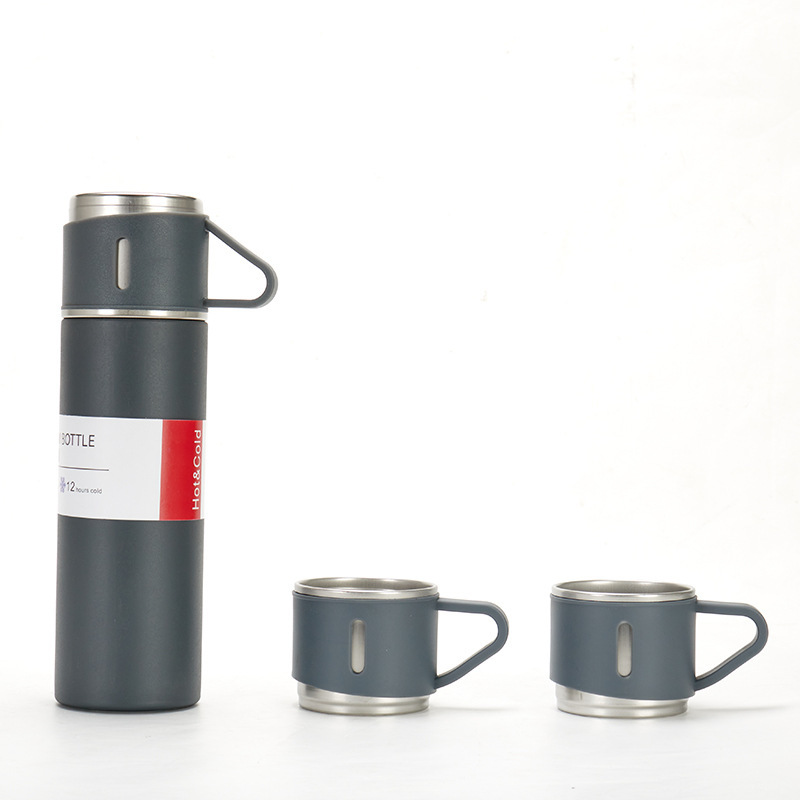
Description
Custom Business Gift Insulated Bottle Sets
Corporate gift sets are bought by a procurement officer on a deadline, not by a consumer on impulse. The decision criteria are different from retail: the box has to survive shipping and still look presentable on a desk, the artwork deadline is fixed by an event date, and the order often splits across recipients with different names. This page covers how to build a gift set program that survives all three.
Set composition is a cost decision
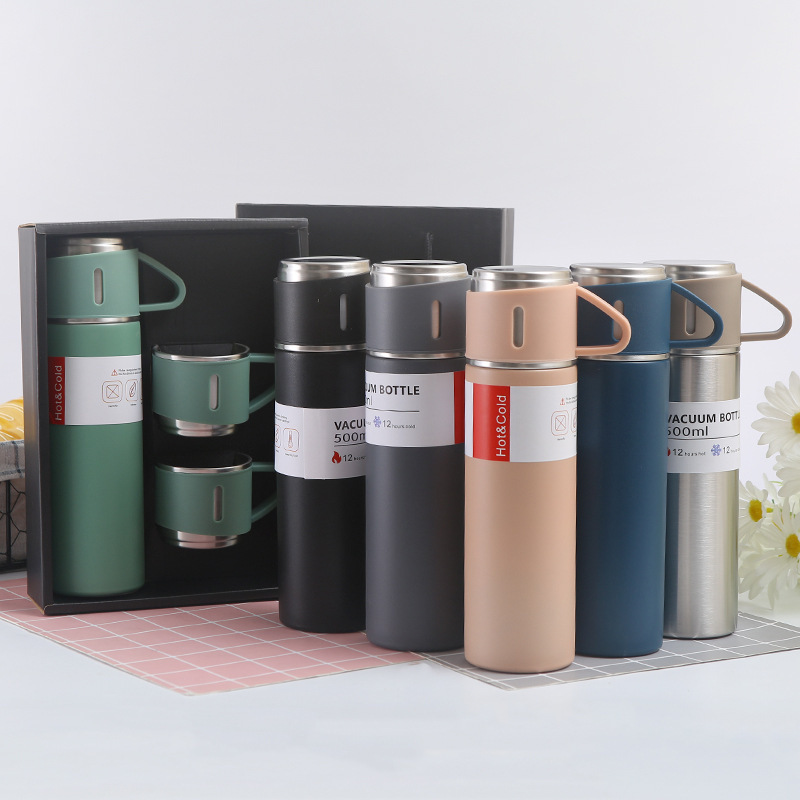
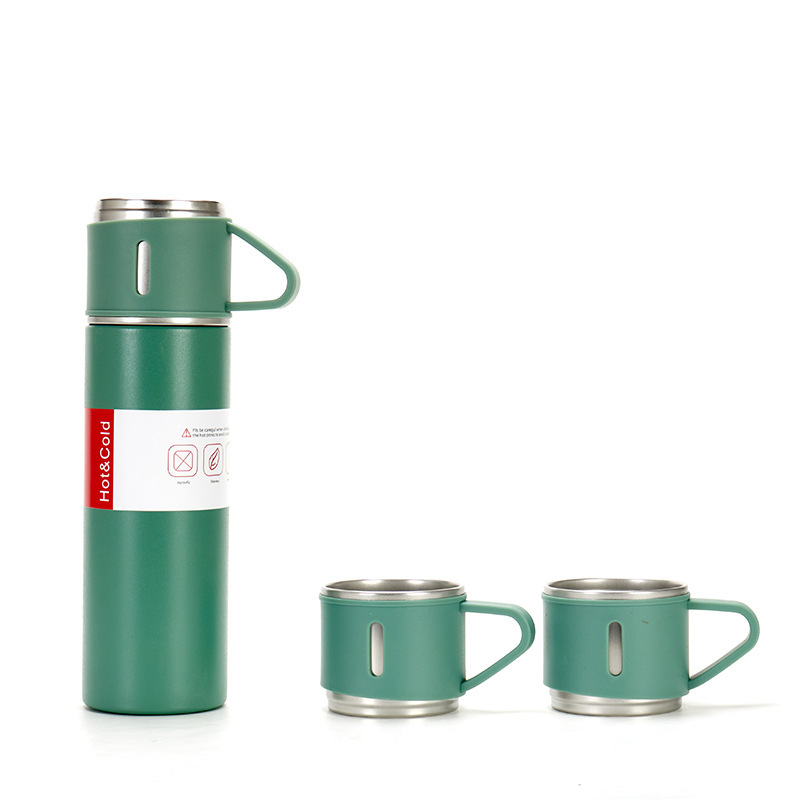
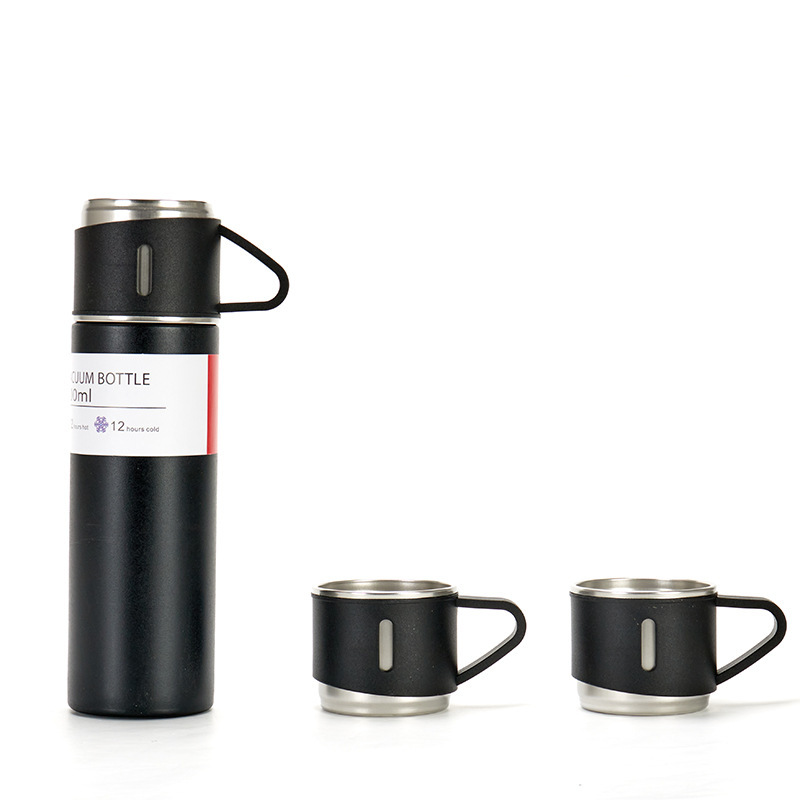
A typical set pairs a bottle with a second object: a tumbler, a notebook, a set of tea infusers, or a travel pouch. Adding a second item rarely doubles the cost, because the packaging and logistics are already paid for. It does change the box, and the box is where the cost concentrates.
Two-item sets ship in a rigid box with a moulded insert. The insert is tooled per configuration, so a set that changes composition needs a new insert. If the buyer expects to vary contents across years, choose a box with a foam or pulp insert that can be re-cut rather than a hard moulded tray.
The deadline is the real constraint
Corporate gifting runs on event dates. A set that arrives a week late has no value at all. Working backwards from the event: decoration and assembly need two to three weeks, sea freight six to eight weeks, and sampling two weeks. That puts the order date roughly three months before the event for sea freight.
Programs that compress this end up air-freighting rigid boxes, which is expensive because boxes ship with a lot of air. Design the box so it can ship flat and be assembled locally if the timeline is tight.
Personalisation per recipient
Named engraving turns a gift into a keepsake, and it also turns a single order into hundreds of unique units. That has consequences: each name is a separate laser job, sorting has to be exact, and a mis-engraved unit cannot be recovered.
The workable process is a name list in a fixed spreadsheet format, a proof sheet approved before the run, and packing in recipient order. Ask whether the factory can handle sorting, because not all can, and the failure mode is a box of correctly engraved bottles in the wrong boxes.
Presentation details that read as expensive
Ribbon, tissue paper, a printed card and a magnetic closure cost little individually and change the perceived value substantially. A foam insert with a fabric laminate reads better than bare foam. A printed sleeve over a plain box costs less than a fully printed rigid box and looks nearly as good.
Spend the budget on the insert and the closure. Those are the two things the recipient touches when opening.
Compliance and documentation
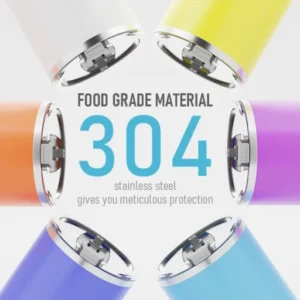
Corporate buyers increasingly ask for the same documentation as retail: food-contact declarations, and for European recipients, LFGB or equivalent. Gifts do not exempt a product from food-contact rules in most markets.
Also confirm the box printing is free of restricted substances if the recipient’s market has packaging regulations. The cup can be compliant while the ink on the box is not.
Programme checklist
- Set composition and insert tooling implications
- Event date, working back through decoration, assembly and freight
- Name list format, proof approval step, sorting responsibility
- Box format: rigid, folding with sleeve, or flat-ship with local assembly
- Documentation pack for the recipient’s market
- Spare units allowance for damage and mis-engraving
Order spares. On a named program, a damage rate of two to three percent is normal and there is no way to replace a single named unit after the run closes.