Description
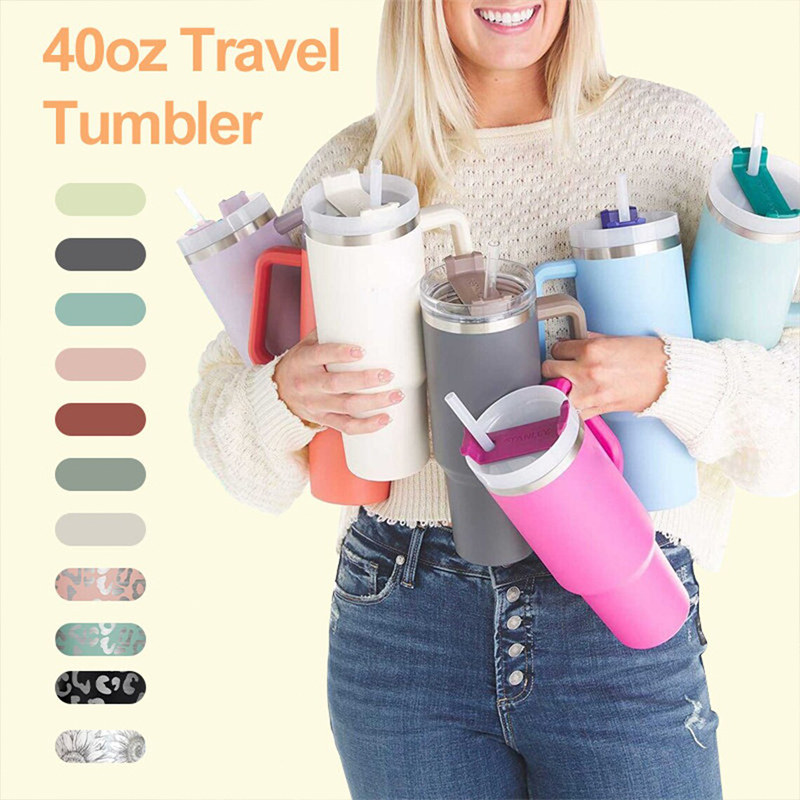
40oz Tumbler with Handle and Straw
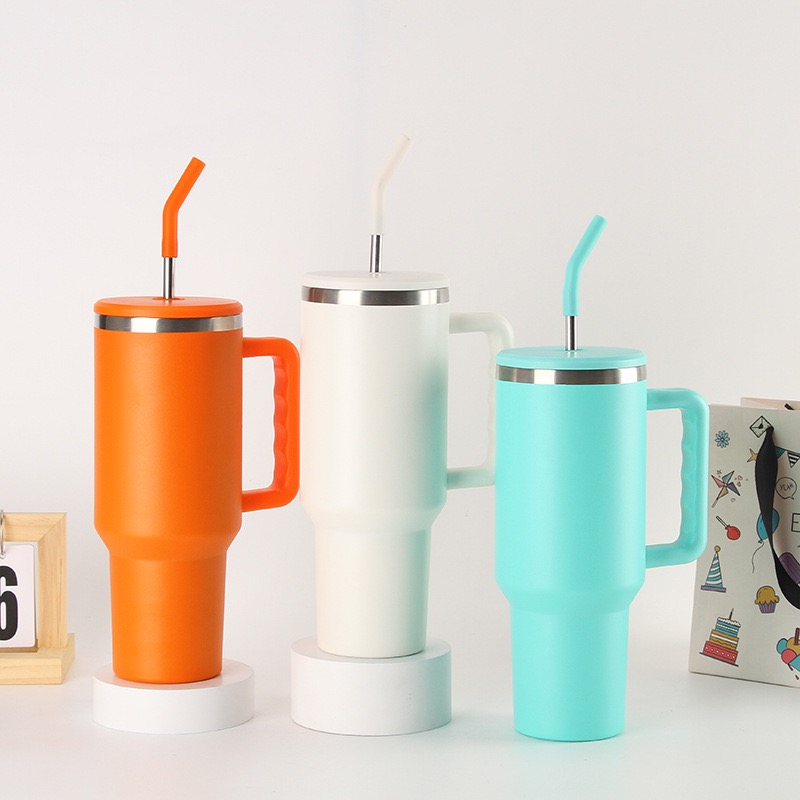
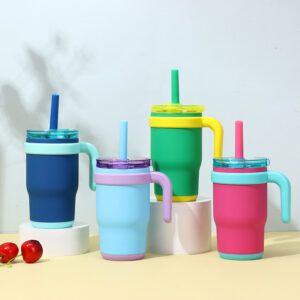
A 40oz handled tumbler looks simple on a shelf and is difficult to build well. Three parts decide whether the program succeeds: how the handle attaches, how the lid seals around the straw opening, and whether the base fits the cup holder the buyer already owns. This page covers those three, plus the coating choices that survive a dishwasher.
The handle is a structural problem, not a styling choice
On a 40oz body the empty weight sits around 600 to 700 grams with the lid, and a full tumbler passes 1.7 kilograms. Every time someone lifts it, the handle carries that load at a lever arm of roughly 90 millimetres. Welded handles concentrate stress at two small contact patches and are the first thing to fail in drop testing.
The more durable construction is a continuous bracket that wraps a section of the body wall and is welded along its full length, or a moulded collar that distributes load around the circumference. Ask how the handle is attached and how many weld points carry the load. A handle that is spot-welded at four points is a warranty claim waiting for a busy month.
Straw lids leak at the gasket, not the straw
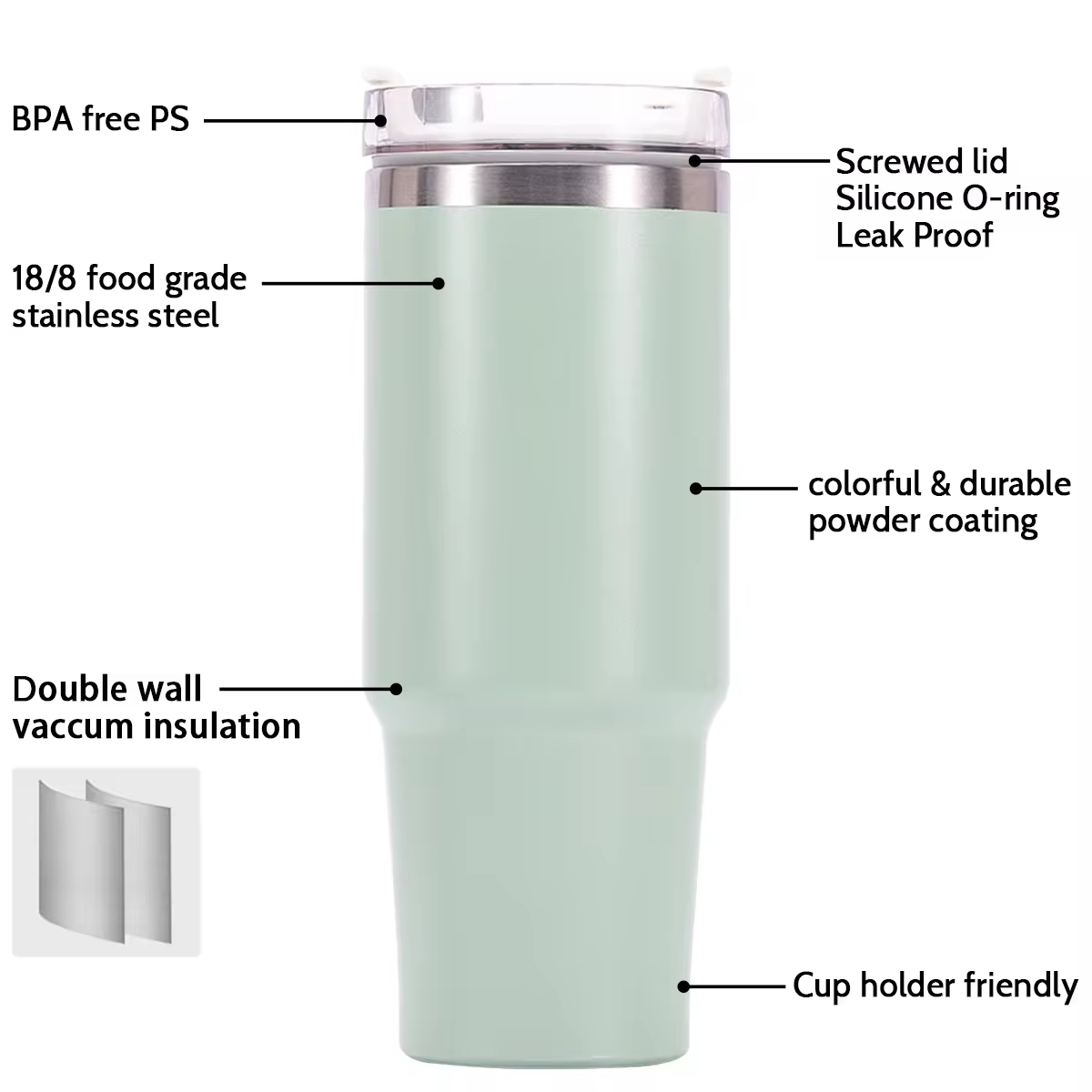
Most leak complaints on straw lids come from the gasket seat rather than the straw aperture. The gasket has to compress evenly against a sealing land that stays flat after the lid is moulded and after it has been through a dishwasher cycle. Warpage of a few tenths of a millimetre is enough to open a path.
Two specifications matter: the gasket material and the sealing land tolerance. Silicone holds compression set better than EPDM across repeated wash cycles. On the lid, ask for the flatness tolerance of the sealing land and confirm it is checked after moulding, not only on the tool.
Base diameter and the cup holder
40oz tumblers are bought to travel. If the base diameter exceeds the cup holder in the buyer’s vehicle, the product fails in daily use regardless of how well it insulates. The common constraint is a base around 70 to 75 millimetres. A tapered base can keep the body wide while still entering a standard holder.
Confirm the base diameter on the drawing before sampling, and test it in an actual vehicle holder rather than a measuring jig.
Coating that survives the dishwasher
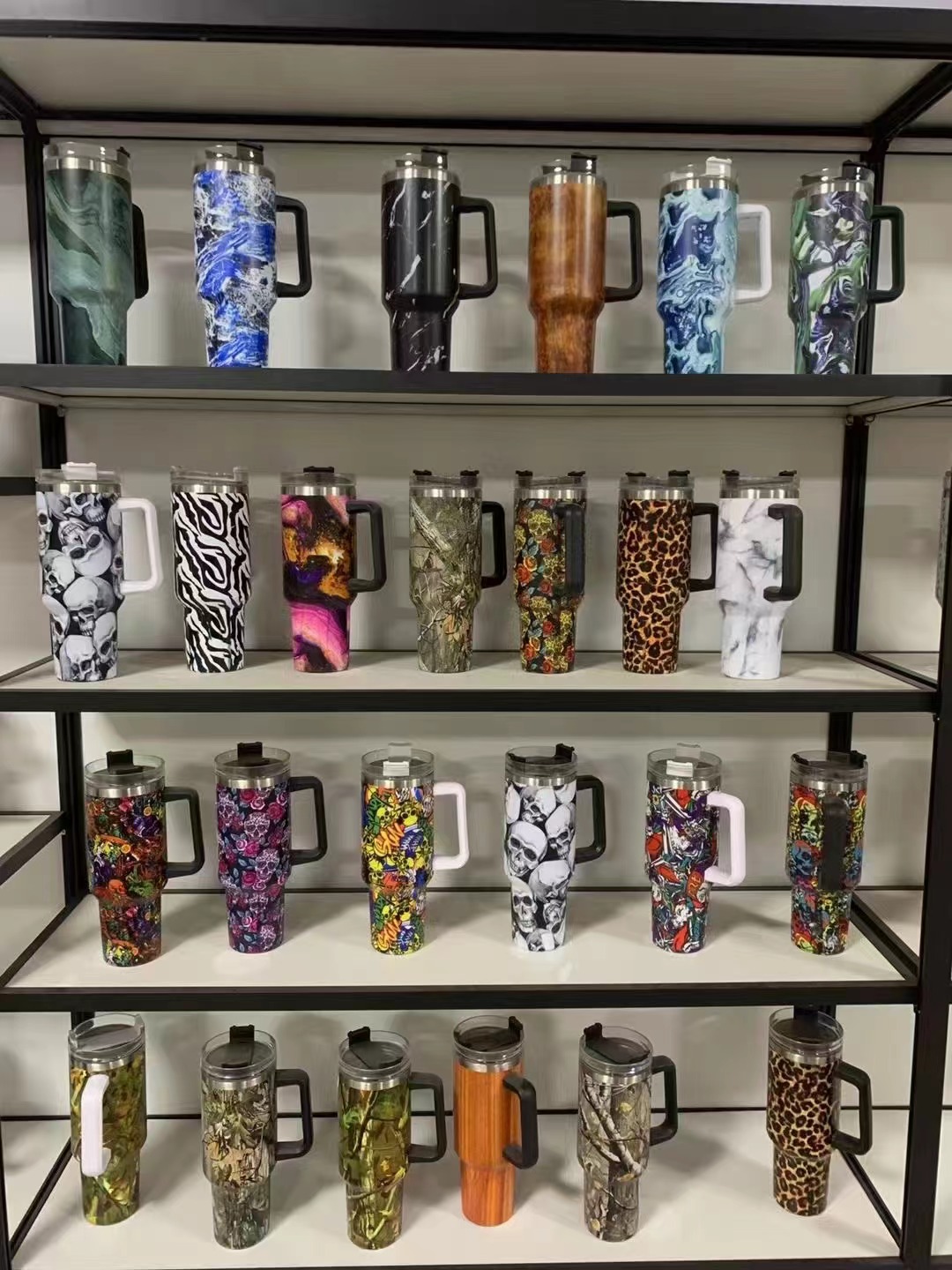
Print applied over powder coat holds up better than print applied directly to bare steel. On a tumbler that goes through a dishwasher two or three times a week, the failure mode is edge chipping where the print meets the coating, not overall fading.
If the artwork includes fine detail near the top rim, move it down. The rim takes the most handling and the most abrasion.
What to confirm before the PO
- Handle attachment method and number of load-bearing weld points
- Gasket material and sealing land flatness tolerance
- Base diameter, tested in a real cup holder
- Coating system with a dishwasher cycle reference
- Drop test height and the surface used
These five items determine the return rate more than the insulation rating does.