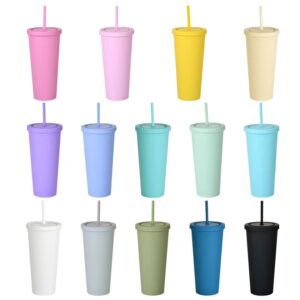
Description
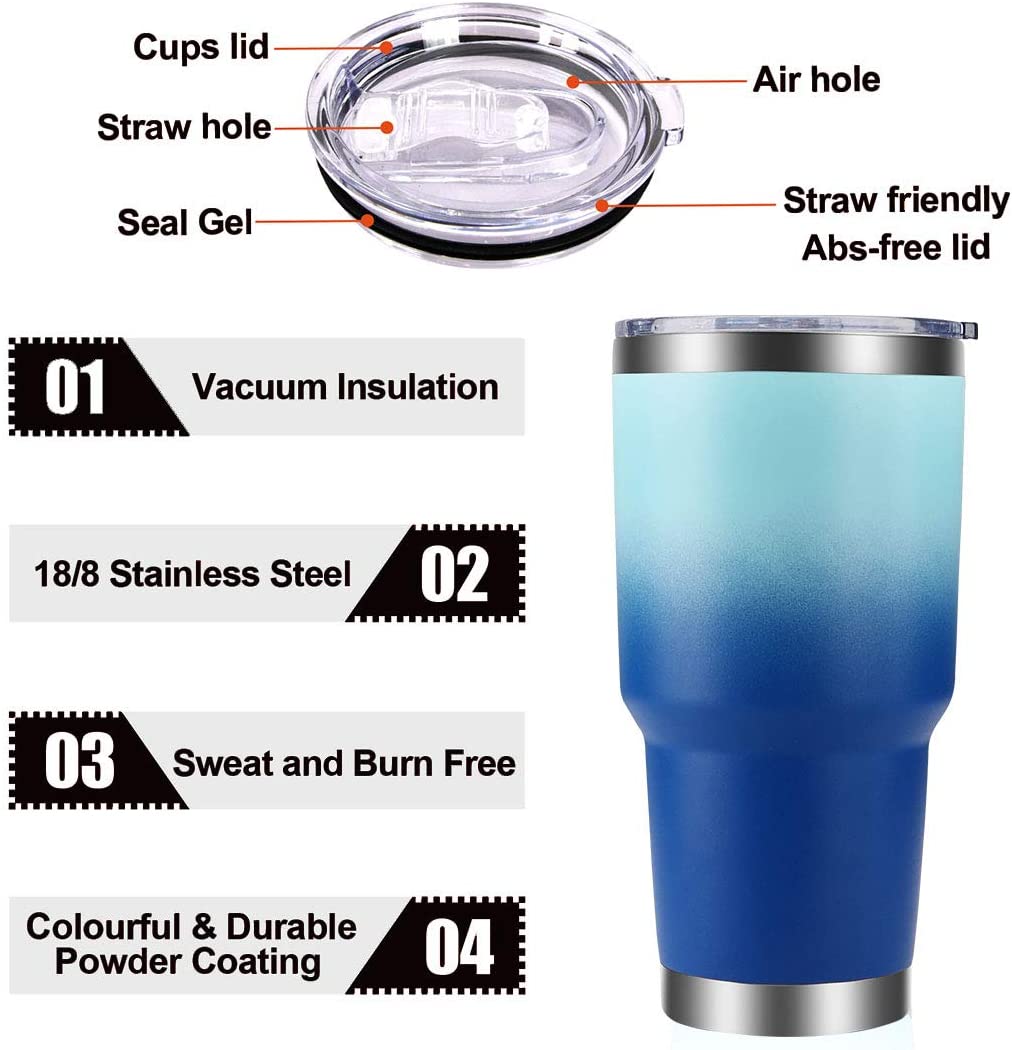
30oz BPA Free Vacuum Tumbler
What “BPA free” legally means
BPA free is not a certification. It is a statement that the product does not contain bisphenol A above the applicable detection limit, and it carries different weight in different markets. In the EU, BPA is restricted in food-contact materials and the statement is largely redundant for compliant products. In the US, there is no federal definition, which is why the claim is regulated more by litigation than by rule.
The practical consequence: the claim is only as good as the documentation behind every plastic part that touches liquid.
Which parts actually contain plastic
The body is stainless, so the BPA question lives entirely in the lid: the cap body, the gasket, the straw if there is one, and the sliding or flip mechanism. A tumbler can have four plastic components and a buyer will treat the whole product as one claim.
Map every plastic part to its resin and its supplier declaration. A lid molded from PP is inherently BPA free; a lid molded from PC is not, because polycarbonate is made from bisphenol A and can release it under heat and repeated washing. This single material choice is the difference between a defensible claim and a recall.
Tritan, PP and the cost difference
PP is the cheapest BPA-free option and handles hot liquids well, but it is translucent rather than clear. Tritan gives clarity and impact resistance at roughly twice the resin cost. Both are defensible; the choice depends on whether the lid needs to look like glass.
For a 30oz vacuum tumbler with a clear lid, Tritan is the material that makes the product look premium. For a colored lid, PP does the same job for less, and the BPA-free claim is equally valid.
Testing and the paperwork a retailer will ask for
Expect three documents: a resin manufacturer declaration, a migration or extraction test report from an accredited lab, and a declaration of conformity covering the finished article. A supplier who offers only a certificate for “food grade material” is offering something a compliance team cannot use.
Repeat the extraction test after any change of resin supplier, even to the same grade. Buyers skip this and discover the gap during a retail audit.
Why the claim is worth getting right
The customers searching for BPA-free drinkware are, by definition, the ones who read labels. For that audience the claim is the purchase reason, and an unsupported claim is the fastest route to a public correction. Getting the resin right and the paperwork complete costs a few thousand dollars and removes the only real risk in the product.