Description
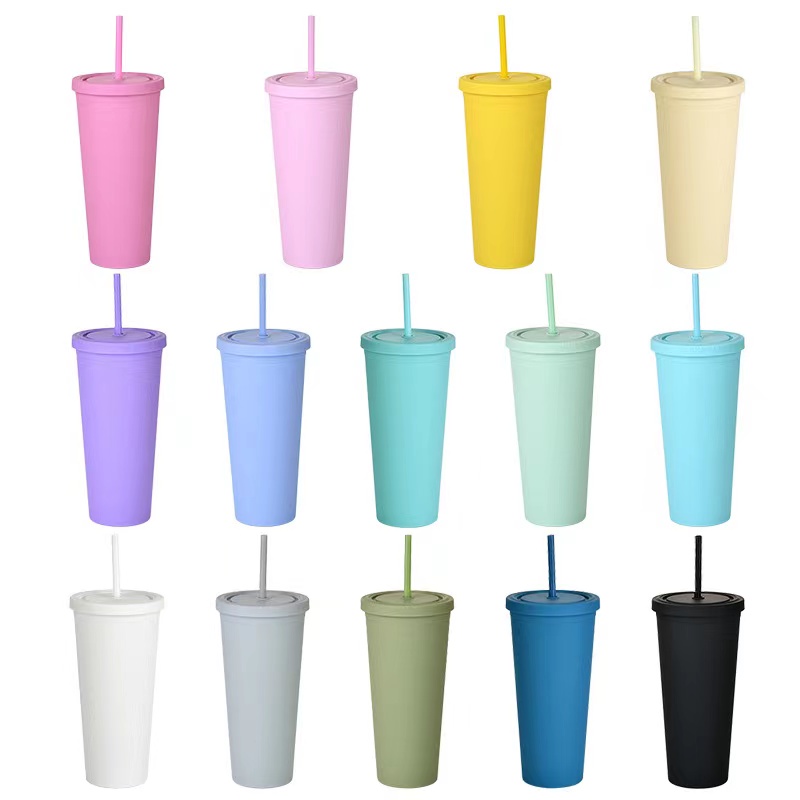
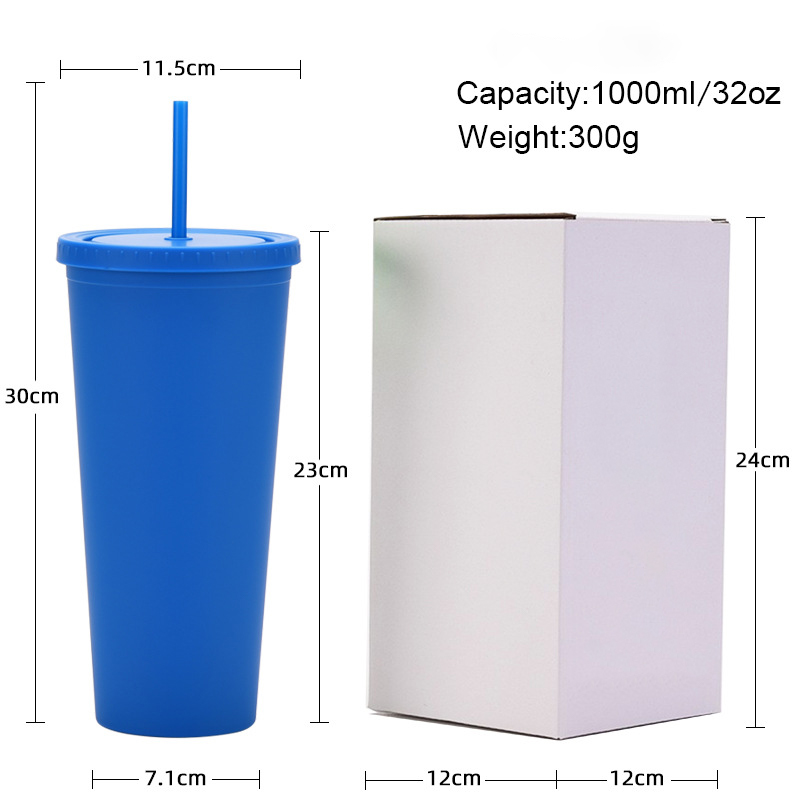
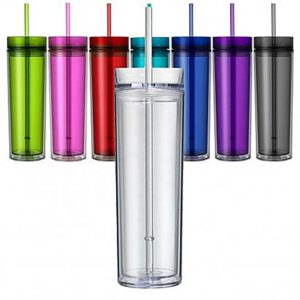
32oz Large Capacity Double-layer Plastic Cup
Not every program needs stainless steel. Plastic double-wall cups win on cost, weight and print area, and they lose on heat retention and perceived durability. Knowing where the line sits decides whether a plastic cup is the right answer or an expensive mistake discovered at the trade show.
What double-wall plastic actually buys you
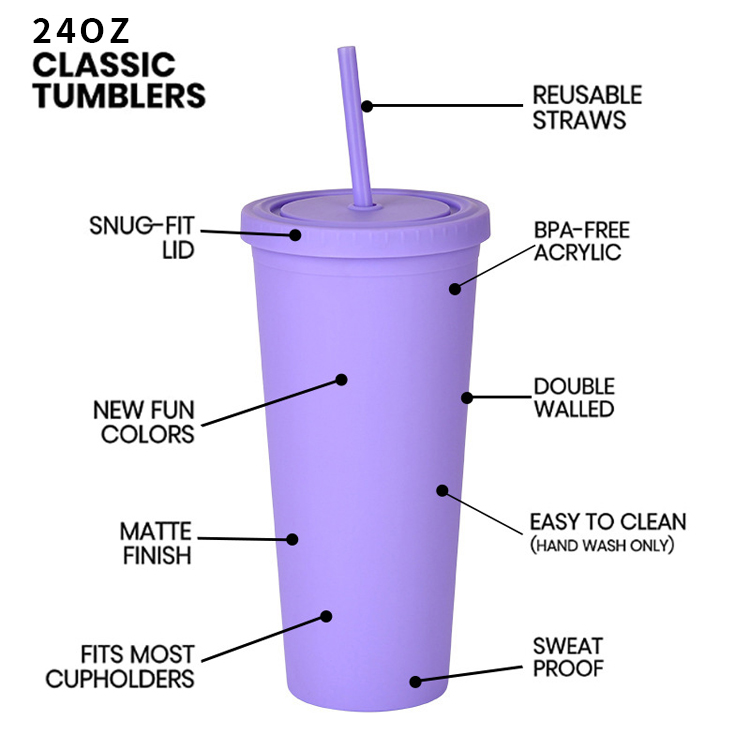
A double-wall plastic cup creates an air gap between two moulded shells. That gap stops condensation on the outside, which is the main reason the format exists — a cold drink in a single-wall cup sweats and ruins the table it stands on. It provides some insulation, but air is a far worse insulator than a vacuum.
Practical performance: a cold drink stays acceptably cold for roughly an hour to ninety minutes. A hot drink loses heat noticeably faster than in a vacuum tumbler. If the program is a summer promotional item, that is fine. If it is a retail product competing on temperature claims, plastic will lose the comparison.
Material choice drives the whole cost model
AS (acrylonitrile styrene) gives clarity and a premium look, and it is the usual choice for the clear outer shell. PP (polypropylene) is cheaper, tougher and opaque, and it is common for the inner shell and for coloured bodies. Mixing the two in one cup is normal.
The cost difference between a good and a cheap plastic cup is usually wall thickness and mould cycle time, not the resin itself. A thinner wall cools faster and cycles faster, and it also flexes more in the hand. Below roughly 1.5 millimetres the cup starts to feel disposable.
Print area is the real advantage
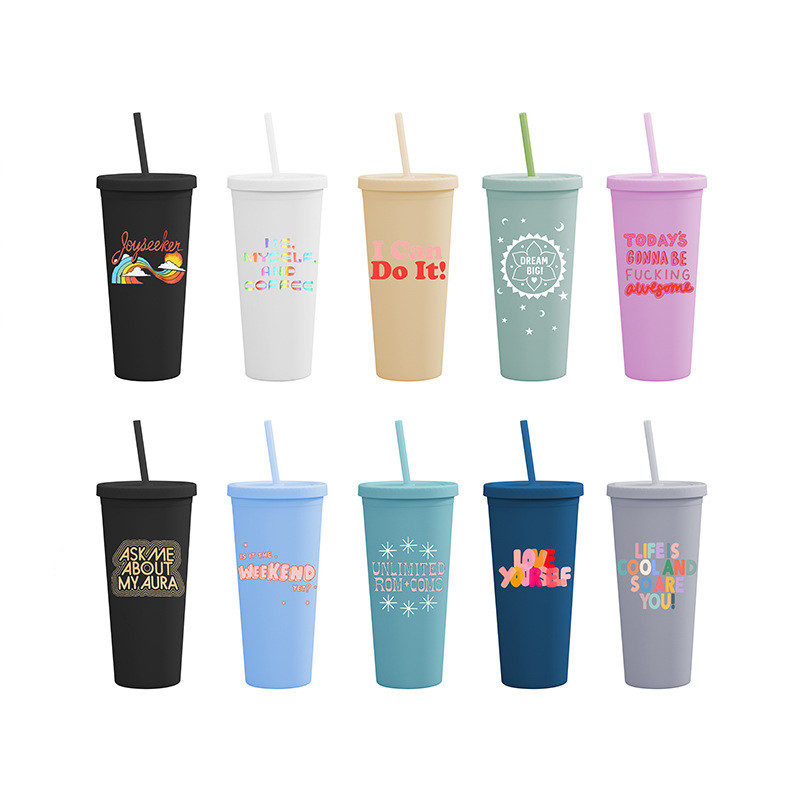
A 32oz plastic cup gives a wrap-around print area that a coated stainless body cannot match at the same price. Full-colour sublimation or in-mould labelling produces photographic artwork that survives handling because the decoration is under or inside the wall rather than on top of it.
For trade show giveaways and beverage promotions, this is the deciding factor. The cup is a billboard first and a drink container second.
Where plastic fails
Crazing. A plastic cup that goes through a hot dishwasher repeatedly develops fine surface cracks, and once crazing starts the cup looks dirty even when clean. If the end user will dishwasher it, either specify a higher-grade resin or accept a short service life.
Also odour retention. Plastic picks up smells from strong drinks. For coffee programs, this is a real complaint driver.
Recyclability and the compliance question
PP is widely recyclable and carries a recognised resin code. AS is recyclable in principle but far less accepted in curbside streams. If the buyer’s market has extended producer responsibility fees or packaging taxes, the resin choice affects the reported obligation, not just the unit cost.
Ask for the resin datasheet and the food-contact declaration for the specific grade used, not for the resin family.
When to choose plastic over stainless
- Unit cost is the primary constraint
- Large print area matters more than temperature retention
- The item is a giveaway, a promo, or a short-life seasonal product
- Weight affects shipping cost significantly
If any two of those do not apply, the stainless option usually wins on total cost of ownership once returns and complaints are counted.
Ordering & lead time
| Minimum order quantity | 100 pcs per SKU |
| Sampling lead time | 3 days |
| Production lead time | 7 days |
| Monthly capacity | 100,000 pcs |
Lead times apply to existing tooling and standard colours. New mould development or custom colour matching carries its own schedule — confirm before committing to a delivery date.