Description
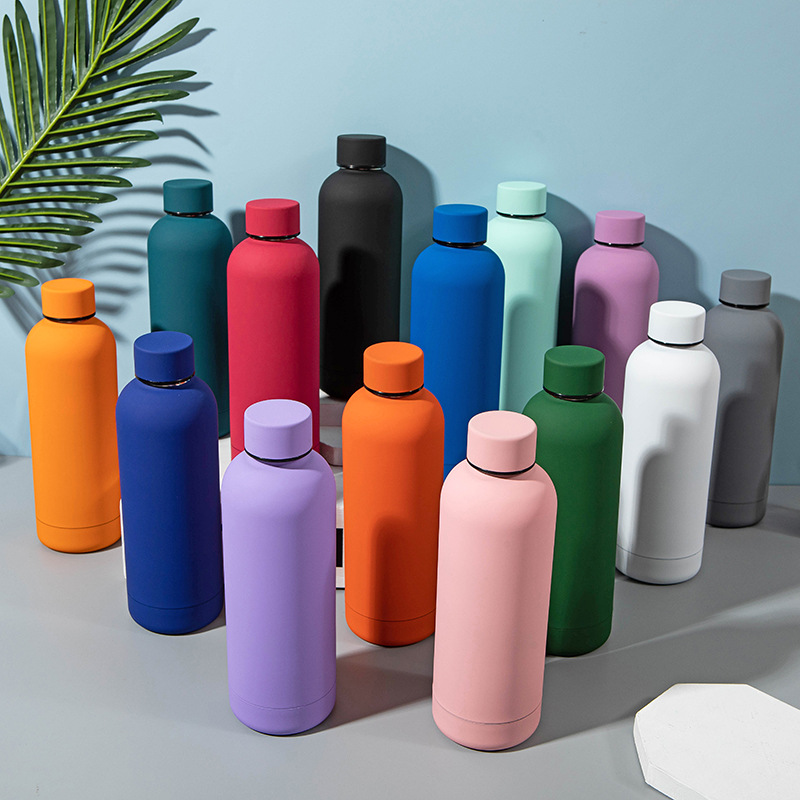
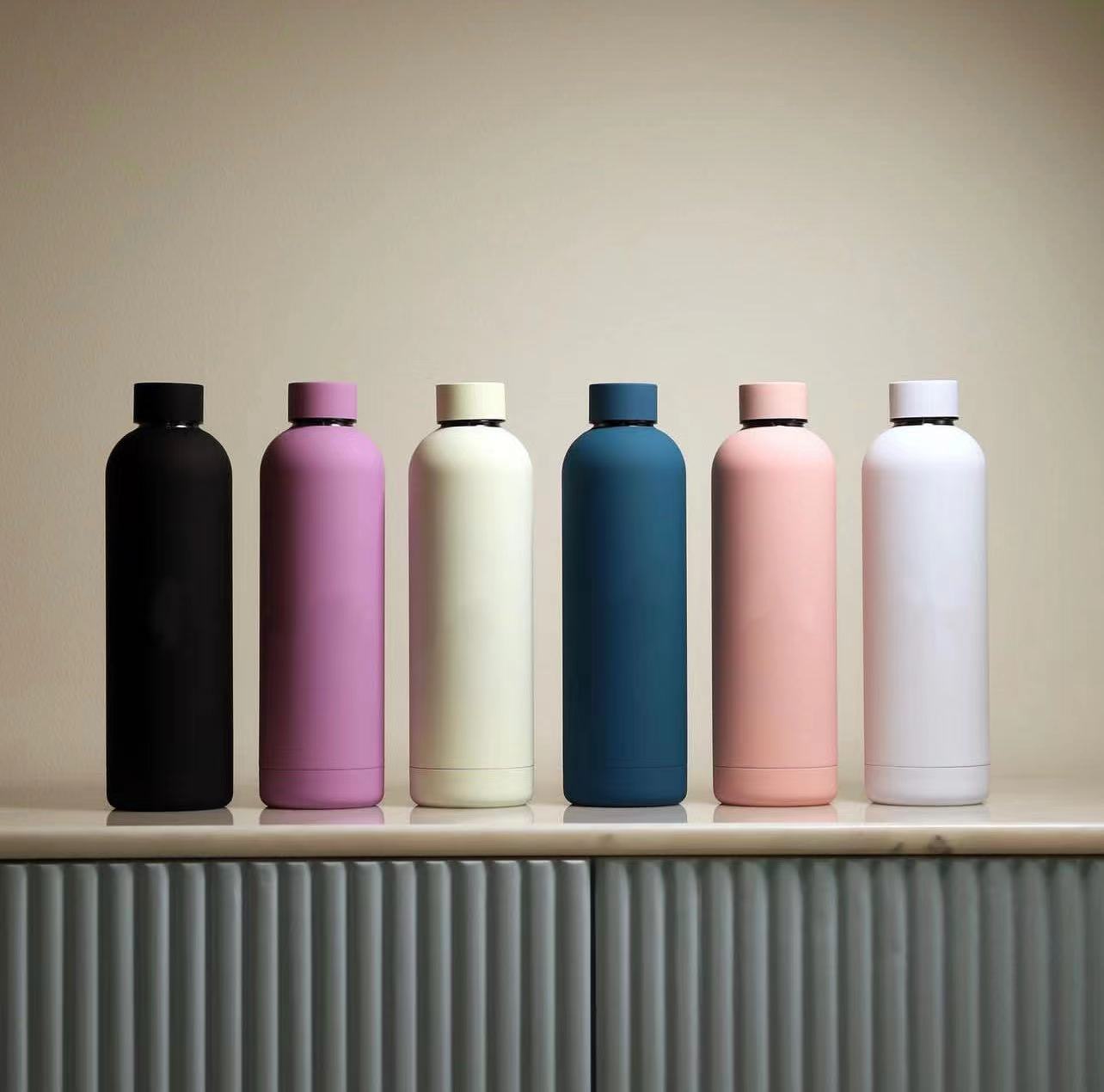
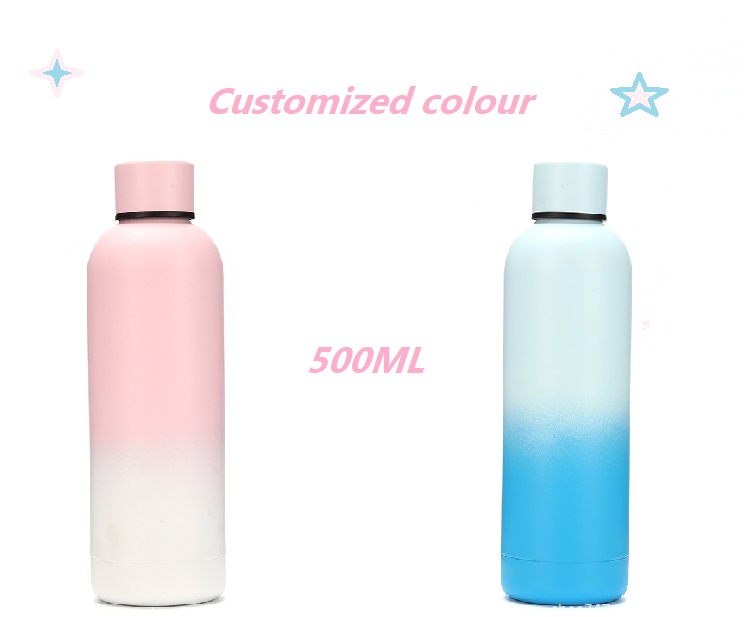
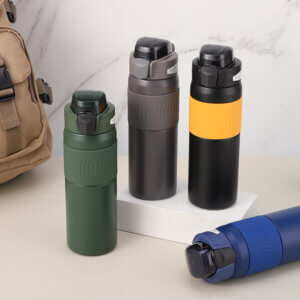
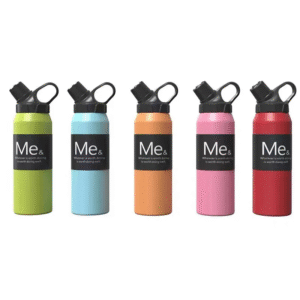
Custom Cola Shape Stainless Steel Water Bottle
How a cola profile is actually formed
A cola-shape bottle is not a cylinder with a waist pressed into it. The profile is drawn from a flat blank through a sequence of dies that reduce diameter in stages, and the waist groove is formed in the same pass as the shoulder. That matters commercially because the groove is not decoration added later; it is part of the forming sequence, and changing its depth means changing the die set.
For a 500ml to 750ml cola body, three draw stages are typical. The first stage sets the base diameter, the second forms the shoulder transition, and the third impresses the waist and calibrates the neck. A supplier who quotes a two-stage process for this shape is either outsourcing the forming or planning to hide a seam.
The waist groove is structural, not cosmetic
Stainless at 0.4mm has almost no column stiffness on its own. The waist groove acts as a stiffening ring, and it is the reason a cola bottle feels rigid in the hand despite thin walls. Remove the groove and the body buckles at roughly 40 percent lower axial load, which shows up as dents in transit rather than in the customer’s hand.
Groove depth beyond 3mm starts to thin the wall at the transition radius. Wall thinning at that point is where pinholes appear after a year of dishwasher cycles. Ask for a wall-thickness map at the groove, measured at four points around the circumference, and reject anything below 0.32mm.
Decoration limits on a curved surface
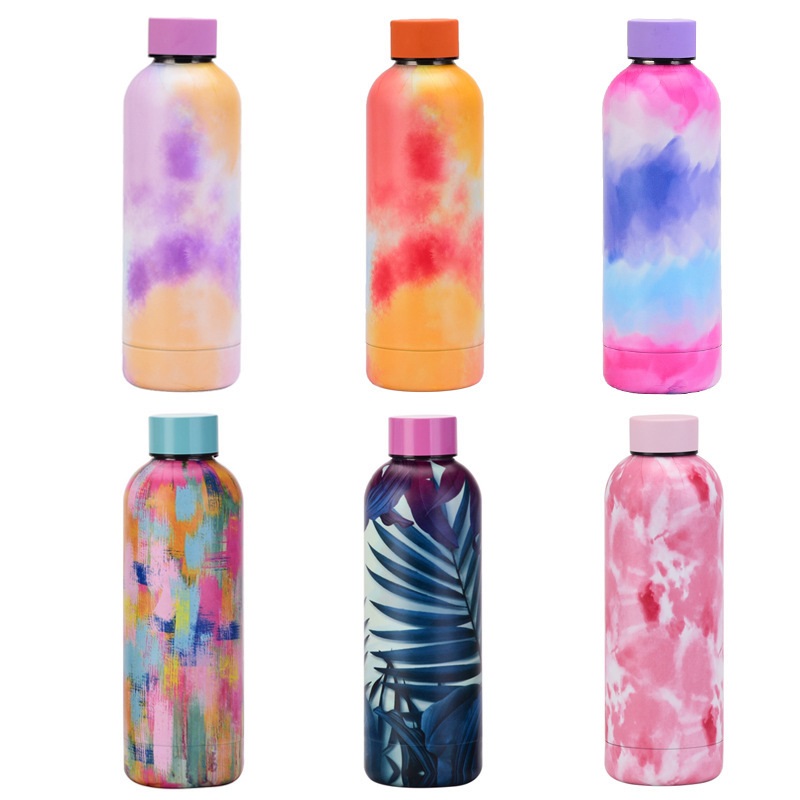
A cola profile has two radii that fight each other: the shoulder taper and the waist curve. Pad printing handles the flat band but distorts across the shoulder. Wrap decals follow the curve but wrinkle if the shrink rate is not matched to the groove depth. Laser etching is the most forgiving because it does not need contact, but it only produces a single tone.
Practically, most private-label cola programs put the logo on the flat band between waist and base, and use the shoulder for a single-color pad print or nothing at all. Designing artwork across the waist is where approvals get stuck for weeks.
Tooling cost and the MOQ that follows
A three-stage die set for a cola profile is a real capital item, and it is specific to one diameter family. That is why cola bottles cluster around a handful of standard sizes. If your target is 10,000 units, expect to choose an existing die rather than cut a new one. If you are above 50,000 units and the shape is your differentiator, a dedicated die set amortizes quickly enough to justify itself.
The commercial reality is simple: standard die plus custom decoration gets you to market in six weeks. Custom die plus custom decoration takes four months and needs volume to make sense.
What to verify before approving samples
Three checks decide whether a cola body will hold up. First, the wall map at the groove. Second, a vacuum test after 500 dishwasher cycles, because the seam at the waist is where fatigue shows first. Third, a drop test on the shoulder, since that is the impact point when a bottle rolls off a table. Passing all three is what separates a sample that photographs well from a program that survives a returns season.