Last updated: October 19, 2026
Every year we sit in meetings where a brand owner says some version of the same sentence: “We paid forty thousand dollars for that mold, so it is ours.” Then someone opens the contract, and the sentence that actually governs the relationship says the tooling is “provided for the exclusive use of the buyer during the term of this Agreement.” Those are two different things. One is a payment. The other is a property right. In between sits a set of clauses that decide whether you can move that mold to another factory in eighteen months, whether a competitor can run it next season, and — the part almost everyone misses — whether US Customs will treat the money you spent as part of the entered value of every tumbler you import.
Tooling disputes are one of the most common failure modes in stainless steel drinkware programs, because the tooling is expensive, single-purpose, and physically located on someone else’s floor. A deep-drawn 20 oz tumbler body is not made from a generic die set. It runs through a blank die, a first draw, one or two redraws, a trim die, a bottom-forming station, a necking or curling station, and a set of gauges and fixtures that only make sense in combination. Add the EDM electrodes, the CNC programs, and the polishing fixtures, and a single SKU can involve twenty to forty pieces of dedicated hardware. None of it is useful to anyone else, which is exactly why the factory has leverage and the buyer has anxiety.
Below is the operator’s version of tooling ownership: what the money actually buys, how to write clauses that survive a supplier change, how US customs valuation treats buyer-supplied molds, and what it really costs to move a tool between plants. If you are about to approve a tooling invoice, this is the cheaper place to make the mistake.
Tooling ownership is easiest to establish on formats that required a bespoke mold rather than a stock body. In our current line, Custom Egg Shape Insulated Vacuum Mug with handle and 6oz Double Wall Egg Shape Tumblers are the closest matches.
Why Does “We Paid for the Mold” Not Mean “We Own the Mold”?
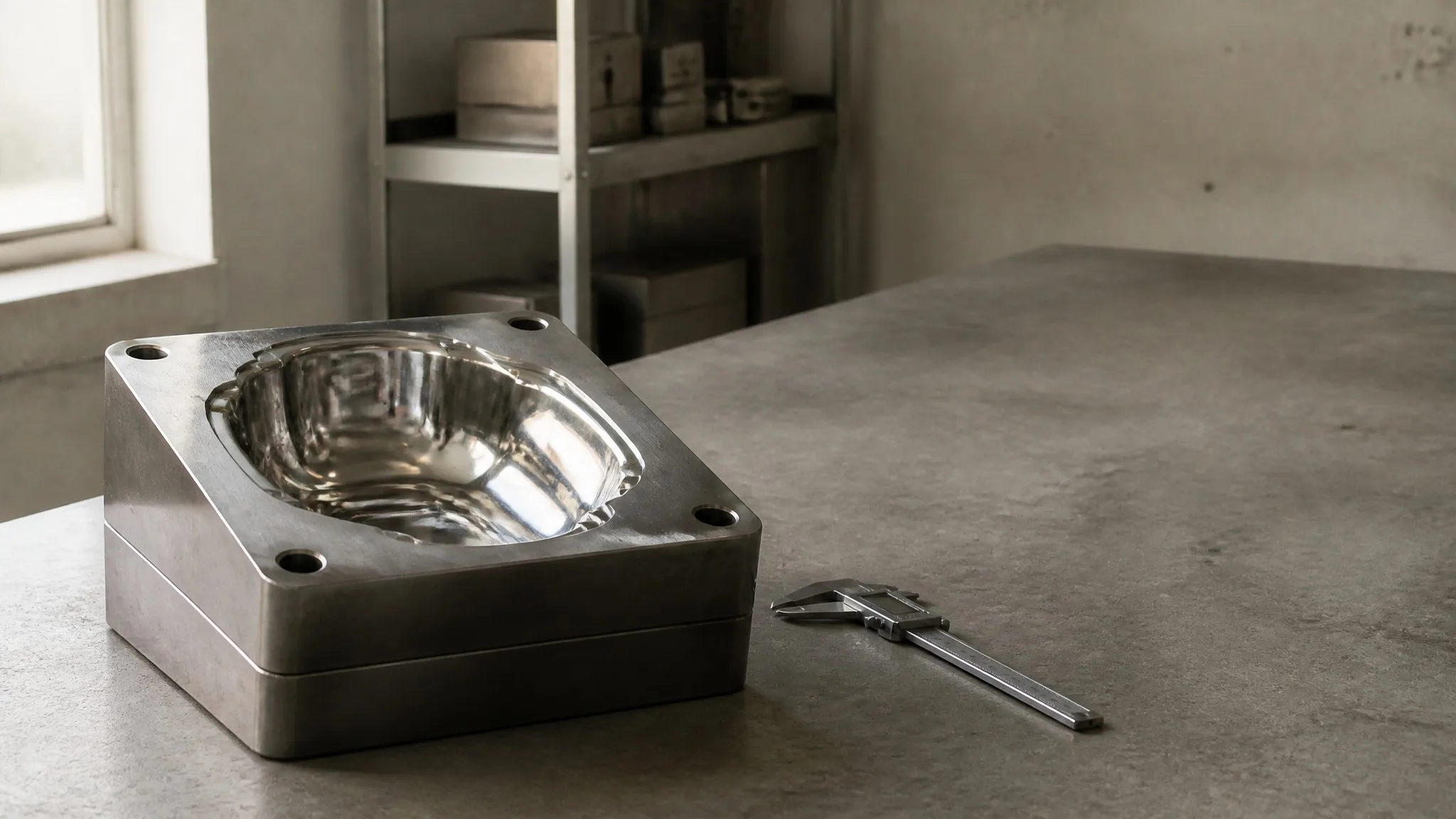
Payment creates a claim, not a title. In most legal systems, ownership of a mold is decided by the agreement between the parties, not by who wrote the cheque. If the purchase order says “tooling charge: USD 38,000” and nothing else, you have bought a service — the fabrication of a tool — and the physical asset may sit on the factory’s books as their fixed asset. You have a contractual expectation of use. You do not have an asset you can seize, sell, or move.
The distinction matters in the three situations buyers actually face:
- Supplier change. You want to move the SKU to a cheaper plant, or a plant closer to a different port. If the mold is not yours, the incumbent can refuse to release it, and your only remedy is a commercial negotiation conducted from a weak position: you have already paid for the tool and you have no production.
- Insolvency. If the factory fails, its creditors look at its balance sheet. A mold the factory owns is an asset available to them. A mold you own, properly documented and marked, is yours to retrieve. Retrieval from a failed plant is chaotic either way, but documented title is the difference between a claim and a conversation.
- Exclusivity. If the tool is the factory’s, nothing on the face of the document prevents them from running your geometry for another buyer — particularly in markets where your brand is not registered. Ownership plus an exclusive-use clause plus physical marking is the only combination that reliably stops this.
Here is the counter-intuitive part: many factories will happily grant you title. It costs them nothing if they keep possession and keep running the tool, and it makes the buyer feel secure enough to sign. What they resist is transferability — the right to take the tool away on short notice without a release fee, a “technology transfer” charge, or a claim for lost future margin. So do not stop at “the tooling is the property of the Buyer.” Add the mechanism that makes the sentence operative.
What Counts as Buyer Tooling in a Drinkware Program?
Most tooling schedules are too narrow. They list “the mold” and ignore everything that makes the mold produce saleable parts. A workable definition covers four categories.
1. Forming tooling. Blank, draw, redraw, trim, flange, necking, curling, and bottom-forming dies; punches; die inserts; strippers; and any progressive or transfer tooling. For a vacuum-insulated bottle, this includes the inner-wall draw tooling and the outer-wall tooling, which are separate sets with different clearances.
2. Fixtures and gauges. Welding fixtures for the base and the neck, polishing fixtures, leak-test adapters, vacuum-port brazing fixtures, and go/no-go gauges for thread pitch, lid engagement, and overall height. These are cheap individually and expensive to recreate under time pressure, because recreating them requires re-measuring a part you may no longer be able to produce.
3. Digital assets. 3D models, 2D drawings with tolerances, CAM programs, EDM electrode geometry, and inspection programs for CMM or vision systems. This category is where disputes become ugly, because files can be copied without anyone noticing and their ownership is rarely addressed in the supply agreement.
4. Secondary-operation tooling. Powder-coat masking jigs, logo-engraving fixtures, laser rotary attachments, and assembly jigs for handles or straw lids. If you run a custom colour program, the masking jigs are what keep the thread clean, and they are made for your geometry alone.
Before you commission any of it, price the job properly: our breakdown of what a new bottle shape really costs in 2026 separates tool fabrication, trial runs and the engineering hours that never appear on a quotation.
A tooling schedule that lists only category 1 gives the factory three ways to hold you hostage: “the fixtures belong to us,” “the programs are our intellectual property,” and “we have to re-quote the masking jigs.” Write all four categories into an annex, with part numbers, photographs, and a replacement cost for each line. The schedule should be an appendix to the supply agreement, not an email attachment, and it should be updated every time a new SKU is tooled.
How Should the Contract Define Title, Custody and Exclusive Use?
Three concepts need to be separated, because template contracts routinely merge them and merging them is what creates ambiguity later. Title is who owns the asset. Custody is who physically holds it and is responsible for its condition. Right of use is who may run it and for what purpose. A factory can legitimately hold custody of a mold you own — that is the normal arrangement — but the contract must say so explicitly, and it must say what happens to custody when the relationship ends.
| Clause | What it must say | Failure mode if omitted |
|---|---|---|
| Title and transfer | Title passes to Buyer on payment of the tooling invoice; Seller holds as bailee. | Tool sits on Seller’s fixed-asset register. |
| Identification | Unique tool number stamped on the block and recorded in an annex. | Dispute over which mold is “yours.” |
| Exclusive use | No production for third parties without written consent; no running after termination. | Your geometry appears in a competitor’s catalogue. |
| Maintenance | Seller maintains at own cost to specification; records shots and repairs. | Worn tooling blamed on “normal wear.” |
| Release | Release within 15 business days of written request; no fee beyond documented outstanding amounts. | “Technology transfer” invoice of USD 20k or more. |
| Condition on return | Returned in production condition, with last inspection report and shot count. | Mold arrives with a cracked cavity and no recourse. |
Two details do more work than the rest. First, the release window: fifteen business days is realistic for a plant that has to schedule a crane and pack a die; thirty days is generous; “upon mutual agreement” is not a clause, it is a postponement. Second, the shot counter: a stainless deep-draw die has a finite life, and the difference between “40,000 shots remaining” and “at end of life” is the difference between a usable asset and scrap metal. Require a monthly shot count in writing, or you will discover the tool’s condition at exactly the moment you need it.
Do Your Molds Count as a US Customs “Assist”?
This is the part of tooling ownership that finance and sourcing teams almost never discuss, and it can quietly change your landed cost by a few percent on every unit you import.
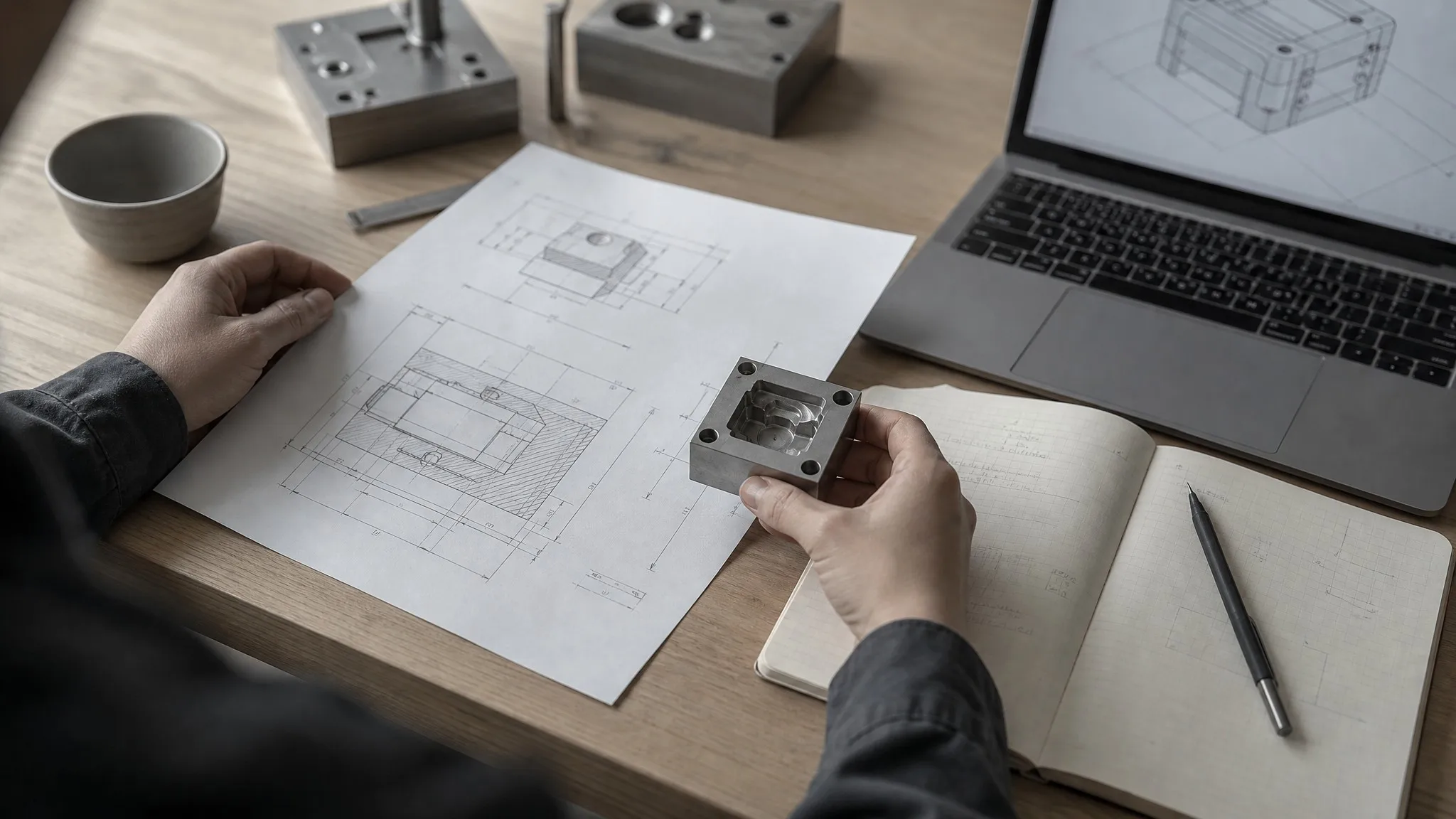
Under US customs law, the transaction value of imported merchandise must include certain additions. One of them is the value of any assist — defined in 19 U.S.C. 1401a(h)(1)(A) to include tools, dies, molds, and similar items supplied directly or indirectly and free of charge or at reduced cost by the buyer for use in connection with the production of the imported merchandise. In plain terms: if you pay for a mold and hand it to the factory at no charge, that mold is an assist, and its value has to be reflected in the entered value of the tumbler bodies produced from it.
The regulation at 19 CFR 152.103 sets out how transaction value is built up, including the treatment of assists. It also works through the two allocation methods and states plainly that the value of an assist includes transportation costs to the place of production. CBP’s CROSS ruling H031244 restates the statutory definition and is a useful plain-language reference for the “supplied directly or indirectly, free of charge or at reduced cost” test.
Two practical consequences follow. The first is arithmetic. If a tool costs USD 40,000 and is expected to produce 100,000 units over its life, the duty-relevant addition is roughly USD 0.40 per unit — small on its own, but on a 200,000-unit program the assessment difference is not trivial, and it compounds with the duty rate and with any additional tariff layer that applies to the classification. The second is documentation. If you never declare the assist, you have a valuation exposure that survives for years, and it is discovered during an audit rather than at entry, when the goods are long gone.
Most factories will not raise this with you, and many will actively prefer the simpler arrangement: they invoice you for “tooling” as a separate service, treat the mold as theirs, and quote you a unit price that excludes the amortisation. That is convenient, and it may be perfectly lawful — but it changes who bears the valuation obligation and it changes who owns the asset. Decide which structure you want deliberately, with your customs broker in the room, rather than discovering it during a focused assessment.
How Does CBP Value and Allocate a Tooling Assist?
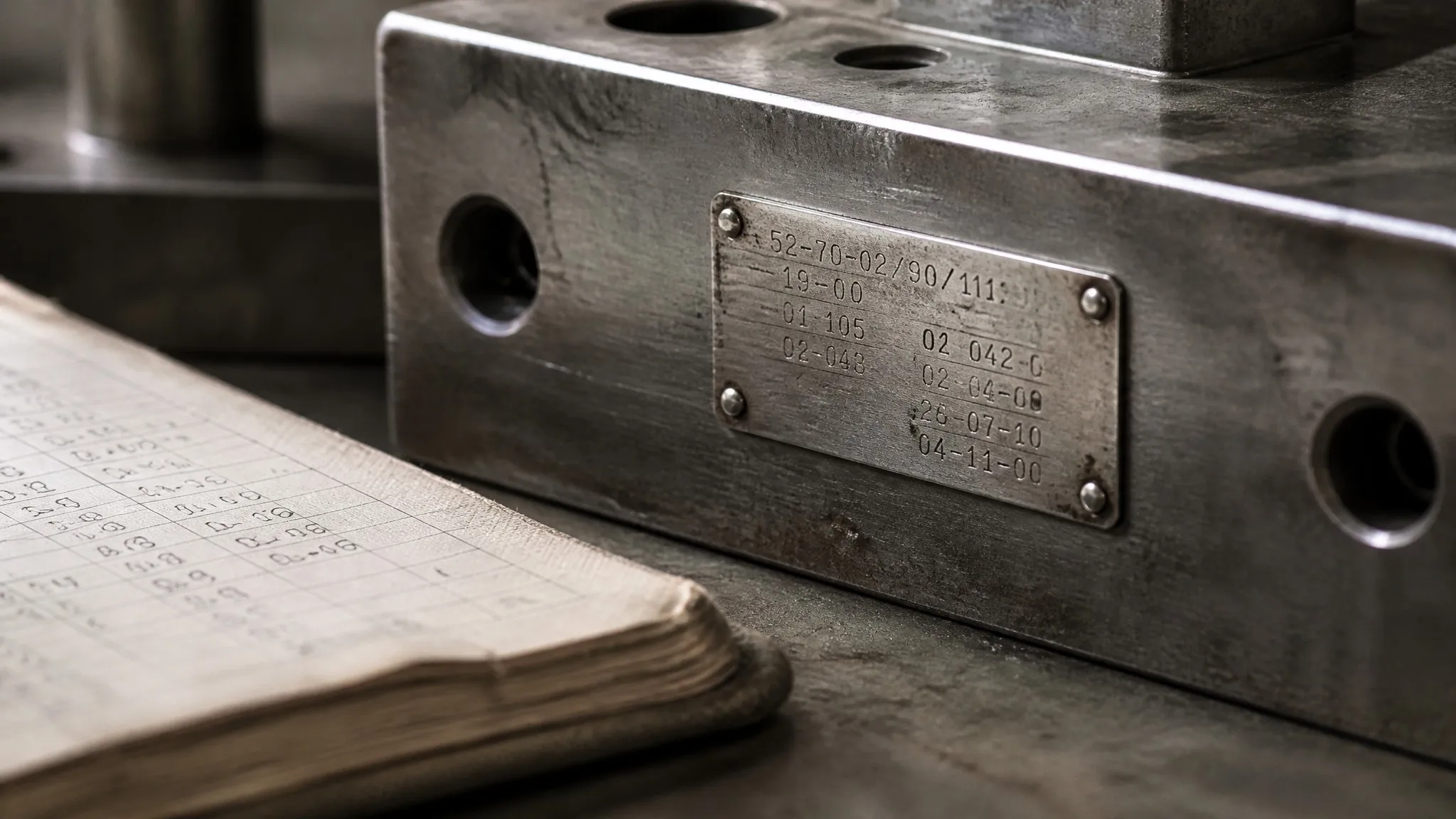
The regulation allows the assist to be allocated across the production it supports, which is the sensible approach for a mold that makes tens of thousands of units. In practice the allocation decision has three inputs: the cost of the tool, the expected production volume, and the period over which you expect to import. Change any one of them and the per-unit addition moves.
Where teams get into trouble is with molds that are reworked or replaced. If a cavity is repaired mid-program, the repair cost is generally part of the assist value and should be allocated over the remaining production, not expensed silently. If a tool is replaced and the old one is scrapped, the unrecovered balance has to go somewhere. And if you run the same tool across two SKUs — a 20 oz and a 24 oz sharing a body diameter, for example — the allocation basis has to be defensible, because the two SKUs may carry different classifications and different duty rates.
The workable discipline is a one-page tooling register maintained by the importer, not the supplier. It should carry: tool number, description, fabricator, invoice value, date placed in service, expected total shots, shots consumed to date, and the per-unit assist currently being declared. Update it quarterly. When a customs auditor asks how you arrived at the addition, that page is your answer, and it is also the page that tells you the truth about whether the mold is still worth retrieving.

What Does It Really Cost to Move a Mold to a New Factory?
Buyers tend to budget for freight and forget everything else. Moving a die set is not a courier job; it is a re-qualification project. The tool has to be surveyed, cleaned, possibly re-polished, crated against corrosion, shipped, installed on a different press with different bed dimensions and different tonnage, and then run through a qualification cycle until the parts meet the drawing again.
Our own production records from nine tooling transfers between 2023 and 2026 — single plant, unaudited, and skewed toward mid-size draw tools in the 15–40 kg range — show a consistent pattern:
- First-lot scrap on a transferred tool ran 6.8% on average, against 1.9% on the same tool in steady-state production at the original plant. The gap closed over three to five lots as operators adjusted ram speed, blank-holder pressure, and lubricant. The cost of that scrap is usually invisible in the transfer budget, because it is absorbed as “ramp-up.”
- Refurbishment before transfer consumed 8–14% of the original tool cost. The common items were guide-pin replacement, cavity polishing after storage marks, and re-cutting a worn trim edge. Tools that had been sitting idle for more than a year were consistently at the top of that range.
- Release took 11 to 27 days from written request, with two of the nine exceeding 30 days. The delay was never the crane. It was the final commercial reconciliation — an outstanding balance, a disputed freight charge, or a request to sign a release of claims.
Those numbers are ours, from one plant’s records, and they should be read as an order of magnitude rather than a benchmark. But the direction is consistent with what every sourcing manager who has moved tooling will tell you: the mold is the cheap part of the transfer. The expensive part is the four to six weeks when you have no saleable output and your retail commitments are still running.
There is also a technical constraint that limits where a tool can go. A draw die is matched to a press: shut height, bolster size, cushion capacity, and the stroke profile all matter. A tool built for a 400-ton hydraulic press with a specific cushion arrangement may not run cleanly on a 250-ton mechanical press, and the “we can make it fit” conversation usually ends with a new die shoe — which is most of a new tool. Before you approve a transfer, send the tool drawing and the press specification to the receiving plant and get a written confirmation that the tool will run without modification. If they will not put that in writing, they are not sure.
When Should You Escrow Tooling or Physically Retrieve It?
Escrow makes sense in one specific situation: you have a long program, a single source, and a factory whose continuity you cannot independently verify. In that case, a tooling escrow — the drawings, CAM files, electrode geometry, and a documented condition report, held by a third party — gives you the ability to rebuild without depending on the incumbent’s cooperation. It does not give you the physical tool, and rebuilding a deep-draw set from drawings typically costs 70–100% of the original tool, so escrow is insurance against catastrophe, not a substitute for ownership.
Physical retrieval is the right call when the relationship has already broken down, when the tool is at end of life anyway, or when the same geometry can be re-tooled more cheaply than the dispute can be settled. Run the arithmetic honestly: a USD 6,000 refurbishment plus USD 2,500 in freight and crating plus four weeks of lost production is often more than the tool is worth, especially if the design has changed since it was cut. Retrieval is a strategic move, not a reflex.
What you should never do is leave the tool in place with no documentation and no marking while the commercial relationship deteriorates. That is the configuration in which tools disappear into a warehouse, get “lost” during a relocation, or reappear as a competitor’s new 24 oz line.
How Do You Audit a Tooling Ledger Before You Pay?
The audit is short and it happens before the invoice is approved, not after. Ask for five things:
- A tooling drawing with a revision number. If the drawing revision does not match the drawing you approved, you are paying for a different tool.
- A bill of tooling components with weights and material grades. This is how you tell a 40 kg die block from a 22 kg one, and it is the basis for any future replacement quote.
- A photograph of the tool number stamped on the block. Not a rendering. A photograph, dated.
- A first-article inspection report covering the critical dimensions: body diameter, height, thread pitch, lid engagement depth, and wall thickness at the base fillet. Our guide to prototype, pre-production and golden samples explains how that report should be structured before a tool is signed off. These are the dimensions that decide whether the tool is capable, and they are also the dimensions that fail first when a tool is worn.
- A written statement of the tool’s expected life in shots, with the basis for that number. “Standard life” is not an answer; a shot count derived from similar tools in the same material and thickness is.
If a supplier cannot produce all five, the tooling is not ready to be paid for. That sounds harsh until you consider the alternative: paying USD 30,000 for a tool whose capability nobody has measured, and discovering the tolerance problem in the third production lot, when the retail packaging is already printed.
Which Clauses Should You Refuse to Sign?
Four clauses are worth walking away from, or at least escalating to someone who can price the risk.
“Tooling remains the property of the Seller until full amortisation.” Amortisation is a pricing mechanism, not a title mechanism. If you want the tool to be yours, buy it outright and say so. A clause that ties title to a future event you do not control is a clause that keeps you renting your own asset.
“Buyer may not transfer tooling without Seller’s written consent.” A consent requirement is a veto. If the supplier insists on it — and some will, because they have been burned by buyers who moved tools mid-program — pair it with an objective standard: consent not unreasonably withheld, deemed given after ten business days, and no fee beyond documented outstanding amounts.
“Seller may use tooling for other customers when idle.” This is the exclusivity killer, and it is often buried in a maintenance clause. It converts your investment into a shared asset and it is very hard to detect until your design shows up elsewhere.
“Tooling maintained at Buyer’s cost.” Routine maintenance is a production cost, and the factory is the party running the tool. Accept capital repairs caused by buyer-driven design changes; refuse blanket maintenance liability.
Tooling clauses are the physical half of design protection. The other half — registered designs, unregistered rights, and what to do when a mould walks — is set out in our guide to protecting a custom drinkware design in the OEM supply chain.
What Should the Tooling Annex Actually Contain?
One page per tool, and no prose. Item number, description, drawing revision, material, weight, fabricator, invoice value, date in service, expected shots, current shot count, storage location on the factory floor, and a photograph. Attach the first-article report and the most recent maintenance record. Have the factory’s authorised signatory initial each page, and re-initial the annex annually.
The point is not bureaucracy. The point is that in a dispute, the side with the documents wins, and in an audit, the side with the documents pays the correct duty instead of the assessed one. A one-page-per-tool annex takes an afternoon to build and it is the cheapest insurance in the entire program.
Conclusion: Buy the Asset, Not the Relationship
Tooling ownership is one of the few areas in drinkware sourcing where a modest amount of paperwork changes the outcome completely. Pay for the tool, name the tool, mark the tool, record the shots, define the release, and declare the assist. None of that requires a law firm; it requires a buyer who understands that the invoice is the beginning of the asset’s life, not the end of the transaction.
If you take one thing from this article, take the customs point. Most buyers who read about mold ownership stop at the contract. The assist rule is where the same mold shows up a second time — in the entered value of every container you import — and it is the part your broker will ask about years later, when the tool is worn out and the records are gone.
Author Block
Written by the OEM engineering and export documentation team at oemwaterbottle.com, a stainless steel drinkware manufacturer serving US and EU brands. The tooling-transfer figures in this article come from our own production records between 2023 and 2026; they are internal, unaudited, and drawn from a single plant, and are presented as an order of magnitude rather than as an industry benchmark. Customs and contract points are general information, not legal advice — confirm the valuation treatment of your own tooling with a licensed customs broker before you file. Last updated October 19, 2026.
Frequently Asked Questions
Who owns a mold if the buyer paid for it?
Only if the contract says so. Payment creates a claim, not a title; ownership of tooling is determined by the agreement between the parties. A clause stating that title passes to the buyer on payment, with the factory holding the tool as bailee, is what converts the invoice into an asset you can move.
Is buyer-supplied tooling dutiable when the goods enter the United States?
It can be. Under 19 U.S.C. 1401a(h)(1)(A), tools, dies and molds supplied free of charge or at reduced cost by the buyer for use in producing the imported merchandise are an assist, and their value must be added to transaction value under 19 CFR 152.103. The addition is usually allocated across the production the tool supports.
How is a tooling assist calculated per unit?
Divide the value of the tool, including transport to the place of production, by the number of units it is expected to produce, and declare that amount per unit. Recalculate when the tool is reworked, replaced, or shared across SKUs with different classifications.
Can I move my mold to another factory whenever I want?
Only if the supply agreement provides for it. Look for a release window, a cap on release fees, a condition-on-return standard, and an obligation to hand over the digital files. Without those, the factory’s cooperation is a commercial favour rather than a contractual duty.
What does a mold transfer actually cost?
More than freight. In our own records from nine transfers between 2023 and 2026, refurbishment consumed 8 to 14 percent of the original tool cost, first-lot scrap averaged 6.8 percent against 1.9 percent in steady state, and release took 11 to 27 days. Those figures are internal and unaudited, but the pattern is consistent across the industry.
What is a reasonable tooling release window?
Fifteen business days is realistic for a plant that must schedule a crane, clean and crate a die, and close out the commercial reconciliation. Thirty days is generous. Wording such as ‘upon mutual agreement’ is not a deadline and should be rejected.
Who should pay for mold maintenance and repair?
Routine maintenance is a production cost and normally sits with the factory that runs the tool. Capital repairs caused by a buyer-driven design change are normally the buyer’s. The failure mode to avoid is a blanket clause making the buyer responsible for all wear.
Does owning the mold stop the factory from running it for someone else?
No. Ownership and exclusive use are separate clauses. Add a prohibition on third-party production, a no-production-after-termination obligation, and a physical tool number that can be traced, or the factory can lawfully use an idle tool for another customer.