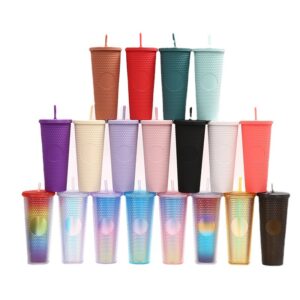
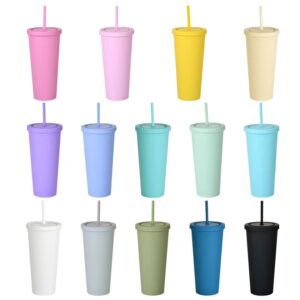
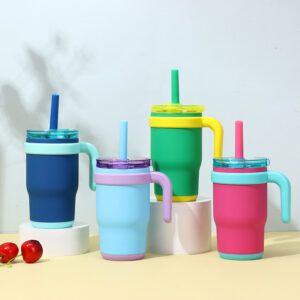
Description
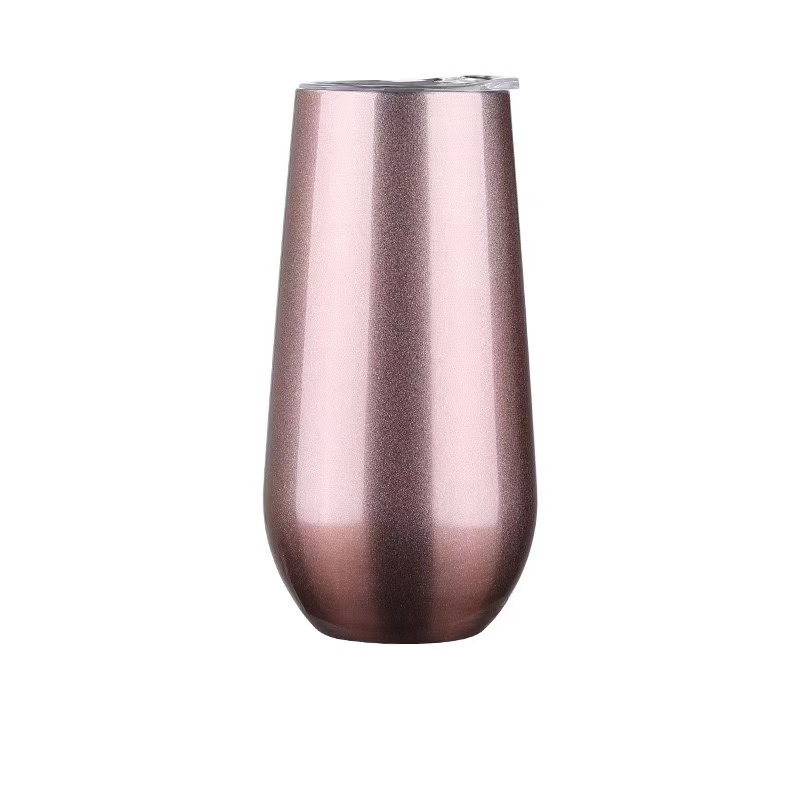
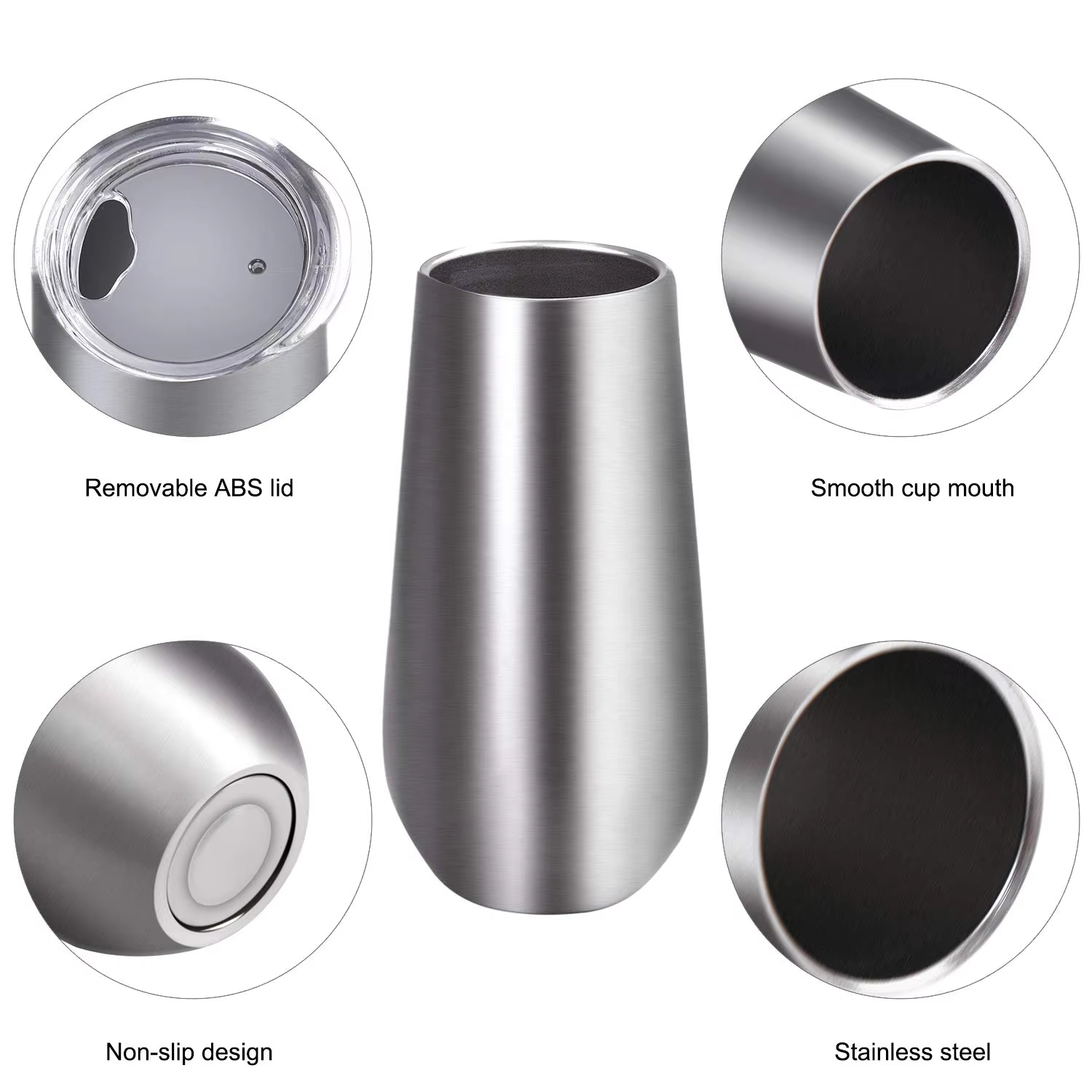
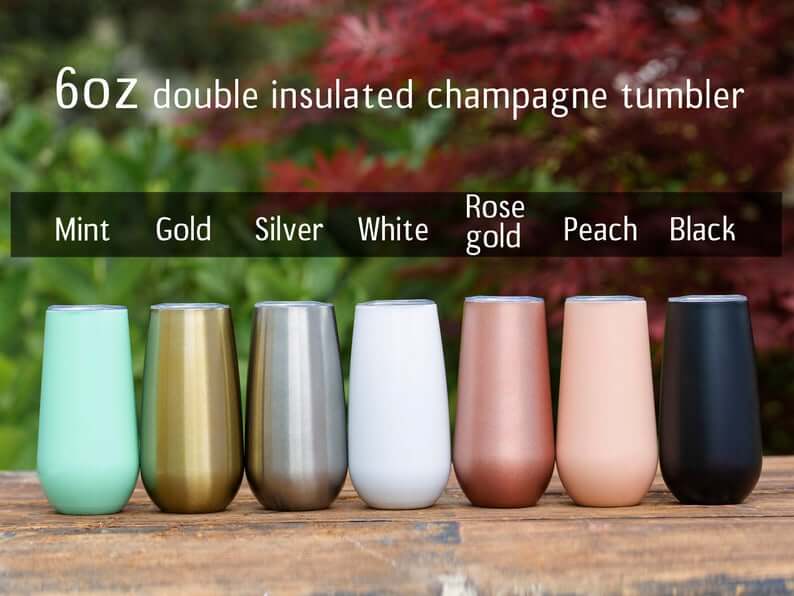
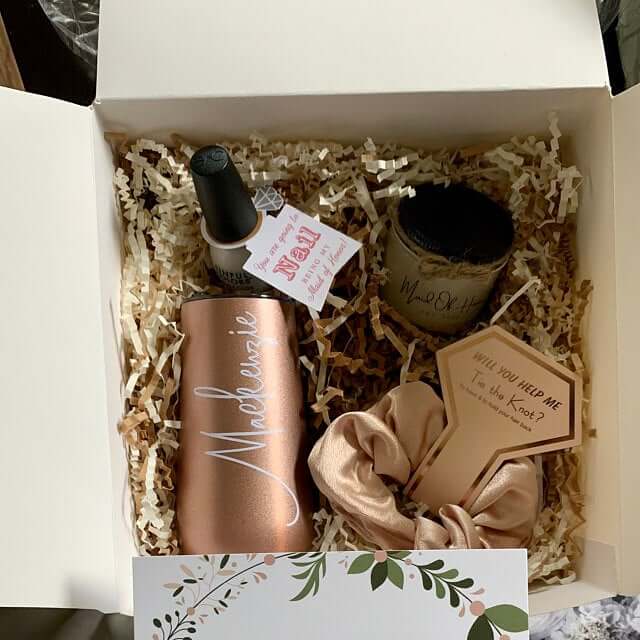
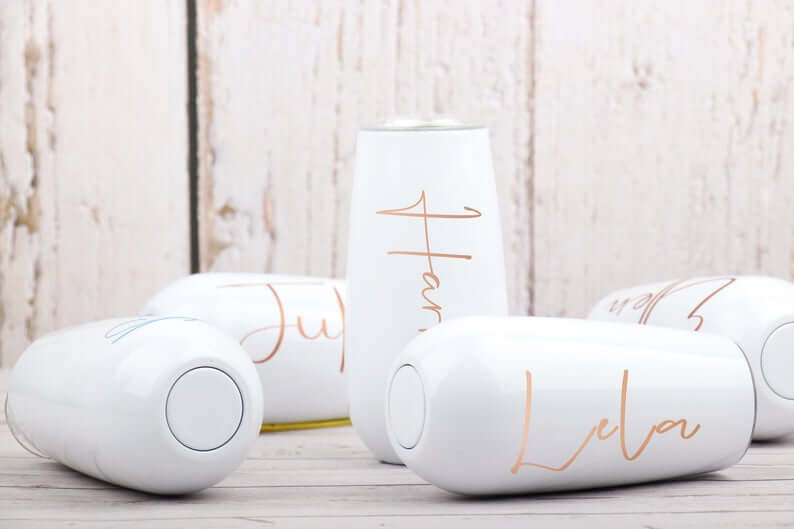
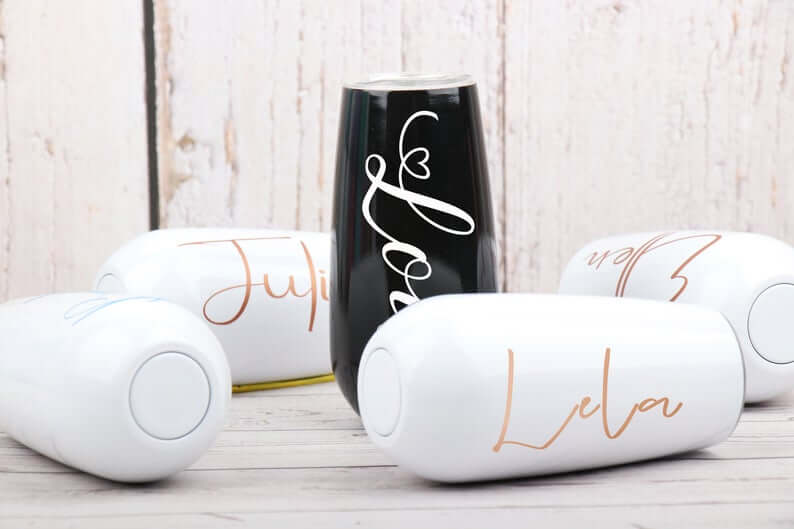
6oz Double Wall Egg Shape Tumblers
Why an egg shape is harder than it looks
An egg profile has no straight section. Every point on the surface is a compound curve with a continuously changing radius, which means the drawing stages cannot share a single punch profile and the wall thickness has to be controlled through a continuously varying strain field. That is the whole engineering story of a 6oz egg tumbler, and it explains why the shape commands a price premium rather than being a cosmetic variant.
Wall thickness across a compound curve
During deep drawing, material thins where the strain is highest, which on an egg profile is the upper third where the radius tightens toward the rim. A nominal 0.4mm wall can drop to 0.3mm at that band. Below 0.28mm the body becomes dent-prone and the vacuum gap can collapse locally.
Ask for a thickness map at six points along the profile on a sectioned sample. Suppliers who cannot produce one are forming by feel, which works until the coil supplier changes temper.
The double-wall problem at 6oz
At small volumes the surface-to-volume ratio is high, so a double wall buys less hold time than buyers expect, while the vacuum gap steals capacity. A 6oz egg tumbler often holds closer to 5oz of usable liquid. That gap matters in a product whose entire purpose is a small pour.
Decide early whether the product is genuinely vacuum insulated or simply double-walled with an air gap. The second is cheaper, thermally weaker, and honest if the packaging does not promise hours of hold time.
Decoration on a surface with no flat area
Pad printing needs a tangent plane. On an egg there is none, so artwork either sits in a narrow band near the widest point or distorts. Laser etching handles the curve better because the focal distance can be held by a rotary fixture, but it produces a single tone and cannot do white on a dark body.
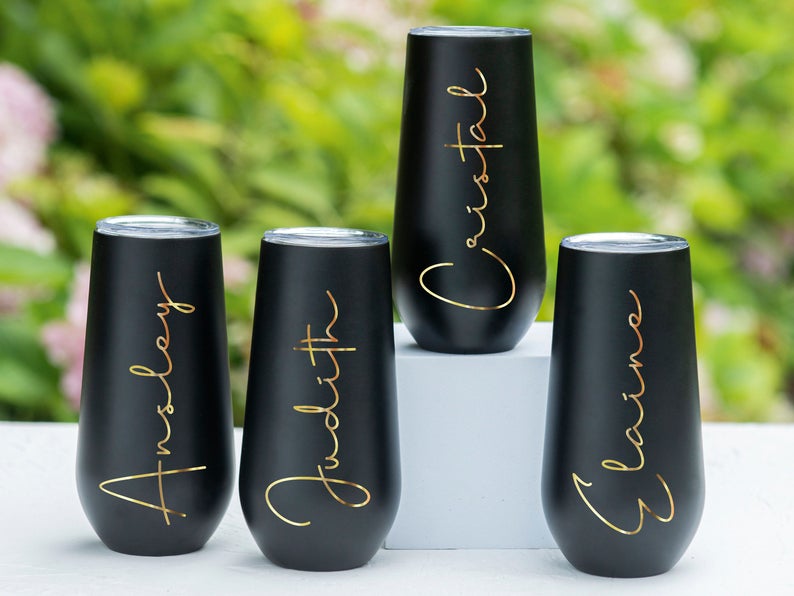
For a gift-channel product the practical answer is a small laser-etched mark plus a printed sleeve or gift box carrying the full brand message. Putting the message on the object is where approvals stall.
The channel that actually buys 6oz
Six ounces is not a hydration size. It is a tasting size, a gift-set component, a sampler, or a bar item. Buyers in those channels care about presentation and unit cost more than thermal performance, and they buy in sets rather than singles. Specifying the product for a gift set, with a tray and a box, changes the engineering priorities: the rim finish and the exterior coating matter more than the vacuum.