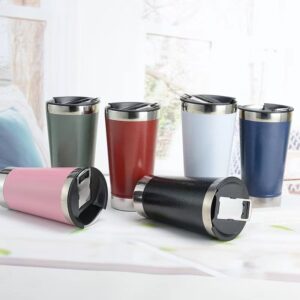
Description
Insulated Vacuum Flask Thermoses
Capacity claims are where suppliers get creative
A vacuum flask sold as 500ml frequently holds 460ml to the brim once the double wall and the lid volume are accounted for. That gap is legal in most markets as long as it is disclosed, and it is the single most common source of buyer complaints in the category. The claim on the packaging and the number a customer measures with a measuring cup need to agree.
Ask the supplier to state three numbers: brim capacity, usable capacity with the lid fitted, and the internal height available for liquid. A supplier who provides only one number has not thought about the question.
Hold-time claims and how they are measured
Marketing hold times assume a full flask, a pre-heated body and a starting temperature near boiling. Real use starts with a cold body and a half-full flask, which cuts the hold time substantially. A claim of 24 hours is not false under the test conditions, but it is misleading if the packaging does not state them.
The defensible approach is to publish the test conditions alongside the number: initial temperature, fill level, ambient temperature. That is what a buyer’s compliance team will ask for anyway, and stating it first removes a negotiation.
Vacuum integrity over the product life
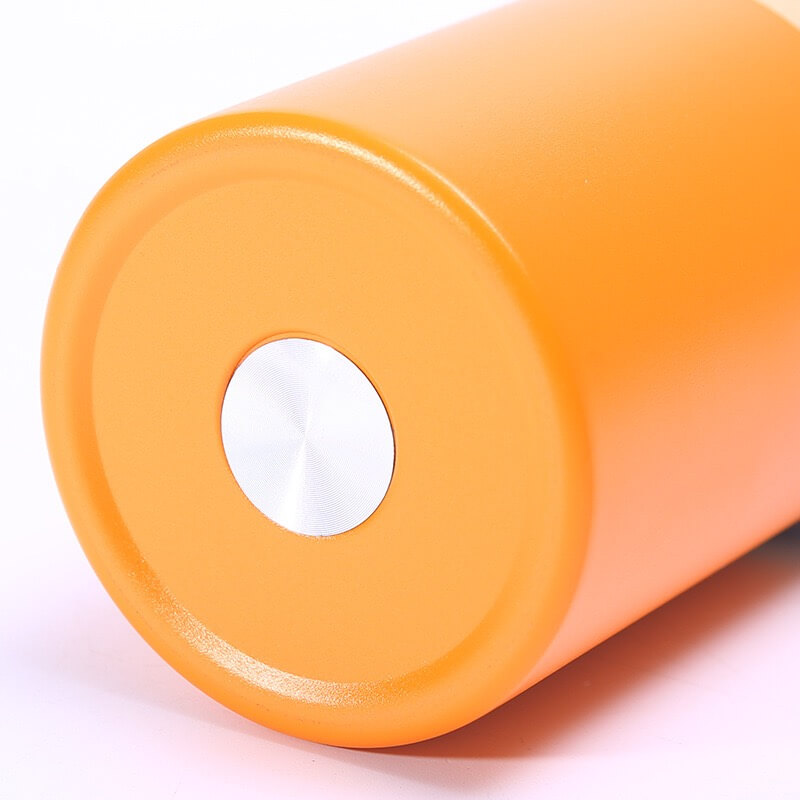
A flask that passes the factory test can still lose vacuum in service, usually through the base crimp or a stress crack at the shoulder. The field signature is a body that becomes warm when filled with hot water. There is no way to repair it, so the only control is process control at the crimp and a sampling check at the end of the line.
Ask what percentage of production is vacuum-tested and how. In-line testing of every unit is rare; a statistically sampled check with a documented reject rate is the realistic standard.
What a purchase decision should compare
Four suppliers quoting the same flask will differ on the things that do not appear in the price: crimp inspection method, whether the vacuum gap is copper-coated, the gasket material, and the coating thickness at the neck. Those four determine the returns rate, and the returns rate determines the real cost per unit sold.
A supplier who answers those four questions with specifics is worth a higher unit price than one who answers with adjectives. In this category the difference between a good and a bad program is almost never the steel.
Lead time and the second order
The first order reveals the supplier’s engineering. The second order reveals their production discipline. Ask, before the first order, what the lead time was for their last three repeat orders and what caused any delay. The answer tells you more about reliability than any certification on the wall.